
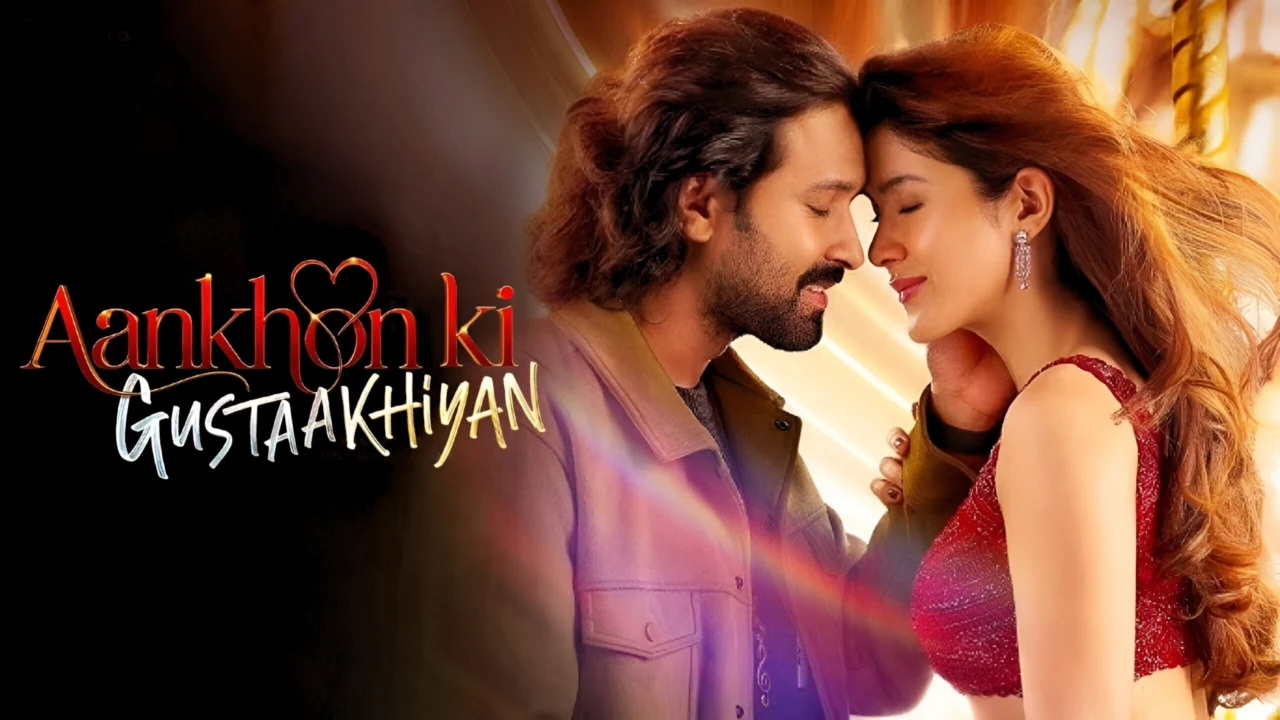
Aankhon Ki Gustaakhiyan (2025) Movie ft. Vikrant, Zain, and Shanaya
Aankhon Ki Gustaakhiyan (2025) is a Hindi romantic drama that leans on old‑school feels rather than high concept, built around three people whose lives keep brushing past each other because of one impulsive train journey. Vikrant Massey, Zain Khan Durrani and Shanaya Kapoor form the emotional triangle, but the film is very clear: this is primarily Jahaan and Saba’s story, with Abhinav as the uncomfortable reminder that timing is everything.
The film adapts Ruskin Bond’s The Eyes Have It, but only uses that as a starting spark. By the end, it’s more about memory, ego and the small lies people tell themselves so they can live with what they did , or didn’t do.
Story, structure and setting
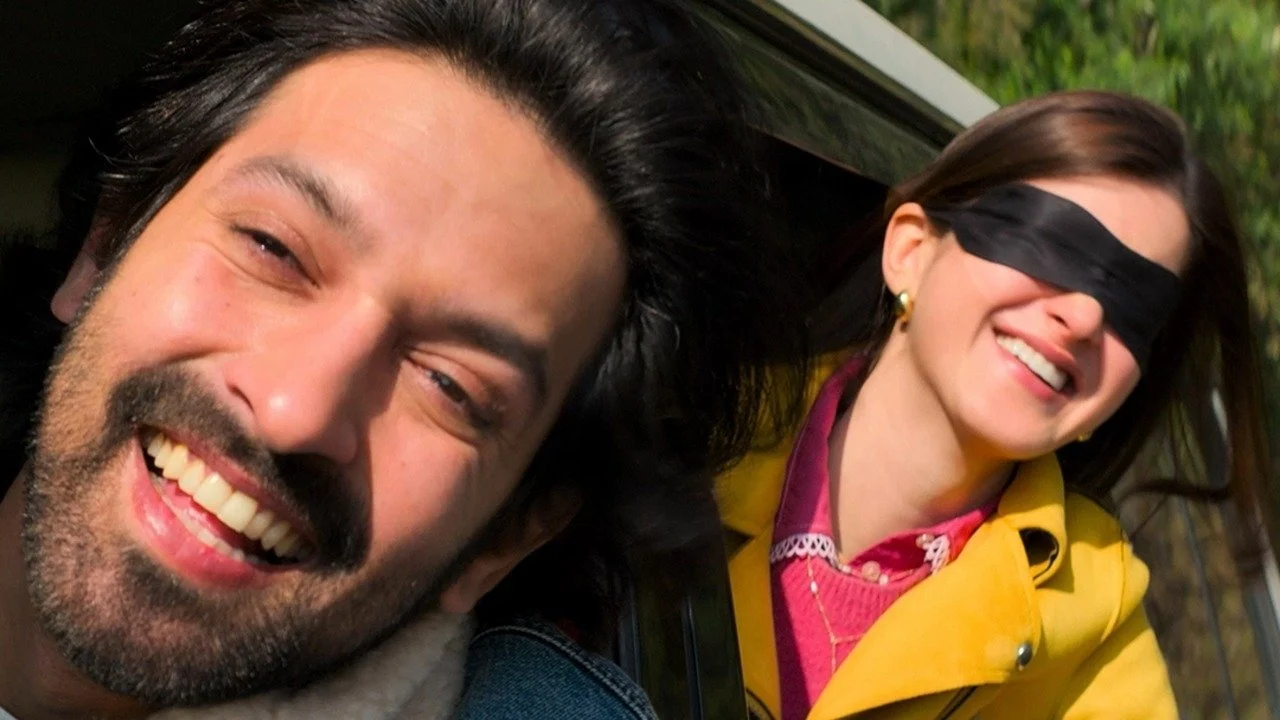
The opening stretch is almost deceptively simple. Jahaan (Vikrant), a visually impaired musician, boards a train from Dehradun to Delhi. Saba (Shanaya), a theatre actor prepping for a role, blindfolds herself to get into character and ends up sharing his compartment. For a few hours, sight is off the table; words, silences and stray touches do all the work.
They talk about plays, weather, imagined landscapes outside the window, and the result is one of those intense, contained connections that feel unreal the moment you step back into fluorescent station light. Jahaan gets off without seeing her face, Saba removes the blindfold without ever having looked at him, and life yanks them in different directions.
Years later, they meet again in Europe, now very much in each other’s line of sight. Jahaan is working as a session musician, Saba is touring with a play, and Abhinav (Zain) enters the frame as the producer‑friend who has quietly been in love with Saba for a long time. The film’s second half is less about “will they meet” and more about whether that train connection can survive reality.
Performances and characters
Vikrant makes Jahaan lived‑in rather than saintly. He’s thoughtful but not always gentle, funny but often guarded. His blindness is there in the mechanics , the cane, the way he tilts his head to follow sound , but the character isn’t reduced to that. What really sells him is how he uses voice: the way he leans into a joke, stalls when he’s lying, or lets a pause drag because he’s scared of the answer.
Shanaya’s Saba is written as someone who is used to performing for a living and slowly realises she has been performing in her personal life too. She’s not instantly “perfect” on screen; the film lets her be slightly vain, slightly unsure, and that works. Her best moments are when she breaks script , with Jahaan, with her father, with Abhinav , and says something that sounds half like a line and half like a confession.
Zain’s Abhinav is the guy most films turn into a convenient villain. Here he’s more complicated: supportive, present, occasionally passive‑aggressive, but never cartoonish. His love for Saba is real, his resentment towards Jahaan is understandable, and the film doesn’t give him an easy out.
Direction, writing and music
Santosh Singh keeps the camera close enough to faces that you rarely forget this is a film about people listening and failing to listen to each other. The train sequences are warm and slightly dreamy; the later European portions are cleaner, colder, almost too picturesque , which fits a story where everything looks better on the outside than what the characters feel inside.
The writing leans into small motifs: the idea of “seeing” someone beyond their surface, the way sound builds a mental picture, the gap between how you remember a moment and how it actually was. Conversations don’t explode into monologues very often; instead, arguments simmer, cool down, and then quietly change how these people behave next time.
Vishal Mishra’s music does a lot of heavy lifting. The title track and the softer pieces are used like recurring thoughts , popping up when characters revisit the same emotional space. There are a couple of full song set‑pieces, but the more effective use of music is in the background: a single line from a melody creeping in under a crucial line.
What works
- The first act on the train is genuinely engaging. It uses the lack of sight as a narrative tool, not a gimmick, and lets you fall for the idea of these two before you see them in “real life”.
- Vikrant and Shanaya share a believable awkwardness when they meet again; it feels like two people who romanticised a memory and now have to deal with the actual humans behind it.
- Abhinav is written with empathy. The film acknowledges that being the “other guy” is painful and messy, without turning him into a stock roadblock.
- The adaptation doesn’t worship the source material. It respects the core idea and then extends it forward in time, asking what happens after that magical train ride ends.
Where it slips
The pacing in the middle is uneven. Once the reunion happens, the film spends a bit too long circling familiar beats , professional commitments, missed meetings, misunderstandings , when it could have pushed harder into the tougher conversations.
Some dialogue leans a little too hard on quotable lines, especially in the more dramatic confrontations. You can occasionally feel the writer in the room when a simpler, messier sentence might have hit deeper.
The resolution, while emotionally satisfying, wraps things up neater than real life usually allows. Depending on your taste, you’ll either enjoy that closure or wish the film had left a little more discomfort hanging in the air.
Emotional impact and audience appeal
If you like character‑driven romances that value conversation over grand set‑pieces, Aankhon Ki Gustaakhiyan will likely land with you. It’s not trying to be a “twist” film; the pleasure is in watching how these three navigate regret, loyalty and the stories they’ve told themselves about what happened on that train.
For mainstream audiences, it has enough songs, scenic locations and light moments to keep things accessible, while still holding on to a quieter, more reflective core than the usual big‑budget love story.
Overall verdict
Aankhon Ki Gustaakhiyan (2025) is a gentle, sometimes uneven, but sincere romance about the long echo of one brief encounter. It works best when it trusts silence and small gestures, less so when it reaches for big filmi payoffs, but the performances and the central idea give it a distinct voice in a crowded genre.
Rating: 3.7/5