

Andhra King Taluka (2025) Movie ft. Upendra, Bhagyashri, and Ram
Andhra King Taluka is a Telugu action‑drama that turns fan culture into both a warm love letter and a sharp warning. Upendra’s towering star persona hangs over everything, but the film is really about Ram’s character and how far a boy can lose himself in worshipping his “Andhra King.”
Sagar (Ram) grows up in a small coastal town where life is measured by how many times you’ve watched a Surya Kumar (Upendra) first‑day‑first‑show. His room is a shrine, his bike is painted like his hero’s, and even his haircut follows the latest poster. Mahalakshmi (Bhagyashri) loves him, but learns quickly that she’s competing with a man on a screen, not another real person.
Story, conflicts and tone
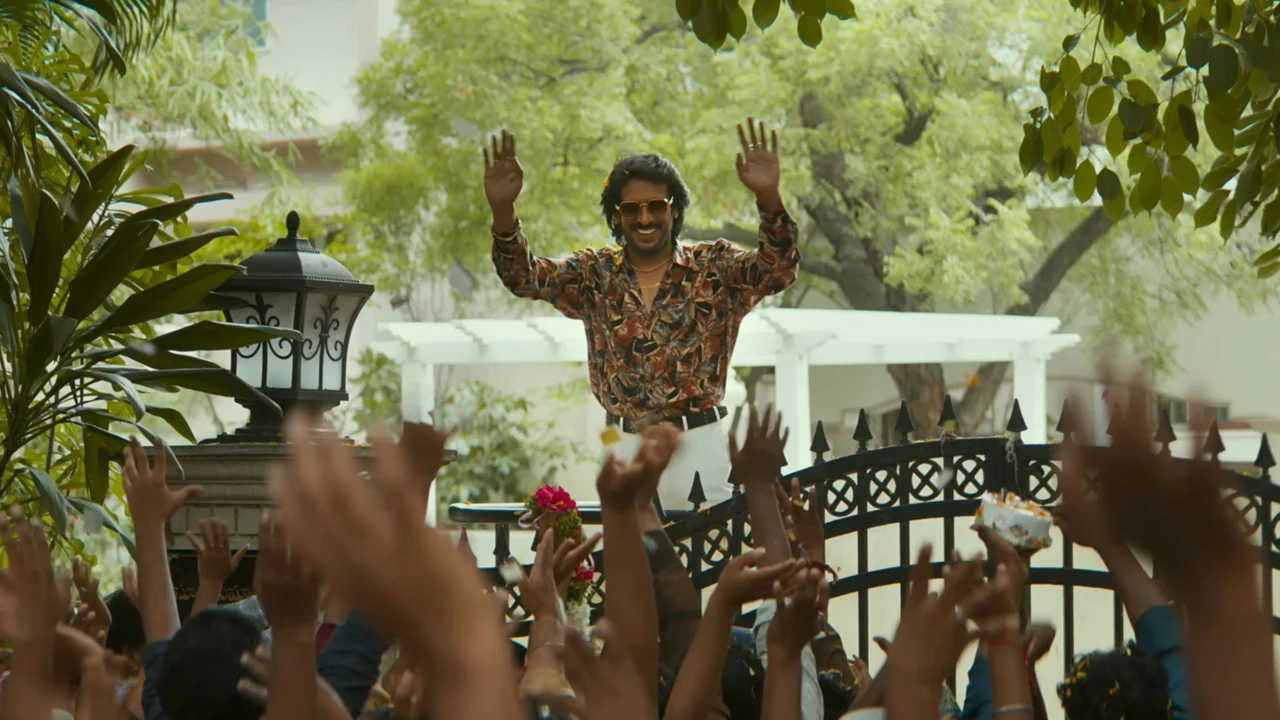
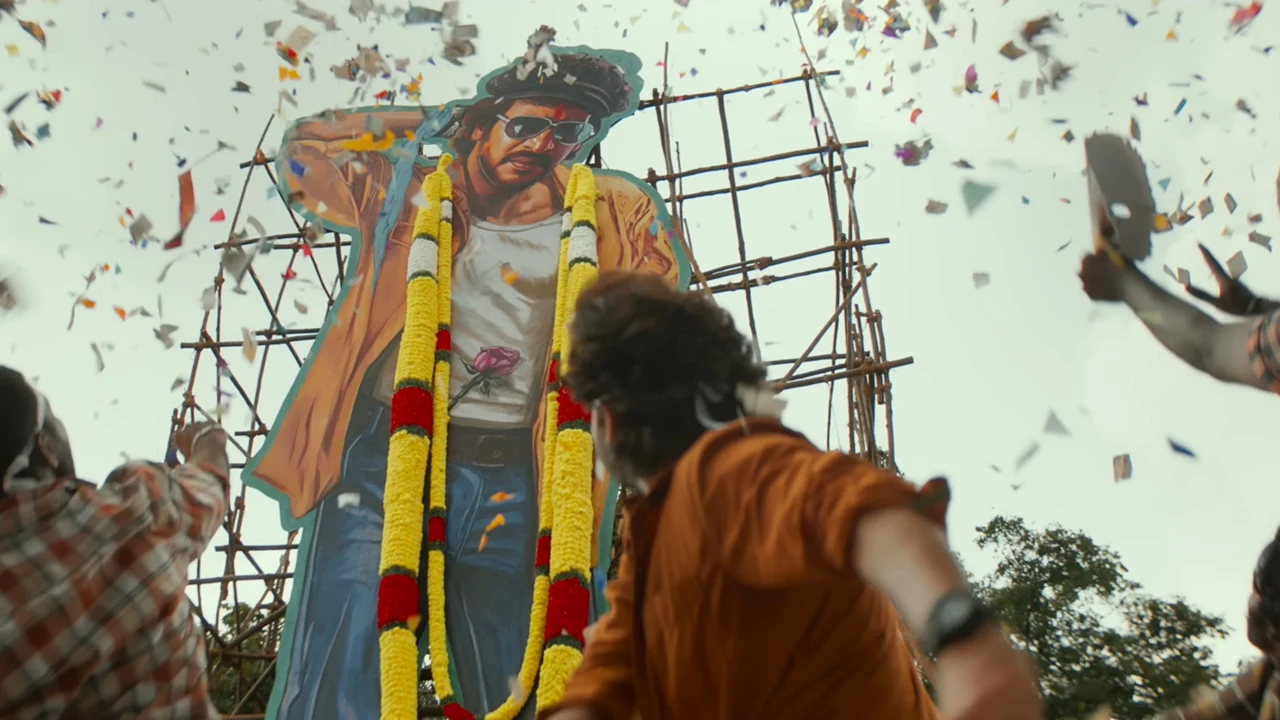
The film starts out light: fan fights over cut‑outs, shouting matches with rival hero groups, low‑stakes bragging about who knows Surya better. It’s funny, loud, and instantly recognizable to anyone who’s seen a single‑screen crowd on a festival release day.
Then reality barges in. A local theatre owner cancels a Surya re‑release for a corporate event, leading to a scuffle that spirals into legal trouble and public humiliation for Sagar and his gang. When the footage goes viral, Sagar’s “passion” is mocked nationwide, and the very hero he worships is dragged into a controversy he didn’t start.
From here, the tone shifts. The film begins asking what it means when your whole identity is built on someone who doesn’t even know you exist. Sagar’s father, Simhadri, bluntly tells him he knows more about Surya’s filmography than his own mother’s medical reports, and that line stings throughout the second half.
Performances and characters
Upendra’s Surya is not treated as a distant god; he’s a working star who suddenly discovers there’s a boy out there ready to burn his own life for him. His early scenes are playful , winking at fans, casually stepping over garlands , but when he finally meets Sagar, there’s a clear discomfort in how much power he holds over someone he never meant to shape.
Ram plays Sagar with that slightly restless, stubborn energy he’s known for. The character is loud and occasionally unlikeable, but that’s the point: he’s not a “perfect fan,” he’s a kid who took the wrong things too seriously. Ram sells both the madness , screaming in theatres, painting walls at night , and the quieter crash when it hits him that Surya can’t magically fix his mess.
Bhagyashri’s Mahalakshmi is the film’s sanity check. She’s not anti‑cinema; she attends shows and sings along to songs. But she keeps asking Sagar simple questions: “Do you know what you want beyond shouting his name?” and “If he told you to stop, would you?” Her arc is less about being the hero’s love interest and more about deciding how much of his chaos she’s willing to live with.
Direction, writing and craft
Mahesh Babu P directs Andhra King Taluka with a clear sense of rhythm. The first half is staged like a festival , bright colours, mass songs, over‑the‑top fan antics , while the second half gradually strips that colour away, replacing fireworks with courtrooms, hospital corridors and tense family dinners.
The writing is strongest when it stays close to specific details: a drone show organised just to spell out Surya’s name, an argument over who gets to stand nearest the stage, a father quietly cutting up his son’s star posters at night. These moments make the bigger emotional turns feel earned.
Visually, the film uses the Godavari belt and small‑town Andhra aesthetic well. Bridges packed with banners, roadside flex boards, crowded balcony shots on release day , the world looks like a place where cinema really is the biggest thing happening.
Music by Vivek, Mervin leans into foot‑tapping fan anthems in the first half and softer, reflective melodies later. The main fan song hits the whistle notes, while a quieter track over Sagar’s low point gives the story some much‑needed emotional breathing space.
What works well
- The film genuinely understands fan culture — the highs, the stupidities, the deep sense of belonging. It neither fully glorifies nor outright insults it.
- The Sagar–Surya dynamic in the second half is interesting: a star trying to set boundaries with someone who has none, without crushing him completely.
- Mahalakshmi is written as a participant, not just a complainer. She joins the madness early on, then slowly steps back when she sees the damage, which feels real.
- The class angle — about who owns the theatre, who cleans it, and whose voices matter — is woven into key scenes without turning into a lecture.
Where it falls short
Andhra King Taluka still bends to commercial expectations. A few comedy tracks and fan skits in the mid‑section outstay their welcome, especially once the story has clearly signalled it wants to get serious.
Some conflicts resolve a bit too neatly. A legal scare that should have long‑term consequences is wrapped up quickly to make space for a “fan meets hero” high point. A deeper exploration of mental health or online trolling around fan wars could also have added more bite.
The climax, while emotionally satisfying, does go slightly heavy on speeches. Surya’s big monologue about what he expects from fans lands, but you can see the writing aiming for “clap dialogue” rather than the subtler tone the second half had been building.
Audience connect and impact
For hardcore fans , of any star, not just Upendra , the film will feel uncomfortably close at times. There are lines and situations that could have been lifted straight from real fan groups and WhatsApp forwards.
For regular viewers, it plays as a solid, emotional entertainer with big laughs early and a clear, grounded message by the end: admire your heroes, don’t abandon yourself in the process. Parents, especially those who’ve fought over “too much cinema” at home, will probably nod along more than once.
Overall verdict
Andhra King Taluka (2025) is a lively, sometimes messy, but ultimately heartfelt look at what it means to live your life in someone else’s shadow. It knows the thrill of being part of a fan army, but it’s far more interested in what happens when the lights come back on and you’re left alone with your own name.
It’s not as sharp as it could have been, yet the performances, specific detailing and emotional payoff make it a worthwhile watch , especially if you’ve ever lost your voice screaming for a hero.
Rating: 3.8/5