
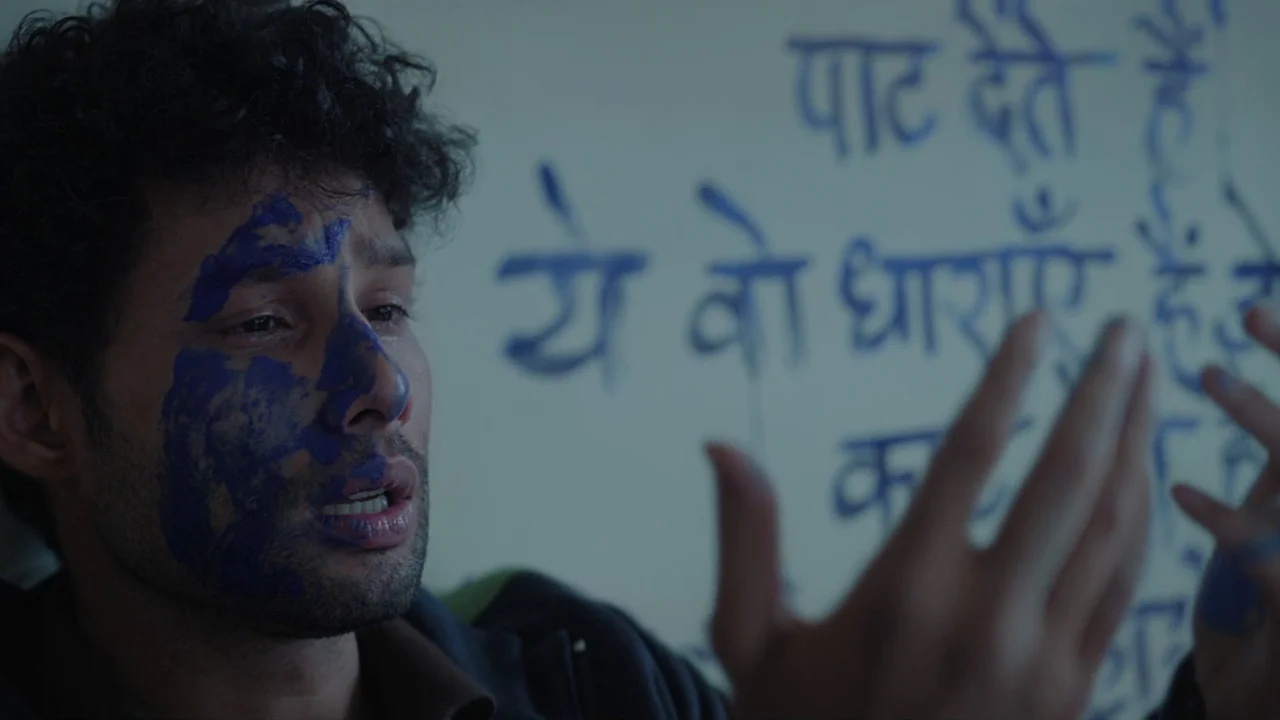
Dhadak 2 (2025) Movie ft. Saad, Siddhant, and Triptii
Dhadak 2 (2025) is a Hindi romance that rips the candyfloss off Bollywood love and drags you straight into caste, humiliation and rage. Shazia Iqbal places Siddhant Chaturvedi and Triptii Dimri in a small-town college where every corridor has an invisible signboard: know your place, or pay the price.
This isn’t a sequel in the usual sense. It doesn’t continue the first film’s story. It takes the title, keeps the word “dhadak” as shorthand for young love, and then flips the grammar completely: here, the heartbeat keeps going long after the happily‑ever‑after fantasy dies.
Story, setting and conflict
Neelesh (Siddhant) is a first‑generation law student from a Dalit family, commuting daily from a village on the edge of town. He carries a worn backpack, an old phone and the weight of a father who believes education is their only exit route. Vidhi (Triptii) comes from a dominant‑caste trader family that sponsors college events and buys influence casually.
They meet in class and on the local train, first as teammates on a moot court project, then as quiet co‑conspirators sharing notes, food and private jokes. The film takes its time here, letting their comfort grow in stolen minutes between lectures and long walks from the station to campus.
The fracture line appears when Neelesh’s surname and home address become visible to Vidhi’s circle. The same classmates who once borrowed his notes now treat him like a stain; WhatsApp groups, snide remarks and “jokes” build an atmosphere where he is always almost one misstep away from being thrown out.

Performances and characters
Siddhant plays Neelesh without grand speeches in the first half. His frustration leaks through in small ways: a clenched jaw, a half‑finished sentence, an extra second before he laughs at an upper‑caste friend’s remark. When the story finally demands confrontation, the anger feels earned because the film has shown the slow drip of everyday prejudice.
Triptii’s Vidhi starts off as the kind of girl Hindi films usually over‑romanticise: open, curious, oblivious to the layers that protect her. As the plot darkens, she moves from naïve ally to someone forced to look at her own house differently. Her best scenes are opposite her father and uncle, where you can see shock, denial and eventual defiance hitting in waves.
Saad shows up as Rony, Vidhi’s cousin and self‑appointed gatekeeper of “family honour”. He’s not a cartoon villain; he’s dangerously ordinary , the guy who smiles at Neelesh in college but arranges humiliation behind his back. That duality makes him one of the more unsettling presences in the film.

Direction, writing and craft
Shazia Iqbal keeps the camera close to faces and bodies rather than big city skylines. Classrooms, train compartments, narrow streets, cramped one‑room homes , these spaces do most of the heavy lifting. You’re never allowed to forget how small Neelesh’s world is compared to Vidhi’s.
The writing refuses to rush to tragedy for shock value. Instead, it piles on micro‑aggressions: seating arrangements, teachers mispronouncing names, security guards stopping Neelesh and not his friends, relatives “jokingly” asking about caste at functions. By the time the actual violence arrives, you’ve already seen a hundred cuts.
Music stays mostly inside the story. There are songs, but they feel like emotional extensions of specific moments , a study session that turns into a near‑confession, a bus ride after a particularly harsh insult , rather than generic love ballads slotted in at random.
What works strongly
- The film doesn’t let romance dilute caste. The love story is framed inside the power imbalance, not outside it; every tender moment carries risk.
- Neelesh is never “rescued” by Vidhi. Her support matters, but the film is clear that it’s his fight, his pain and his agency at the centre.
- Vidhi’s awakening is messy and gradual. She doesn’t switch sides overnight; there are arguments, guilt and a lot of uncomfortable silence before she chooses to stand up.
- The violence, when it comes, is shot without glamorising it. It’s clumsy, sudden and public, which makes it harder to look away from.
Where it slips
Dhadak 2 occasionally feels torn between being a sharp social drama and a mainstream “big” film. A couple of scenes lean into theatrical courtroom exchanges and dramatic reveals in a way that slightly softens the rawness built earlier.
The pacing in the second half wobbles. After a devastating midpoint incident, the narrative detours into a side track involving student politics and media coverage that, while thematically relevant, stretches the runtime and diffuses focus from Neelesh and Vidhi.
Some of Vidhi’s family members are written in broad strokes , rigid elders, silent mothers , without the nuance that could have made the household even more chilling.
Emotional and thematic impact
Where the film lands hard is in how it frames hope. It doesn’t promise that love crushes caste. It shows that love makes the violence of caste more visible, more unbearable, and sometimes more dangerous to confront.
The last stretch doesn’t run to either extreme of full tragedy or fairy‑tale reconciliation. Instead, it parks the couple in a space where they’ve chosen each other, fully aware of the cost, with institutions still stacked against them. That honesty is what lingers.
Overall verdict
Dhadak 2 (2025) is a flawed but important Hindi romance that refuses to look away from the social reality it’s set in. It gives Siddhant and Triptii real people to play, not Instagram cutouts, and trusts viewers to handle discomfort without sweetening everything.
If you walk in expecting a glossy, escapist follow‑up to the first Dhadak, this will feel like a slap. If you’re ready for a love story that understands how political a shared bench in a classroom can be, it’s absolutely worth your time.
Rating: 4.1/5