


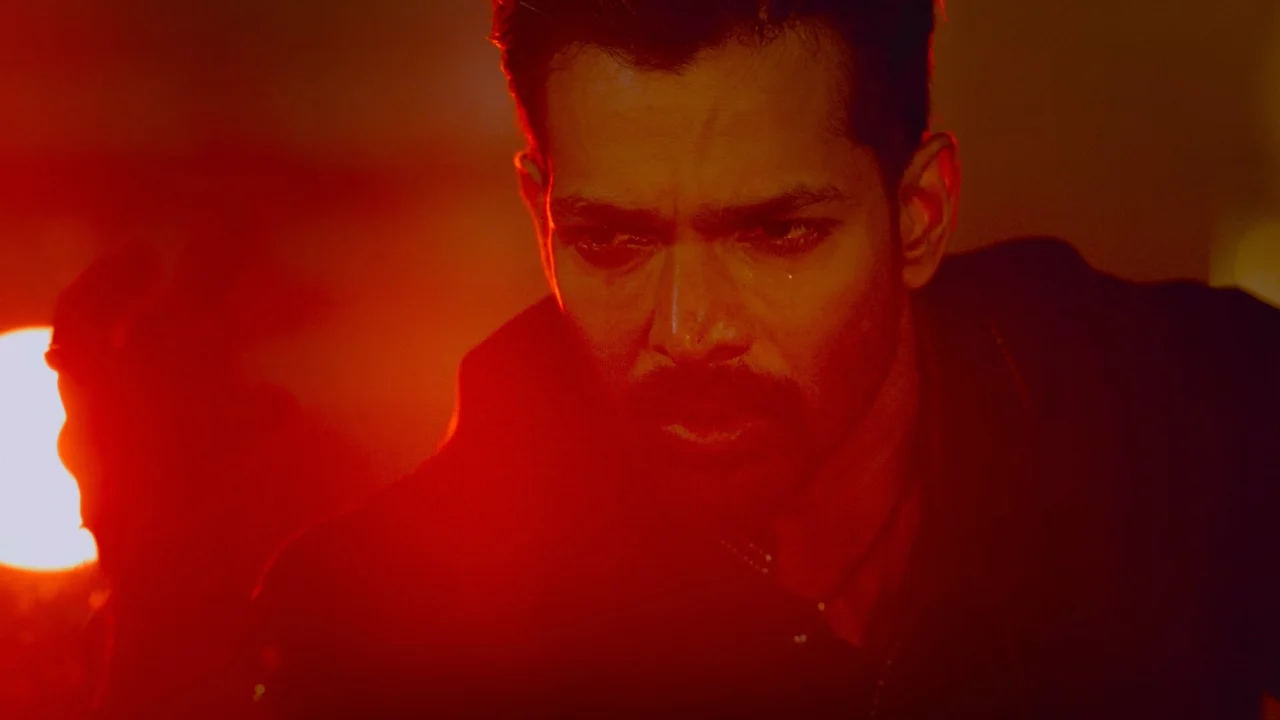
Ek Deewane Ki Deewaniyat (2025) Movie ft. Sonam, Harshvardhan, and Shaad
Ek Deewane Ki Deewaniyat is a Hindi romantic drama that stares obsession straight in the face and refuses to dress it up as “true love.” Milap Zaveri builds the film around a powerful man who mistakes access for affection, with Harshvardhan Rane, Sonam Bajwa and Shaad Randhawa driving a story where passion slowly rots into control.
At its centre is Vikramaditya Bhonsle, a rising politician who lives off applause and fear in equal measure. When he becomes fixated on film star Adaa Randhawa, what starts as fanboy admiration , posters, screenings, “inspirational” speeches , mutates into a campaign to own her time, her choices and eventually her entire life.

Story, framing and tone
The film opens with Vikramaditya winning an election and dedicating his victory to “women’s safety and dignity,” a line that looks bitterly ironic once you see how he behaves with Adaa. Their first real interaction happens on a TV show, where she politely deflects his flirty compliments, unaware that he has already decided she is “destiny.”
From there, the script tracks a slow escalation: special screenings, surprise visits to her sets, phone calls routed through managers, then veiled threats when she keeps boundaries. The tone is deliberately uncomfortable. There are no dreamy montages here , most of their scenes are staged in crowded, noisy public spaces where Adaa smiles for the crowd and flinches once the cameras switch off.

Performances and characters
Harshvardhan plays Vikramaditya as a man who never learnt where attention ends and entitlement begins. He is not a frothing madman from frame one. In public, he’s charming, generous, even self‑effacing. In private, tiny gestures , the way he blocks a doorway, lowers his voice or “requests” another meeting , show how dangerous he really is.
Sonam Bajwa’s Adaa is not written as a helpless damsel. She is alert, smart and acutely aware of how fragile her safety is in an industry and country that treat stalking as flattery. The performance works best in the in‑between moments: the polite smile that doesn’t reach her eyes, the way her shoulders tense when his name comes up, the small flashes of anger when he crosses one line too many.
Shaad Randhawa appears as Kabir, Adaa’s manager and long‑time friend, who becomes the only person willing to tell Vikramaditya “no” to his face. He is also the audience’s entry point into the backroom strategy: security changes, legal options, media spin and the ugly cost of saying no to a powerful man.

Direction, writing and music
Zaveri usually leans loud, but here he tries a more measured build‑up. The first half is structured as a series of encounters that could be read two ways depending on who’s watching. For fans in the film’s universe, Vikramaditya looks like a passionate admirer. For Adaa , and for us , each encounter is a fresh invasion.
The writing is at its sharpest when it sits in that ambiguity. A line that sounds romantic in isolation becomes creepy when you remember what came before. The dialogue gives Vikramaditya enough sugar to be socially acceptable, and enough acid underneath to keep you uneasy.
Music is pure, big‑Bollywood emotional fuel: soaring playback ballads for Adaa’s public life, intense, almost suffocating background score in the private clashes. The title track, built around the word “Deewaniyat,” is used more like a warning siren than a love anthem once the third act kicks in.
What the film gets right
- It doesn’t pretend this is a love story. The title says “madness,” and the film stands by that, clearly showing how romantic tropes are used to justify harassment.
- Adaa’s reactions feel rooted in real, modern fears – social media mobs, victim‑blaming headlines, producers who would rather “manage” the situation than fight it.
- Vikramaditya is frightening precisely because he looks respectable. The film understands that the worst behaviour often hides behind the best tailoring.
- The narrative gives Kabir and other secondary characters enough agency to show that bystanders can choose to either enable or resist this kind of obsession.
Where it falls short
Ek Deewane Ki Deewaniyat still carries the DNA of mainstream melodrama. Some confrontations are written to produce claps more than to reflect how such a situation would actually unfold, especially in the courtroom‑style scenes of the final stretch.
The second half also indulges in a few convenient turns: security lapses, legal shortcuts, news cycles that move at exactly the speed the plot needs. Those choices keep the tension high but occasionally break believability.
And while the film criticises obsessive love, it also occasionally revels in its aesthetics , slow‑motion shots, heightened monologues, grand set‑pieces. That double stance might feel muddled to viewers who wanted a more grounded, clinical take.
Audience connect and impact
For viewers used to Hindi films romanticising pursuit, this one plays almost like a corrective. You see familiar gestures , standing outside a house, sending gifts, quoting “I’ll do anything for you” , stripped of their soft focus and shown as they really are: pressure tactics.
Fans of Harshvardhan and Sonam get plenty of screen time and a handful of big, dramatic scenes each. At the same time, the film may be heavy, even triggering, for anyone who has dealt with stalking or public harassment; it doesn’t flinch from the anxiety of being watched.
Overall verdict
Ek Deewane Ki Deewaniyat is a glossy, sometimes clumsy, but ultimately unsettling look at obsession dressed up as devotion. It runs on high emotion, big music and louder performances, yet underneath all that noise it is asking a simple, important question: at what point does “love” cross the line into violence?
It’s not subtle and not flawless, but it is more self‑aware than many earlier “crazy lover” stories. For that reason alone, it earns a watch if you can handle the intensity.
Rating: 3.6/5