


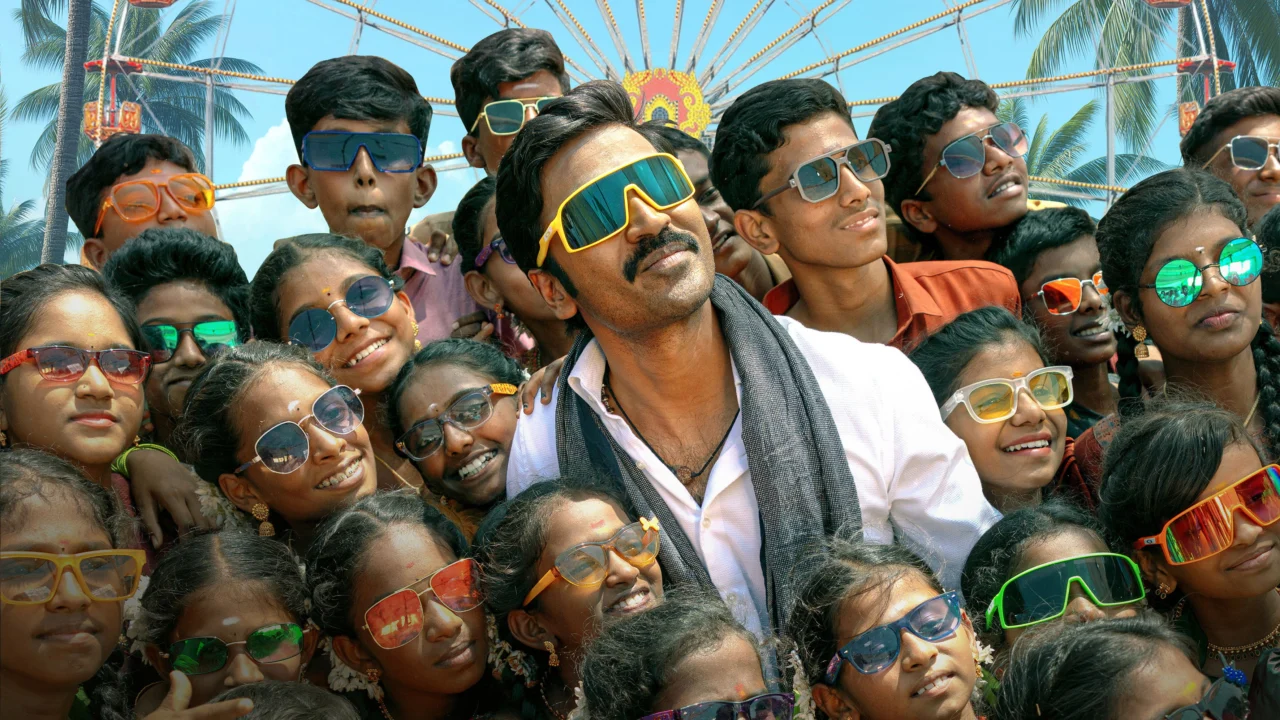
Idli Kadai (2025) Movie ft. Rajkiran, Arun, and Dhanush
Idli Kadai (2025) is a Tamil drama with a strong village spine, fronted by Dhanush as a city-bred professional forced to confront everything he once walked away from. Around him, veterans like Rajkiran and Arun Vijay anchor the emotional and dramatic weight, turning a simple idli shop into the centre of a clash between pride, profit and family.
The film is set largely in and around a small town in Theni, where Sivanesan’s modest eatery, “Sivanesan Idli Kadai”, has quietly fed the village for decades. When his son Murugan returns from his corporate job in the city, what looks like a short visit quickly turns into a long, messy fight over legacy, land and the right to define success.

Story, conflicts and mood
Idli Kadai starts with Murugan arriving in his native village on what seems like a guilt-driven break from his high-paying job. He sees the shop as a burden, a symbol of everything he thought he had escaped. For Sivanesan, played by Rajkiran, that same shop is dignity, history and the only thing he’ll leave behind.
The central conflict kicks in when a powerful company, represented on ground by Arun Vijay’s Ashwin, eyes the land for a highway-side food plaza. The deal looks irresistible to everyone who measures value in money. For Sivanesan, and eventually Murugan, it becomes a line they’re not sure they want to cross.
Tonally, the film walks a middle line: it isn’t a loud commercial masala, but it also doesn’t play like an art-house slow burn. There is humour from regulars at the shop, warmth in family scenes and a steady tension once corporate pressure and local politics tighten around the kadai.

Performances
Rajkiran’s Sivanesan is the soul of the film. He plays the character as proud yet gentle, someone who refuses to bend but never stops caring for the people around him. His scenes wiping the counter, tasting sambar, quietly counting coins at night carry as much weight as the big confrontations.
Dhanush’s Murugan is written as a man who can sell anything in a boardroom but struggles to speak honestly to his own father. As the story unfolds, his performance shifts from restless and impatient to grounded and protective, and that journey feels earned rather than sudden.
Arun Vijay’s Ashwin isn’t a one-note villain. He’s slick, ambitious and fully convinced that his offer will “improve” the area. The friction between him and Murugan is not just about money; it’s a clash between two different ideas of progress.

Direction, writing and craft
Dhanush directs Idli Kadai with a clear affection for small details: the way batter is poured, the regulars who always ask for “soggy idli” or “extra podi”, the newspaper vendor who treats the shop as his second home. These touches keep the film from becoming a generic land-grab story.
The writing builds conflicts layer by layer , loan pressure, legal notices, ego clashes, village gossip , instead of throwing one big twist. Conversations between father and son are messy, with long silences and half-finished sentences, which makes them feel real.
Technically, the film leans into natural light and earthy colours. Morning steam from the idlis, evening crowds, festival days near the shop , all of this is shot with a warmth that makes you almost smell the chutney. G. V. Prakash’s music supports this mood with simple, melodic songs and an emotional background score that peaks at the right places without drowning the scenes.
What stands out
- The father–son track is genuinely affecting. There are no sudden speeches that magically fix years of distance; understanding comes in small, awkward steps.
- Food is not used as a prop but as a living part of the story. Idli Kadai treats the shop as a character with memory and emotion.
- Rajkiran and Dhanush share a lived-in chemistry that sells the idea of two stubborn men bound by love but divided by their idea of pride.
- The film raises questions about development without lecturing. It shows the cost of losing spaces that hold community together.
Where it slips
The second half occasionally leans on familiar beats: court scenes, protests, local strongmen flexing power. These sequences are competent but not particularly new, and they can briefly dilute the more intimate emotional track.
At times, Ashwin’s arc feels rushed. A character set up with so much controlled menace deserved a slightly more nuanced resolution than what he gets. Also, a couple of songs in the middle stretch feel like they exist more for commercial balance than narrative need.
Audience connect and impact
Idli Kadai will speak most strongly to viewers who have roots in smaller towns or family-run businesses. The tension between leaving for a “better” life and staying back to protect what parents built is painfully relatable.
Younger audiences may also connect with Murugan’s arc , the realisation that success on paper means little if it comes with constant emptiness. By the time the film reaches its final act around the fate of the shop, it becomes less about idlis and more about identity.
Overall verdict
Idli Kadai (2025) is a grounded, emotionally resonant rural drama that uses a simple idli shop to talk about family, memory and the price of growth. It may not reinvent Tamil cinema, but it delivers strong performances, honest emotion and a handful of scenes that stay with you long after the plates are cleared.
For anyone who likes Dhanush in rooted roles and has a soft spot for village stories with real stakes, this one is worth sitting down for , preferably after a good meal, or you’ll come out hungry.
Rating: 4.0/5