
Dhurandhar (2025) Movie ft. Ranveer, R., and Akshaye
Dhurandhar (2025) is a sprawling Hindi spy, crime thriller that throws Ranveer into the middle of Karachi’s gang wars and Pakistan’s power corridors, with Akshaye Khanna as the man he has to both serve and eventually destroy. It runs long, hits hard and clearly aims to be the opening chapter of a much bigger espionage universe.
At the centre is Hamza Ali Mazhari, a young man from Punjab who disappears from his old life and resurfaces in Lyari under another name, slowly worming his way into a syndicate that supplies guns, muscle and chaos to whoever pays. What begins as survival quietly turns into a mission that changes the balance of power on both sides of the border.
Story, setting and stakes
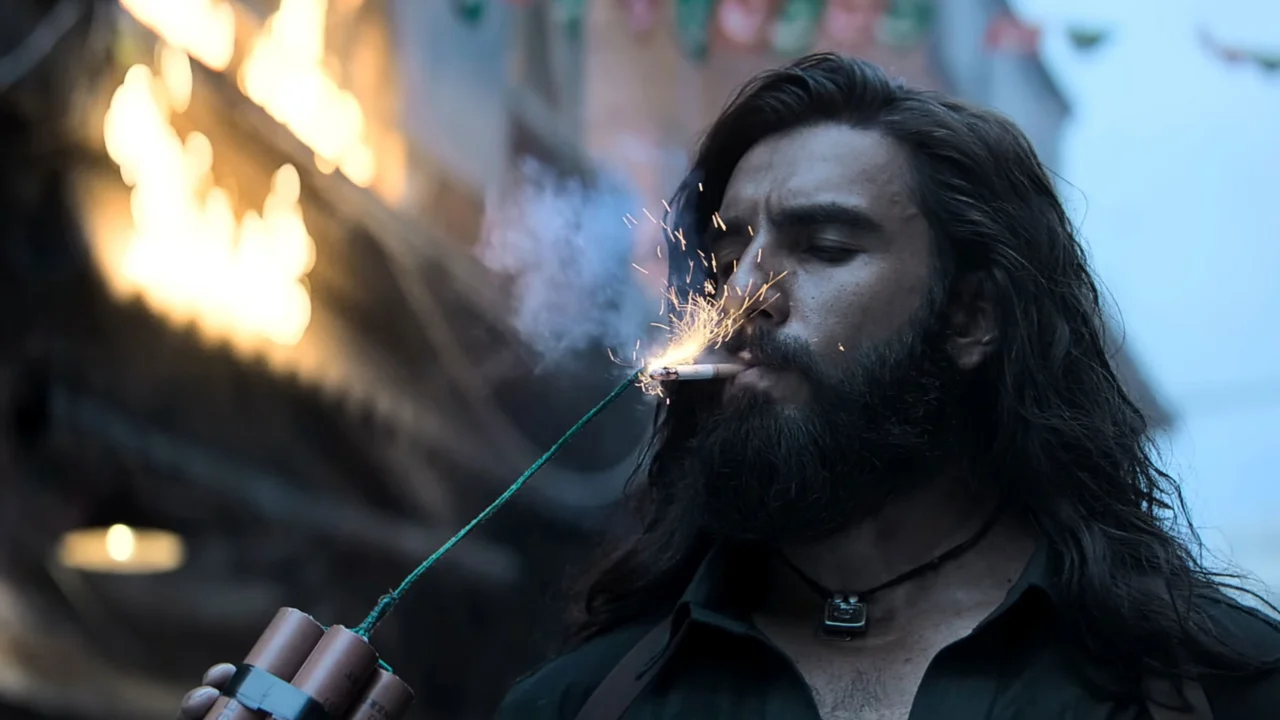
Dhurandhar plants its flag in Lyari, a part of Karachi shown here as a maze of alleys, rooftop shortcuts, weapon workshops and cramped dens where politics, religion and crime all overlap. Hamza starts at the bottom: a driver, a lookout, a boy who knows when to shut up and when to shoot. Over time, he becomes close to the gang’s top man , the unpredictable, magnetic Rehman Dakait.
The long game reveals itself slowly. Hamza isn’t just another thug; he’s carrying instructions, guilt and a promise from people who can never publicly acknowledge him. When he realises that Rehman’s guns have already spilled Indian blood in Mumbai, the operation stops being abstract. Every move from then on is personal, and every betrayal in Lyari has ripples in Delhi and Islamabad.
The stakes are not just about taking one gangster down. They’re about whether Hamza walks out alive, whether anyone will know what he did, and whether removing one “dhurandhar” simply clears space for a worse one.
Performances and characters
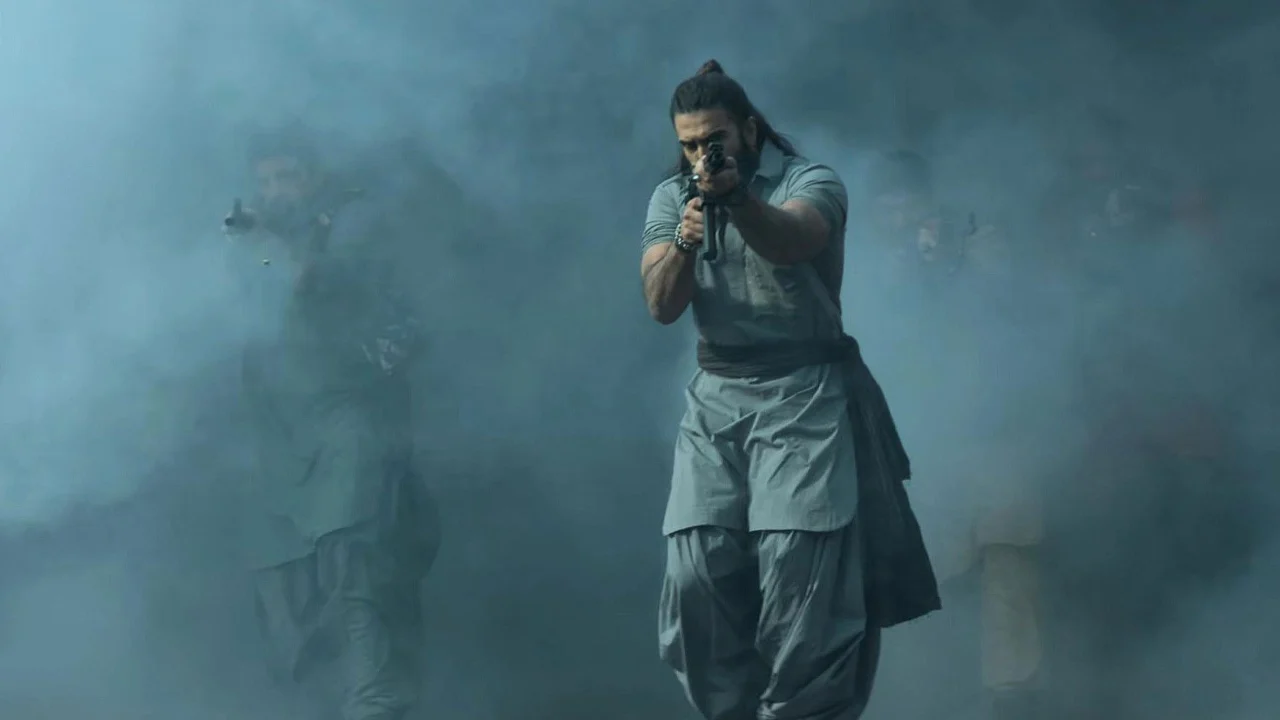
Ranveer’s Hamza is built in layers instead of slogans. In the early chapters, he’s jittery and watchful, behaving exactly like a man who knows one wrong word can get him dumped in a gutter. As he gains Rehman’s trust, the body language shifts , shoulders loosen, eyes harden , but the sense that he’s always calculating never leaves.
Akshaye’s Rehman is pure screen danger. He’s not loud all the time; he shifts between charm and brutality so fast that everyone around him stays on edge. One minute he’s joking with kids in the mohalla, the next he’s smashing a man’s head in as casually as if he’s cracking a coconut. The push, pull between him and Hamza , mentor, father‑figure, ticking time bomb , gives the film its most electric scenes.
“R.” here, in the film’s context, sits in the space of the political machine behind all this. As Jameel Jamali, a seasoned Pakistani politician, he’s the calm, calculating presence who sees Lyari as both asset and liability. He never lifts a gun, but every new shipment or police raid can be traced back to a nod or frown from his side of the table.
Direction, writing and craft
Aditya Dhar shoots Karachi like a character, not just a backdrop. Markets, rooftops, ports, mosques, underground workshops , each space feels specific, with its own rules. Night scenes lean on sodium vapour, neon and firelight, giving the violence a gritty, documentary edge instead of a glossy sheen.
The writing is structured almost like a novel. The first hour is pure immersion: you understand how the gang functions, where the money flows, who pulls which strings. Only later does the larger spy framework click into place. When the film does flip that switch, earlier small moments suddenly gain new meaning.
Action is brutal and close‑quarters. Shootouts aren’t clean; they’re messy, filled with panic, half‑heard instructions and collateral damage. Dhar avoids cartoonish “hero invincible” staging , Hamza bleeds, hides, makes mistakes, and that keeps the tension real even when the set‑pieces go big.
Shashwat Sachdev’s score is a constant presence: brooding, percussive, often carrying more emotion than the characters are allowed to show on their faces.
What really works
- The relationship between Hamza and Rehman is the film’s heart and bomb fuse at the same time. You believe their bond, which makes the eventual betrayal hurt more.
- Lyari feels lived‑in, not assembled on a backlot. Tiny details – kids playing cricket in bullet‑scarred lanes, women negotiating with local leaders, whispered warnings – give the world texture.
- Hamza’s arc balances patriotism with personal damage. He’s not a poster‑boy agent; he’s a man who will carry scars and secrets long after the mission ends.
- The film is unafraid of complexity. It shows how crime, politics and intelligence agencies feed each other instead of pretending there are clean boundaries.
Where it slips
The runtime is a double‑edged sword. The sprawl allows depth, but there are passages where the narrative circles similar beats , new deal, new double‑cross, new briefing , when a tighter cut would have kept the urgency higher.
Some of the secondary Indian characters, especially within the agency, feel functional rather than fully drawn. They deliver exposition, raise eyebrows, provide tech support, but rarely leave a lasting impression compared to the Lyari ensemble.
Also, the heavy focus on set‑up for a Part 2 is obvious by the last stretch. The climax offers a strong emotional punch, but you can also feel the film holding certain cards back for the franchise instead of resolving them here.
Audience connect and impact
For viewers who enjoy espionage mixed with street‑level crime, Dhurandhar offers a dense, absorbing ride. It’s less about gadgets and more about human leverage , who knows what, who owes whom, who fears what.
Ranveer’s fans get one of his more contained yet intense turns in years: less gimmick, more steel. Akshaye reminds everyone why he’s so good at playing morally radioactive characters, the kind you can’t stop watching even when they do unforgivable things.
Overall verdict
Dhurandhar (2025) is a muscular, emotionally charged spy saga that uses the chaos of Karachi’s underworld to ask what it really costs to play games in the name of national security. It’s not light viewing, and it occasionally strains under its own ambition, but when it hits, it hits hard.
As an opening chapter to a larger story, it does its job: you leave the theatre drained, impressed , and uncomfortably curious about just how dark Part 2 is willing to go.
Rating: 4.1/5