
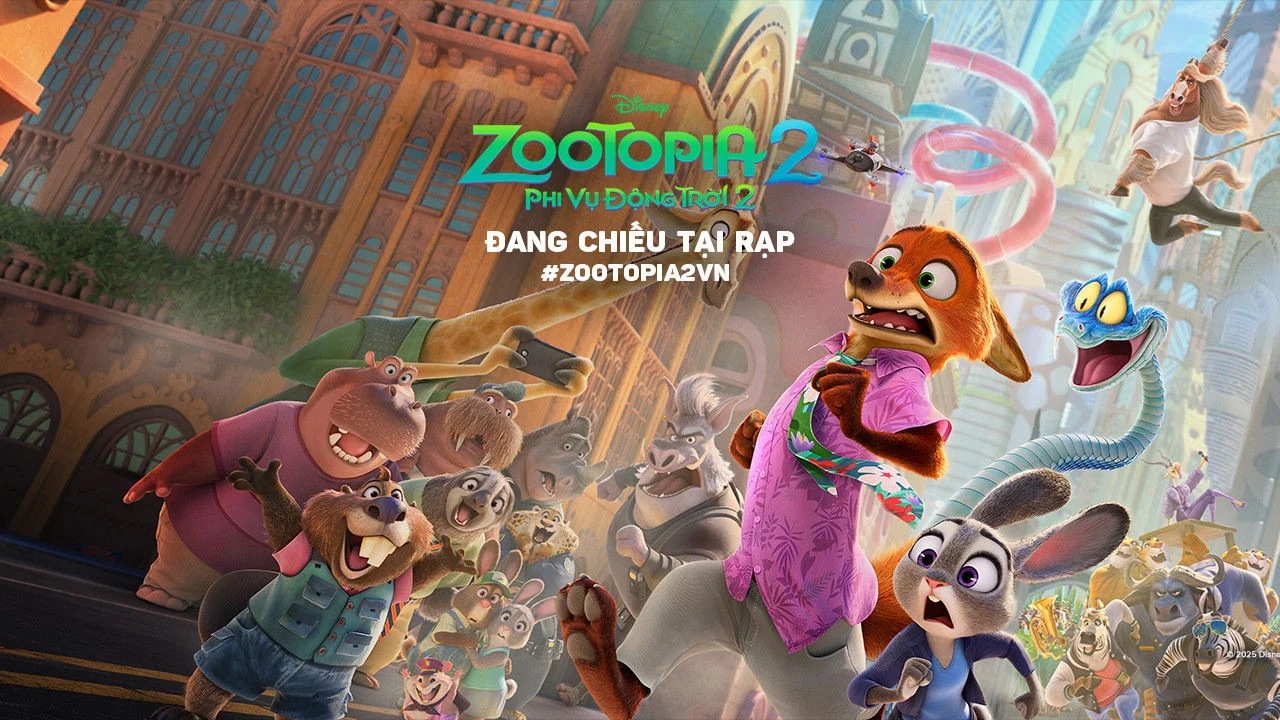
Zootopia 2 (2025) Movie ft. Ginnifer, Jason, and Ke
Zootopia 2 (2025) brings Judy Hopps and Nick Wilde back as full‑time detective partners, but this time the city they’re trying to protect literally changes shape under their feet. Ginnifer Goodwin and Jason Bateman reprise their roles, joined by Ke Huy Quan as Gary De’Snake, a smooth‑talking reptile whose arrival forces Zootopia to confront parts of its history it has carefully hidden.
On the surface, it’s another colourful mystery with chases, puns and crowd‑pleasing gags. Underneath, the sequel digs into how whole communities can be designed out of a city, and what it takes to bring them back into the picture.
Story, setting and new characters
The new case starts with something small: odd break‑ins near the city’s weather walls and a string of pranks that shut down key districts at peak hours. Judy and Nick follow the clues into Marsh Market, a foggy, half‑forgotten corner of Zootopia where reptiles have been living in the shadows, making do with leftovers from the rest of the city.
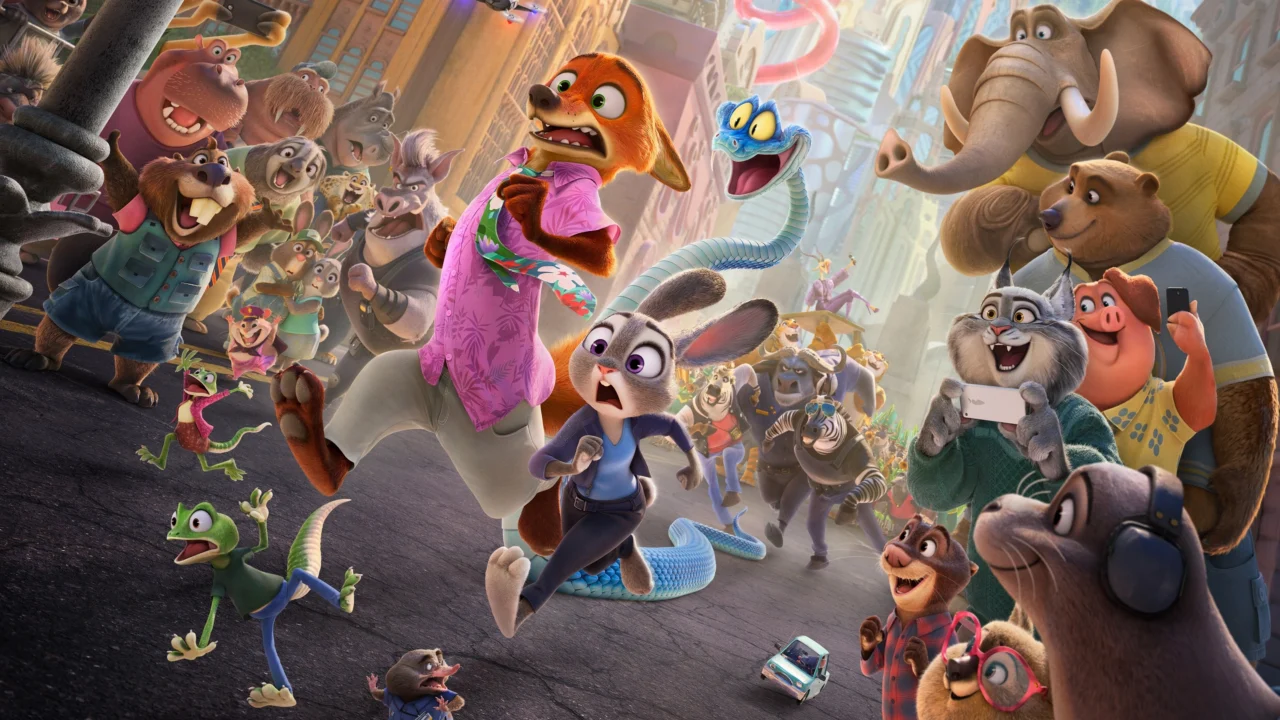
Gary De’Snake is at the centre of this hidden world , charming, sarcastic, clearly up to something, but also furious about what was done to his people generations ago. As Judy and Nick chase him across districts old and newly revealed, they discover that the official story of how Zootopia was built leaves entire species out of the record.
The plot keeps moving between big set‑pieces , a sabotaged sky‑tram, a gala gone sideways, a heist inside the city planning office , and smaller conversations about who gets to live where, who gets stopped by security more often and why some animals are always labelled “dangerous” first.
Voice performances and character arcs
Ginnifer Goodwin once again anchors Judy with that mix of optimism and stubbornness, but this time the character is forced to sit with the limits of “work hard and be nice” when the system itself is tilted. Her confusion and guilt when she realises the police and planners never even logged reptile complaints feel honest and uncomfortable.
Jason Bateman’s Nick leans into his con‑fox instincts more than in the first film. He knows what it means to grow up as the punchline in other animals’ stories, so his sympathy for Gary and the reptiles is more instinctive. That tension , Judy clinging to institutional trust, Nick seeing the cracks , gives their partnership a new, sharper edge.
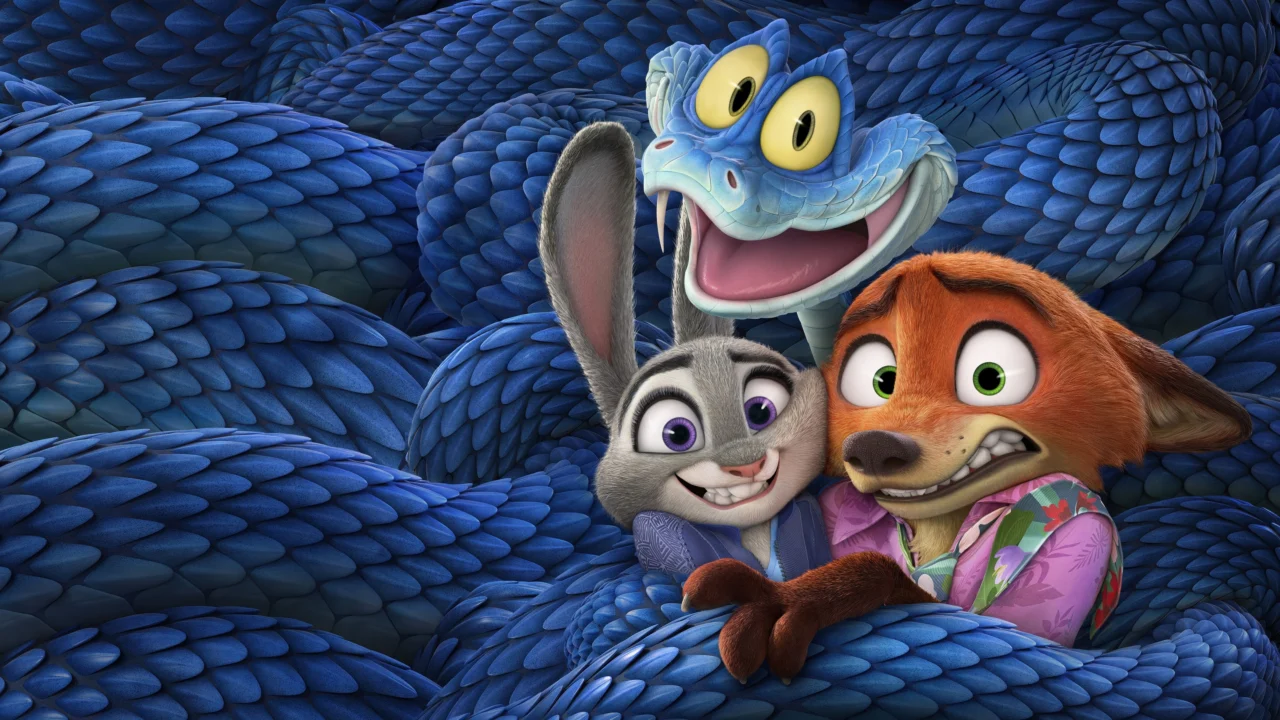
Ke Huy Quan’s Gary glides through the film as both chaos agent and truth‑bomb machine. He’s not written as a straight villain; his stunts cause damage, but his anger has a clear root. Quan’s voice gives him warmth and bite at the same time, so you’re never fully sure which side he’ll end up on.
Direction, animation and humour
Visually, Zootopia 2 doubles down on what the first film did well and then pushes into new textures. Marsh Market is damp, neon‑lit and packed with small details , heat lamps, mist fans, makeshift homes under pipes. New sub‑districts built for cold‑blooded residents contrast sharply with the older, mammal‑centric zones.
The animation team clearly had fun with reptile movement: sliding across ice in Tundratown, coiling into tiny spaces on the metro, sunning on billboards. Action sequences are fluid and readable, especially a mid‑film pursuit through construction sites meant for an upcoming “luxury expansion.”
Humour-wise, the film is busy. There are background gags, signboard puns, running jokes about city bureaucracy and self‑aware nudges at Disney’s own theme‑park style planning. Not every gag lands, but the overall density keeps kids entertained even when the plot takes heavier turns.
Themes and emotional beats
Where Zootopia 2 really scores is in how it frames its big ideas. It doesn’t just say “don’t be prejudiced” again; it shows how prejudice gets baked into maps, laws and train routes. Reptiles aren’t banned outright; they’re pushed to the edges, given fewer exits, less shade, worse transport , and then blamed for not fitting in.
Judy’s journey is about learning that “we treat everyone equally” doesn’t mean much if the starting line is already skewed. Nick’s arc is about deciding whether he can keep trusting a city that keeps proving his childhood fears right. Their arguments at a support group called Partners in Crisis, run by an overly enthusiastic therapist, provide some of the film’s most honest and funniest moments.
The emotional payoff comes less from exposing a mastermind and more from forcing the city , and its leaders , to publicly admit what was done and what needs to change, while still leaving space for individual accountability and second chances.
What works and what doesn’t
On the plus side, the sequel:
- Gives Judy and Nick a real relational conflict that doesn’t feel forced.
- Uses Gary and the reptile community to expand the world in a meaningful, story‑driven way.
- Manages to stay bright, funny and accessible for kids while talking about urban planning, displacement and erased history in ways adults will catch.
On the downside:
- The plot juggles a lot – heists, history, therapy sessions, city council politics – and occasionally feels crowded.
- Some side characters (including a few returning faces) pop in mainly for nostalgia, without adding much to this specific story.
- The final act leans on a familiar “race against time to stop a city‑wide disaster,” which is executed well but not wildly original.
Overall verdict
Zootopia 2 (2025) doesn’t match the shock of discovery of the first film, but it smartly builds on that foundation instead of just repeating it. It widens the map, deepens Judy and Nick’s bond, and uses a snarky snake to push the franchise into bolder, more specific territory.
For families, it’s a lively, joke‑packed adventure with heart. For older viewers, it’s a surprisingly sharp look at who cities are built for , and what it takes to redraw those lines.
Rating: 4.1/5