
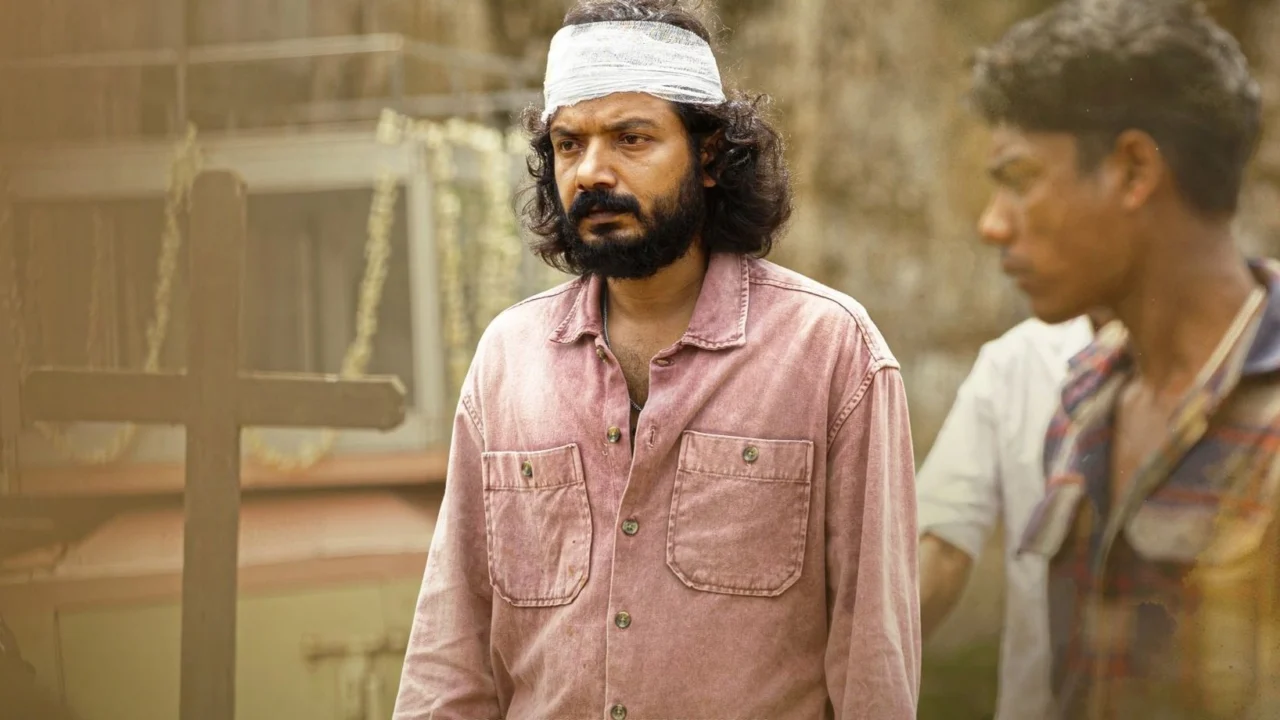
Pongala (2025) Movie ft. Bibin, Baburaj, and Sreenath
Pongala (2025) is a bruising Malayalam harbour drama that puts friendship, ego and revenge into the same, crowded fish market lane and lets everything explode. A.B. Binil sets the story in Vypin’s coastal belt, with Bibin George, Baburaj and Sreenath Bhasi woven into a world of workers, small‑time gangsters and old wounds that never quite healed.
The film doesn’t pretend to be sleek. It smells of fish, diesel, cheap liquor and sweat, and it uses that rawness as its main weapon. Underneath the flying fists and knives, Pongala keeps asking one simple question: when loyalty gets traded for a little power, what’s left to fight for?
Story, place and conflicts
The story revolves around Abhi (Sreenath Bhasi), a harbour regular who grew up among ice boxes and auction shouts, and now handles the “tough jobs” for local fish contractor Sabu (Baburaj). They share a complicated bond: part boss, right‑hand, part older, younger brother.
When a late‑night deal at the harbour goes sideways and a body washes up where it shouldn’t, pressure comes from all sides , cops, rival gangs, and politicians who use the harbour as their pocket ATM. To protect business, Sabu chooses a version of events that quietly throws Abhi and his friends under the bus. That single decision takes the film from rough camaraderie to full‑blown war.
Binil keeps the stakes grounded: no global cartels, no skyscraper offices, just a cluster of coastal lanes where every betrayal is visible and every grudge has a face you see daily.
Performances and characters
Sreenath plays Abhi like a tightly wound spring. He isn’t a loudmouth; he’s the guy who observes first, hits later. The character carries childhood damage he never shares, and that bottled‑up hurt leaks out in sudden bursts of violence. When he finally turns his anger on people he once called family, it feels inevitable rather than heroic.
Baburaj’s Sabu is classic harbour muscle turned businessman. He’s charming when deals are smooth, vicious when anyone questions his authority. Instead of playing him as a cartoon villain, the film lets you see his fear , of losing control, of being replaced by younger thugs, of being exposed. That makes his clashes with Abhi more than just “hero vs villain.”
Bibin steps in as Thommi, a loud, funny sidekick who gradually realises he’s standing on a fault line. His humour brings relief in the first half, but once the screws tighten, he has to choose between survival and solidarity. Those choices give his character more weight than the typical “comedy friend.”
Direction, craft and mood
Binil shoots the harbour as both living space and pressure cooker. Daytime scenes are crowded with people, stalls and movement; nights feel dangerous, lit by bare bulbs and street glow, with the sea always rumbling somewhere off‑screen.
The action is gritty and close‑quarters. Most fights break out in cramped alleys, between stacked crates, inside auction sheds , no stylised wire work, just messy, bruising hits. At times the violence feels relentless, which matches the film’s headspace even when it risks fatigue.
The soundscape leans heavily on ambient noise , auction calls, truck engines, shouting , with Ranjin Raj’s score punching in mainly during confrontations and emotional peaks. Songs stay within the world: bar tracks, local celebrations, and a single romantic number that’s intentionally rough around the edges.
What works
- The coastal atmosphere feels authentic: the routines, slang, clothing and small rituals of harbour life ground the film.
- Abhi’s shift from loyal worker to man on a mission isn’t rushed; you see every small cut that pushes him over.
- Sabu is a credible antagonist because his selfish choices always come coated in “practical” logic – the way real betrayals often do.
- The film doesn’t glorify crime; it shows how every “win” in this world comes with a loss someone has to bleed for.
Where it falls short
Pongala leans heavily on familiar revenge beats. Once the big betrayal happens, you can broadly see where many scenes are headed , confrontations, ambushes, emotional funerals, and a blood‑soaked climax. Execution keeps you engaged, but the skeleton is conventional.
The cast is crowded. There are uncles, side gangs, politicians, cops, love interests and family members, and not all of them get the time they need. A few subplots, especially around romance and comic relief, feel like they were added to tick genre boxes rather than deepen the story.
Tonal shifts can be jarring. Jokes occasionally undercut tension, and some emotional scenes don’t get enough breathing space before the next outburst of violence.
Emotional impact and audience appeal
Despite its rough edges, Pongala hits a nerve whenever it focuses on class and trust. Watching harbour workers pushed around by everyone with a uniform or a little money, then finally punching back, has a raw, cathartic energy.
This is very much a theatre film for viewers who enjoy regional crime dramas with strong local flavour and raw performances. If you’re fine with some predictability and want atmosphere and intensity over polished subtlety, Pongala delivers enough to be worth the trip.
Overall verdict
Pongala (2025) is an uneven but gripping coastal action drama that rides on Sreenath Bhasi’s simmering presence, Baburaj’s solid menace and a convincingly lived‑in harbour world. It doesn’t reinvent the revenge genre, yet its textures, setting and performances give it a distinct identity.
For fans of Malayalam crime stories rooted in real places and messy relationships, it’s a rough, noisy, but engaging watch.
Rating: 3.4/5