Drones (2026): Dravid Selvam Anchors A Madcap Fantasy That Loses Its Own Thread
Somewhere inside R. Raghav Mirdath’s Drones, a genuinely interesting movie is trapped beneath a pile of competing eccentricities. The film wants to be a witchy horror-comedy, a science-fiction lark, a romantic triangle, and a pointed essay on beauty standards all at once, and only intermittently earns the right to be all four.
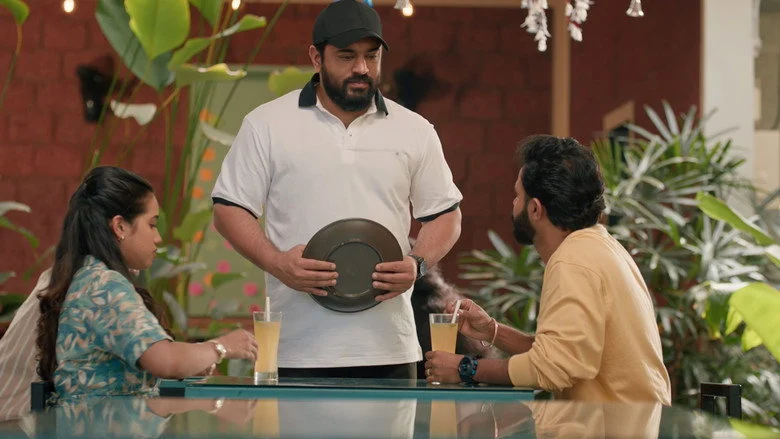
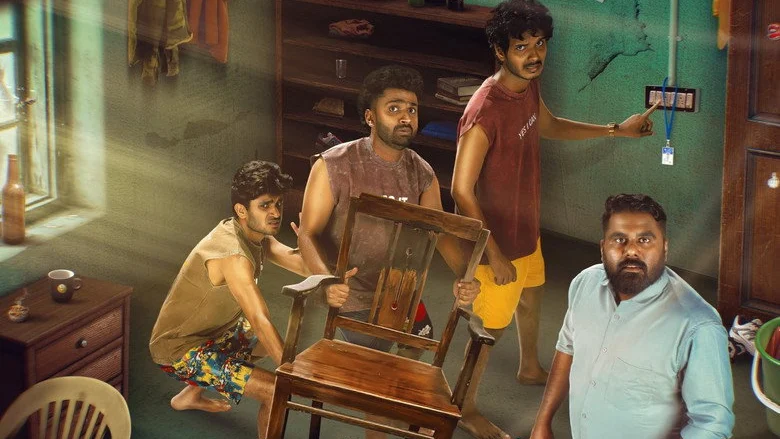
It opens with real promise. Three suspended students, Kish, Rush, and Dush, take refuge inside an eccentric scientist’s locked-down house nicknamed the “Black Hole, ” and before long Kish has hijacked the household drone, Sampangi, to spy on a mysterious mansion across town.
The Drone As Narrative Trojan Horse Is The Film’s Cleanest Idea
What Mirdath understands, at least in the opening stretch, is that surveillance is a comic engine. Sampangi hovers over the old mansion and finds Prakruthi, a miniature artist whose face stops men mid-sentence, and the film’s central mechanism clicks into place: technology as voyeurism, curiosity as trespass.
The spatial architecture is genuinely considered. The “Black Hole” is a sealed scientific box full of absurd experiments, while Prakruthi’s mansion is a storybook haunt of dolls and dust, two opposing worlds bridged only by a lens. That contrast gives the film a visual logic that many Tamil fantasy entertainers simply don’t bother to construct.
It is the same instinct for controlled space that distinguished the quieter theatrical textures of Poniiy, though Mirdath’s version of discipline collapses the moment his plot multiplies.
An Eccentric Who’s Who That Slowly Stops Moving Forward
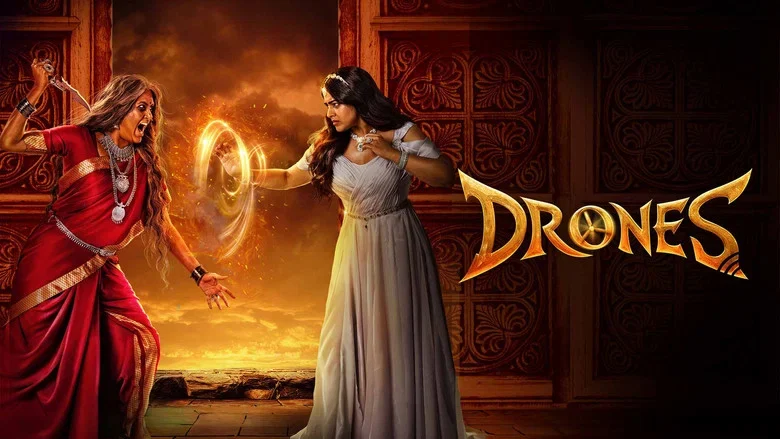
The trouble begins when the film mistakes accumulation for escalation. Padmanaban, the scientist, is building a made-to-order girlfriend. The Inspector is a forty-year-old bachelor cursed by a palmist’s warning that any woman he sincerely tells “I love you” will die. The witch, played with real comic menace by Devadarshini, transforms admiring men into dolls.
Each of these is a fine idea in isolation. Stacked together, they become a waiting room of premises with no clear door out, a structural failure the screenplay never quite corrects once the middle hour begins to sag.
The repeated courtship ritual, poems, dolls, rings, and promises to love Prakruthi even when her hair turns white, is the film’s signature gag. It works once, twice, maybe three times. By the fifth iteration, the joke has become the film’s own thesis statement about repetition, which is either very clever or not clever at all.
Anjali Nair’s Rush Is The Only Character Who Actually Argues
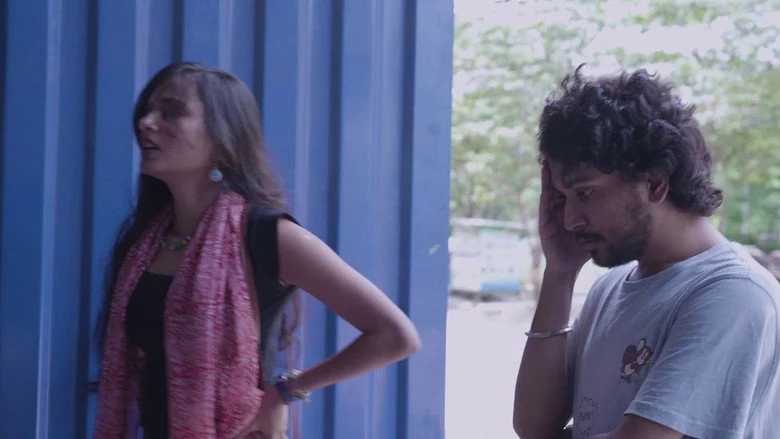
Buried inside all this machinery is Rush, played by Anjali Nair with a quiet, watchful hurt that the film doesn’t always know what to do with. She has loved Kish for years while he stares past her at a woman he has only seen through a drone camera. The performance is all sidelong glances and half-finished sentences, and it is the strongest thing in the movie.
Her confrontation with the witch is where Drones finally stops joking and says something. Rush tells her, plainly, that society’s narrow definition of beauty causes real damage, and the film’s horror premise suddenly snaps into focus. The witch is not the villain. The gaze is.
That scene lands because Nair plays it without pleading. She doesn’t beg, doesn’t cry, doesn’t perform the speech. She just states it, and the film briefly becomes the movie it promised to be.
Dravid Selvam Carries The Comedy, But Not Quite The Blindness
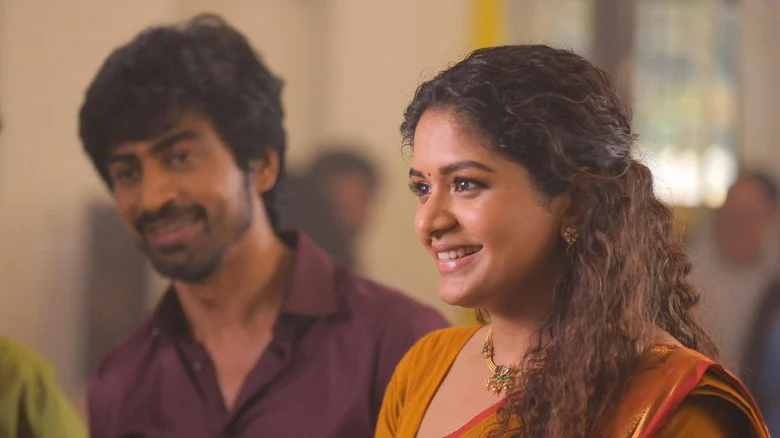
Dravid Selvam’s Kish is the film’s anchor, and he is likable in the way student-group leads tend to be. He does the wide-eyed curiosity, the drone-hijacking mischief, and the sheepish romantic obliviousness with an easy comic rhythm. What he doesn’t quite locate is the uglier edge of Kish’s fixation, the fact that his attraction to Prakruthi is, structurally, the same sin the witch is punishing in every other man.
The screenplay lets him off the hook too gently. Where his sister turn in Once More leaned into emotional self-deception with real weight, here Selvam is asked to play the same blindness as a harmless quirk. The film’s argument would cut deeper if it cut him.
Siddhi Idnani’s Prakruthi is the film’s most undernourished creation. She is asked mostly to appear luminous in soft light and to be looked at, which is the point of the satire, but the screenplay never gives her a moment of interiority that would make the satire land as tragedy rather than concept.
Mirdath’s Direction Finds Rhythm In Props, Not People
What Mirdath does well is stage a joke physically. The poems, the dolls, the rings, these are handled as recurring visual props rather than dialogue gags, which gives the comedy a staged, theatrical quality that suits the storybook world. Devadarshini’s witch works because she plays both registers simultaneously: she is genuinely unsettling in the shadows and genuinely funny in the light.
What the direction doesn’t solve is the middle stretch. Once the Inspector, the witch, the scientist, the sleepwalking student, and the romantic triangle are all in play, the film loses its sense of where it is going. Scenes begin to feel like they’re waiting for permission to end.
The genre blend is more coherent than the marketing suggests. Horror, fantasy, science fiction, and social satire do share a common spine here, the film’s refusal to separate the supernatural from the social. The problem is not thematic confusion. It is pacing.
Where The Fantasy Sits Against Its Genre Peers
Compared to the broader contemporary Tamil horror-comedy wave, Drones is more ambitious in theme and less disciplined in structure. The genre sibling energy of Maharaja Hostel is instructive, that film also built a haunted-house premise and then forgot to keep haunting it. Mirdath at least remembers what his witch is for.
The film’s real achievement is that it makes a beauty-standard argument inside a witch-and-drone comedy without ever stopping to lecture. Rush’s speech works because it arrives as a character beat, not a thesis. That is harder to pull off than the film’s messier stretches suggest.
It also signals a welcome willingness across contemporary Tamil horrors to smuggle social critique into crowd-pleasing genre frames, a trend worth watching even when the execution wobbles.
GM Morgan Films Has A Modest, Risky Bet On Its Hands
GM Morgan Films is producing at a scale that doesn’t allow for much error, and Drones is a strange commercial proposition: a UA13+ fantasy horror-comedy with a beauty-standards thesis, a drone, a witch, and a scientist building a girlfriend. It is not a mass film, not a family film, and not quite an arthouse film either.
For Dravid Selvam, this is a pivotal test of theatrical leverage. He has the likability to carry a mid-budget entertainer, but the film’s structural looseness means word-of-mouth will depend heavily on how forgiving audiences are toward repetition. The advance-booking window suggests curiosity; whether that converts into sustained footfalls depends on the film finding viewers who enjoy its eccentricity rather than enduring it.
The remake-and-remix pipeline has been kinder to tighter high-concept films this year. Drones is original IP, which is to its credit, but originality without structural control is a harder sell in a crowded exhibition market.
A Film That Argues With Itself And Occasionally Wins
The most interesting thing about Drones is that its messiness is not accidental. The film genuinely wants to be about the damage caused by reducing women to visual ideals, and it genuinely wants to be a witch comedy about dolls and drones. Those two impulses don’t fully reconcile, but the friction between them produces a handful of scenes, Rush’s confrontation, the drone’s first discovery, Devadarshini’s double register, that are more memorable than most polished entertainers manage.
What it lacks is the courage to make Kish complicit. The film’s most radical version would have let its hero realize that his love for Prakruthi was the exact crime the witch was punishing. Instead, it lets him off with a shrug and hands the moral weight to Rush, who was already carrying more than her share.
Still, there is something worth respecting in a film this determined to be strange. It doesn’t always work. But when it does, when the drone hovers over the mansion and the whole absurd machine briefly clicks, you can see the movie Mirdath was reaching for, and it is a better one than the film he delivered. That gap is the review.