VISA – Vintara Saradaga (2026): Vintara Saradaga (2026): Ashok Galla & Udbhav’s Debut + A Promising But Unverified Coming-of-Age Gamble
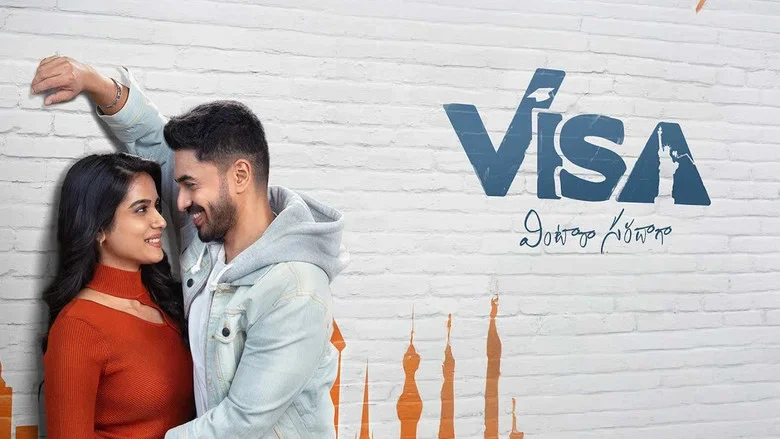
Udbhav Raghu’s debut opens on a young Indian student in America, microphone in hand, narrating the small comedies of a life lived out of a suitcase. The premise has the shape of something intimate: a coming-of-age romance filtered through the bureaucratic anxiety of a visa, a dream, and a return date nobody can guarantee.
What the film is reaching for is clear. Whether it lands is a question this early theatrical window leaves uncomfortably open, and that uncertainty is itself worth examining.
The Overseas-Student Premise Is Ripe, And Already Crowded
Telugu cinema has spent the last few years circling the same emotional territory, the student abroad, the family back home, the phone call that costs more than the data plan. Sithara Entertainments and Fortune Four Cinemas are betting that the audience still wants that story, told with a romantic-comedy lilt rather than a melodramatic wail.
The framing device matters. Making the protagonist a radio jockey gives the film a built-in narrator who can editorialise on his own life without the screenplay having to force exposition into a friend’s mouth. It is a tidy structural choice, and one that suggests Udbhav has thought about voice before spectacle.
Whether that device sustains a full runtime or collapses into a crutch is the film’s central gamble. A narrator who comments on everything can smother the very spontaneity the story needs.
Ashok Galla Carries The Frame With An Easy, Unforced Presence
Galla’s screen manner is relaxed in a way that suits the material, he listens more than he declaims, and the radio-jockey scenes ask him to hold stillness while his voice does the work. That is a harder register than it looks, and he manages the observational tone without pushing it into performance.
His chemistry with Sri Gouri Priya is the film’s most reliable asset. The romantic passages have a loose, unforced quality, closer to the energy of a good conversation than a staged duet, and the pairing carries the lighter stretches with genuine warmth.
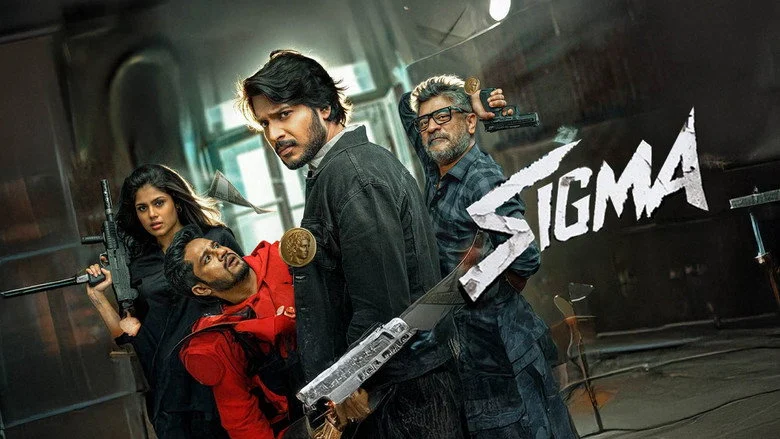
For a sense of how this kind of youthful, ensemble-driven premise can either find its footing or lose it, the tonal wobble in Drones is instructive: energy without a spine curdles fast. Galla’s charm is real, but charm alone cannot anchor a second act that needs to mean something.
Where The Ensemble Thickens, The Focus Thins
Rahul Vijay and Shivathmika Rajashekar occupy the friend-group orbit, and the film uses them the way such films usually do, as sounding boards, comic relief, and occasional mirrors for the protagonist’s choices. The comedy contingent, including Harsha Chemudu, is deployed in the familiar register of campus banter and situational awkwardness.
The problem is structural. When every friend exists to service the lead’s arc, the ensemble stops being a world and becomes a set of accessories. The film’s emotional stakes are supposed to be collective, friendship tested by distance and ambition, but the screenplay’s attention keeps drifting back to a single pair of eyes.
That imbalance is the kind of thing a sharper draft would have caught. The overseas-student story works best when the group feels like it has its own weather, not just a shared address.
The Bureaucratic Comedy Is The Film’s Sharpest Idea
Visa anxiety is inherently funny in the way that all bureaucratic comedy is funny, it is absurd, it is arbitrary, and it is completely beyond the protagonist’s control. The film’s title gestures at that absurdity, and the best stretches lean into it, treating paperwork and interviews as a kind of deadpan farce.
This is where the coming-of-age framework earns its keep. The hero is not fighting a villain; he is fighting a queue, a deadline, and the slow erosion of a plan he thought was solid. That is a more honest portrait of young adulthood than most films of this genre attempt.
The tonal risk is obvious. Push the bureaucratic comedy too hard and the romance feels weightless; push the romance too hard and the procedural texture evaporates. The film’s balancing act is its most interesting formal question, and one the theatrical cut will have to answer on its own terms.
Udbhav’s Direction Favours Warmth Over Rigour
For a debutant, Udbhav shows a confident instinct for the small gesture, a look held across a cafeteria table, the particular silence of a phone call that has gone on too long. The camera stays close and unshowy, letting faces carry the emotional load rather than cutting around them.
What the film lacks is discipline in its transitions. Scenes arrive and depart without the connective tissue that would make the episodic structure feel deliberate rather than merely loose. The romantic passages are the most controlled; the ensemble stretches are the most diffuse.
It is worth noting how a peer release handled a similar tonal challenge. The split-comedy ambitions of Comrade Kalyan show how quickly a film can lose its centre when the register shifts without warning. VISA’s warmth is its strength; its looseness is its vulnerability.
Vijai Bulganin’s music, at least in the promotional material, leans melodic and unforced, and the song sequences give the film its most visually coherent passages. The score’s restraint in the quieter scenes is a point in the film’s favour.
The Romantic Core Is The Film’s Safest Bet
Sri Gouri Priya’s presence is the film’s quiet engine. She plays the romantic interest with a grounded ease, and the scenes between her and Galla have the texture of two people genuinely figuring each other out rather than hitting marks.
The screenplay gives her less to do than it should. Her character’s own ambitions and anxieties are gestured at rather than explored, and the film’s emotional resolution depends on her choices without fully earning them. That is a familiar failure mode in this genre, and it costs the ending some of its weight.
Still, the romantic passages are where the film feels most alive. The chemistry is real, and in a coming-of-age romance, that counts for more than structural polish.
Theatrical Stakes And The Sithara Slate
Sithara Entertainments has built a reputation on youth-oriented entertainers with commercial reach, and VISA sits squarely in that lane. The production house is betting on a familiar formula, romance, comedy, overseas setting, a rising lead, and the film’s theatrical performance will test whether that formula still draws audiences without a marquee star at the top.
Ashok Galla’s box-office leverage is the variable that matters most here. Two prior films that underperformed mean this release carries a career-defining weight, and the October window offers limited protection from competing releases.
The broader exhibition market for mid-budget Telugu youth dramas has become more forgiving of modest openings but less forgiving of weak word-of-mouth. VISA’s commercial life will be decided in its first weekend, and the film’s tonal looseness is a risk in that calculation.
This is the kind of modest, character-forward project that signals where contemporary Telugu dramas are heading, towards intimacy and away from spectacle, but the transition is not always smooth.
A Debut With Warmth, And A Structure Still Finding Its Feet
VISA – Vintara Saradaga is a film that knows what it wants to feel like, warm, wry, a little wistful, and largely achieves that tone in its best moments. What it has not yet solved is how to make its ensemble feel like a world rather than a backdrop.
The result is a promising but uneven debut, carried by its lead pair and its sharpest comic idea, held back by a screenplay that mistakes looseness for naturalism. For a film about the anxiety of waiting, it could use a little more patience with its own characters.
The final image lingers longer than the plot deserves, and that is its own kind of verdict. VISA wants to be remembered as a feeling, and feelings, unlike visas, do not require approval.