Prahaar (2026): Rajkummar Rao Anchors a Disciplined Courtroom Procedural That Trusts Evidence Over Outrage
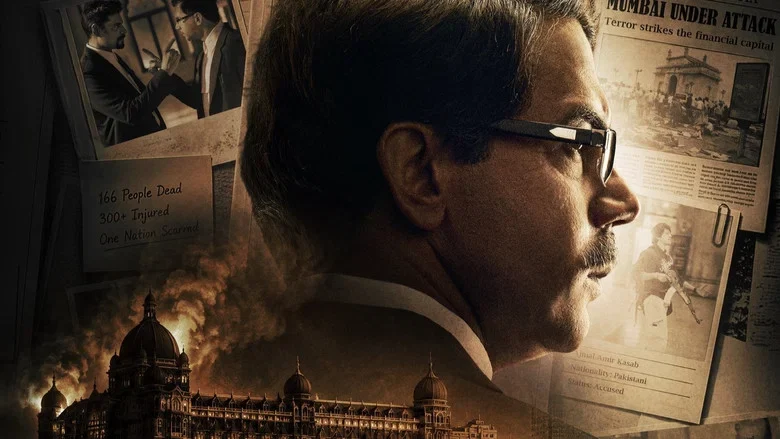
The gavel falls not on a villain but on a stack of paper. Avinash Arun’s Prahaar – The Untold Story of Ujjwal Nikam opens in the wreckage of 26/11 and refuses to leave the courtroom until the case is built, brick by procedural brick.
Rajkummar Rao plays the public prosecutor as a man who weaponizes preparation. The film’s bet is that paperwork, not pyrotechnics, can hold an audience for two hours and twenty-one minutes.
A Prosecutor Who Fights With Chargesheets, Not Fists
The first act moves swiftly from attack to capture to the cold mechanics of investigation. Nikam’s central problem is stated with unusual clarity: public rage is not admissible evidence.
His decision to file a single consolidated chargesheet becomes the film’s structural spine. It is a legal tactic, but Arun stages it like a battle plan, a room, a table, a decision that will echo through every objection that follows.
Just as a tighter spatial discipline shaped the comic tension of Nayyi Navelli, this director strips away decorative camera moves to prioritize raw psychological friction. The result is a courtroom that feels like a pressure chamber rather than a stage.
Kasab’s Denials Are the Film’s Real Antagonist
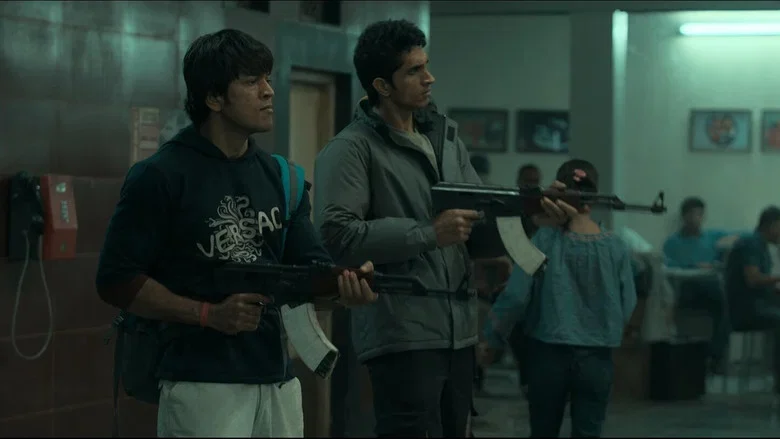
Lalit Prabhakar’s Kasab does not snarl or posture. He denies, revises, and contests, a defendant whose shifting accounts function as recurring obstacles rather than a single dramatic villain.
That choice is the screenplay’s smartest gamble. Suspense is generated not from an unknown perpetrator but from the question of whether the evidentiary chain will hold under sustained cross-examination.
Sikandar Kher, as defence counsel Qureshi, gives the adversarial structure genuine weight. He challenges the prosecution’s reading of the record without theatrics, which keeps the conflict from collapsing into a one-sided victory lap.
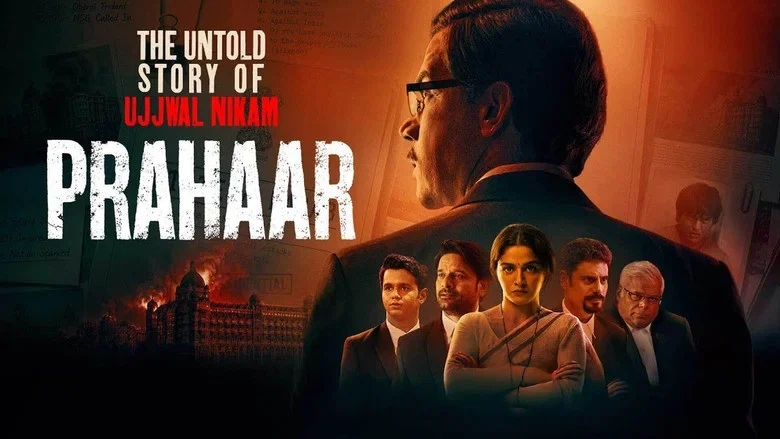
The Stillness That Manufactures Pressure
Rao’s strongest work happens in the pauses. He absorbs Kasab’s denials and the defence’s objections without raising his voice, making verbal precision the primary source of authority.
There is a moment where he simply waits for an answer he knows is coming. The camera holds on his face, and the tension comes from what he does not say.
The performance is not flawless. His accent reportedly slips toward familiar speech patterns within certain sequences, a continuity crack that interrupts the illusion of a consistent character voice.
That restraint also echoes the psychological weight carried in a sister performance from DC, where controlled interiority did the heavy lifting that dialogue could not.
The Personal Track That Never Finds Its Pulse
Wamiqa Gabbi brings a quieter, grounding presence to Nikam’s domestic life. But the material gives her almost nothing to build, no independent arc, no scene that exists outside the shadow of the trial.
Every time the film cuts away from the courtroom, the energy drops. The personal track feels like an obligation rather than a counterpoint, and Gabbi is left holding underwritten pages.
By contrast, Jaideep Ahlawat’s Nazzar leaves a sharp impression despite limited screen time, particularly in a rhetorical passage built around a Sahir Ludhianvi line that widens the conflict beyond technical evidence.
Where the Film Chooses Procedure Over Spectacle
Arun directs with an eye on faces and legal confrontation rather than action recreation. The attacks are staged with restraint, and the film’s visual and production execution reads as effective relative to its mid-budget scale.
The judge, played with institutional gravity by Aashish Vidyarthi, anchors the exchanges in formal procedure. He prevents the film from becoming only a duel between two lawyers.
What the screenplay resists is the kinetic sensationalism that overtook a certain strand of Hanuman Ansh, opting instead for a deliberate, suffocating dread built from testimony and rebuttal.
The cost is compression. Nikam’s wider career is referenced but never explored, and viewers expecting a full biographical portrait will find the narrative locked almost entirely on the Kasab trial.
Maddock’s Mid-Budget Gamble in a Franchise-Obsessed Market
Dinesh Vijan’s Maddock Films is betting on a courtroom procedural in a theatrical landscape dominated by sequels and spectacle. The economics here are unforgiving: no franchise hook, no song-driven marketing, no action set-piece to sell.
The film’s commercial viability rests almost entirely on Rao’s theatrical leverage and the residual public memory of the 26/11 case. That is a narrow runway for a mid-budget release.
If this succeeds, it signals appetite for patient, performance-led drama across contemporary hindi dramas. If it stalls, the remake-and-sequel pipeline tightens its grip further.
The Verdict: A Case Built on Evidence, Not Emotion
The ending frames Nikam’s victory as institutional justice achieved through preparation and sustained courtroom pressure. There is no cathartic revenge, only a legal record that holds.
That is the film’s philosophical consequence: mass trauma converted into admissible fact, and a prosecutor who wins by refusing to perform grief for the gallery.
It is a disciplined, occasionally airless achievement, a courtroom drama that trusts its audience to find tension in a well-built case rather than a raised fist.