Crazy Kalyanam (2026): Anupama Parameswaran Anchors a Wedding Drama That Forgets the Groom
The wedding invitation is printed before anyone asks the bride. Badrappa Gajula’s rural Telangana drama plants its flag in that single patriarchal reflex, then spends two hours and change discovering it has a daughter, not a decoration.
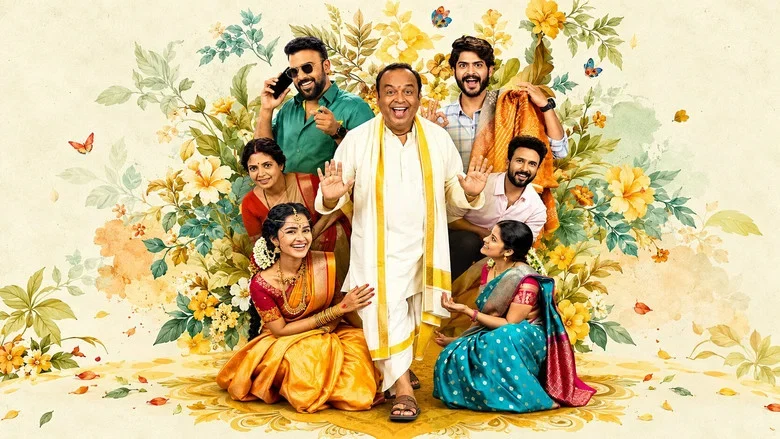
Anupama Parameswaran plays Keerthi, a young woman who wants a degree and a paycheck before a mangalsutra. Her father Parvathalu, played by V. K. Naresh, wants a respectable alliance and a loud reception. The film belongs to the collision between those two appetites.
A Father’s Reputation Is the Only Villain This Village Can Afford
There is no antagonist with a scar and a scheme here. The opposing force is a middle-aged man’s terror of what the neighbors will say, and Gajula stages that terror in domestic geography: the front verandah where guests are received, the kitchen where women negotiate, the courtyard where a drunk son-in-law makes a spectacle.
Parvathalu’s authority is not cruel. It is administrative. He redirects a marriage proposal that was meant for his elder brother’s daughter and installs it in his own house, and the film treats this as a business decision rather than a betrayal. That is the sharpest observation in the screenplay, and it arrives almost by accident.
The screenplay’s structural turn is that redirected proposal, and it is where the film finally stops clearing its throat. Everything before it is a queue of introductions. The first half hour moves at the pace of a village census, and the comedy of a drinking son-in-law cannot fully disguise the fact that the plot has not yet reported for duty.
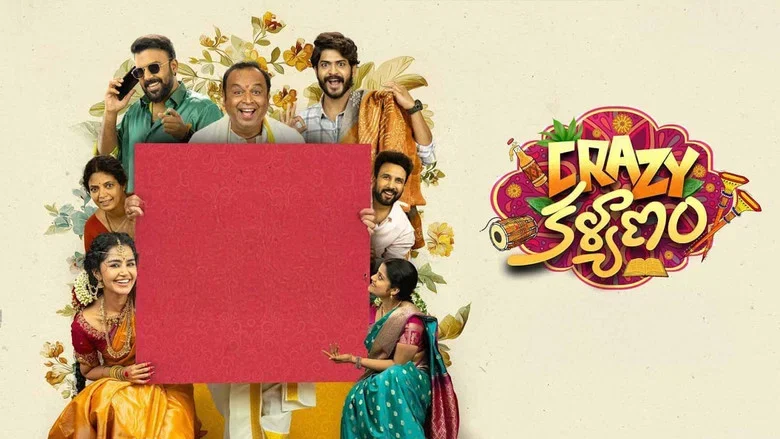
Tharun Bhascker Drinks, Stumbles, and Steals the First Half
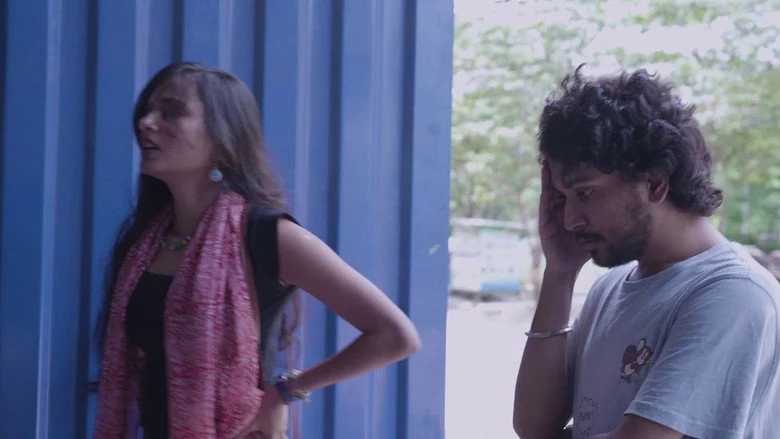
Balraju is the elder son-in-law, and Tharun Bhascker plays him as a man whose body has stopped taking instructions from his dignity. He arrives home listing, grabs at doorframes, argues with a slurred precision that is funnier than any written punchline. The performance has a physical looseness the rest of the film lacks.
His function is structural, not decorative. Every drunken return exposes the gap between Parvathalu’s public performance of honor and the disorder inside his own walls, and Gajula shoots those confrontations in tight domestic rooms where nobody can walk away. The comedy is doing the drama’s work, which is more than the romance manages.
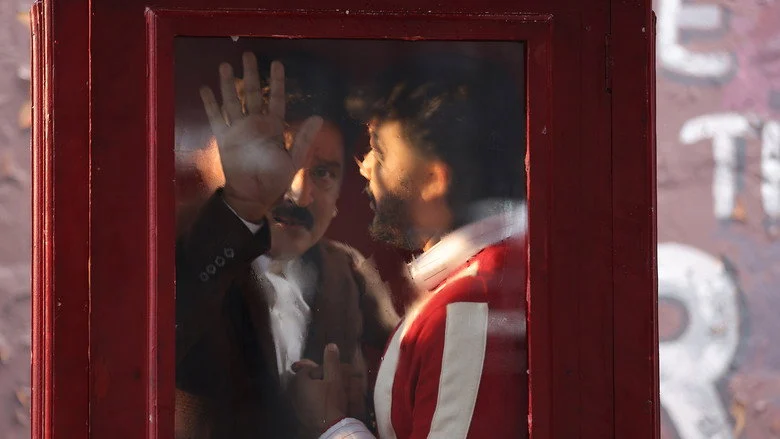
Naresh, meanwhile, holds the film’s center of gravity. There is a long confrontation scene where he does almost nothing but sit, listen, and let his jaw tighten by degrees, and the camera stays on him long enough that the silence becomes the argument. It is the one passage where the film’s theatrical staging earns its patience.
His Parvathalu is not a monster but a man who has confused financial security with love and cannot find the seam. The performance carries the entire ideological weight of the climax, which is fortunate, because the screenplay does not.
Keerthi Has a Thesis, and the Movie Has a Boyfriend Problem
Anupama Parameswaran’s Keerthi is written as a position statement rather than a person, and she plays the self-respect with a flat, steady gaze that refuses to soften for the camera. When she tells her father she wants to finish her studies, the line lands because she does not plead it. She states it.
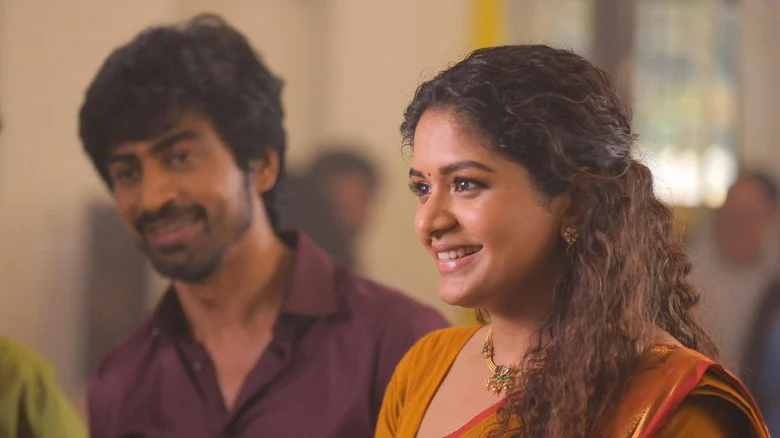
The problem is Uday. Akhil Raj Uddemari’s love interest is a plot requirement dressed as a person, and the romantic track has the emotional temperature of a formality. Every scene between the lovers is a scene the film could have spent on the father-daughter fracture, which is where the actual voltage lives.
This is the recurring weakness in the current crop of contemporary Telugu dramas: the social argument is built with care, then handed a generic romance to carry it across the finish line. The lovers here are a delivery mechanism, not a relationship.
Gajula Directs the Village Better Than He Directs the Turn
The rural texture is the film’s most reliable asset. Shyam Dupati’s frames keep the horizon low and the doorways crowded, so that family reputation feels like a physical condition rather than an abstraction, and the household always seems one guest away from collapse.
What Gajula cannot solve is the tonal handoff. The film spends its first hour as a broad domestic comedy and its second as a sincere argument about female education, and the seam between them shows. The laughter does not curdle into discomfort; it simply stops, and the audience is asked to change registers without being prepared.
The comparison to the more disciplined tonal control on display in Comrade Kalyan is instructive, because that film at least knows when it is joking and why. Here the comedy and the sermon occupy the same house and never speak.
Then there is the climax. Parvathalu’s conversion to the gospel of his daughter’s education arrives as a speech rather than a reckoning, and the film treats his change of heart as a scheduling matter. The social message is clear, correct, and dramatically unearned.
The Message Is Right, the Mechanism Is Lazy
There is a real argument buried in this film about how families spend on weddings what they refuse to spend on degrees, and the screenplay states it plainly in its final stretch. It is a worthwhile thesis. It is also a thesis delivered by decree rather than by consequence.
Parameswaran’s work in the confrontation scenes deserves better scaffolding. She plays Keerthi’s resistance as a slow accumulation of small refusals, a held gaze here, a withheld answer there, and the performance suggests a character with an interior life the script never bothers to furnish.
The romantic material in Srinivasa Mangapuram at least tested its familiar ground with some friction; here the love story is frictionless in the worst sense, a series of scenes that exist to move Keerthi from one location to another.
A Small Film Caught Between Two Bigger Releases
Produced by Boosam Jagan Mohan Reddy on a modest scale that trade estimates place near a single crore, the film has no spectacle to sell and no star vehicle to ride. Its commercial math depends entirely on family audiences in the Telugu belt turning out on word of mouth.
That math is unforgiving. Opening between two far larger regional titles leaves the film with a narrow window and no cushion, and the theatrical lifecycle for a mid-budget rural drama with a slow first act is measured in days, not weeks. The remake pipeline and the franchise economy have no room for a film that needs three days to find its engine.
Naresh remains a bankable presence in this register, and Parameswaran has a following that will follow her into a village setting. But neither name converts into the kind of opening weekend that survives a crowded calendar, and the film’s best hope is a long, quiet run in the family segment.
The Wedding Happens. The Question Doesn’t.
What lingers is not the resolution but the diagnosis. Gajula has made a film about a man who loves his daughter and has confused protecting her with owning her future, and the best scenes sit inside that confusion without rushing to resolve it.
The tragedy is that the film resolves it anyway, in a closing stretch that hands Parvathalu a lesson he should have had to fight for. A daughter’s education is not a plot twist. It is a decision, and this film decides it for him.
Crazy Kalyanam is a wedding album with one honest photograph in it. The rest is posed.