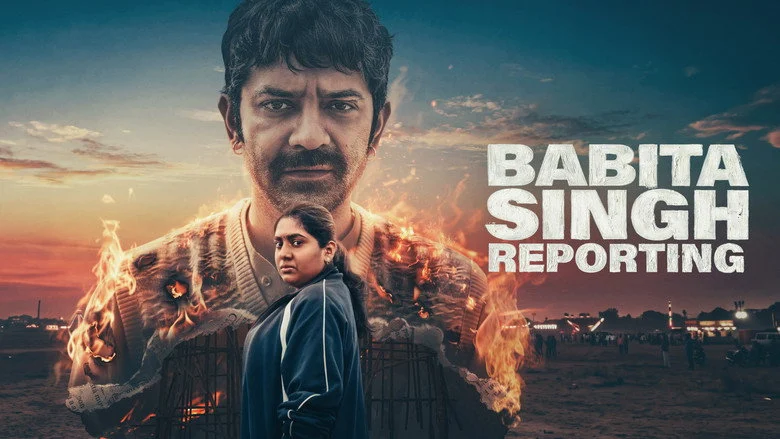
Babita Singh Reporting (2026): Nimisha Sajayan Anchors a Restrained Investigative Drama


Babita Singh Reporting opens with Nimisha Sajayan’s suspended cop walking into her in-laws’ home for the first time, a woman who has spent a lifetime putting everyone else first. The domestic unease is palpable before the murder of her childhood friend Bansi (Barun Sobti) yanks her into an investigation she was never supposed to lead.
Nimisha Sajayan’s Quiet Rebellion Carries the Film
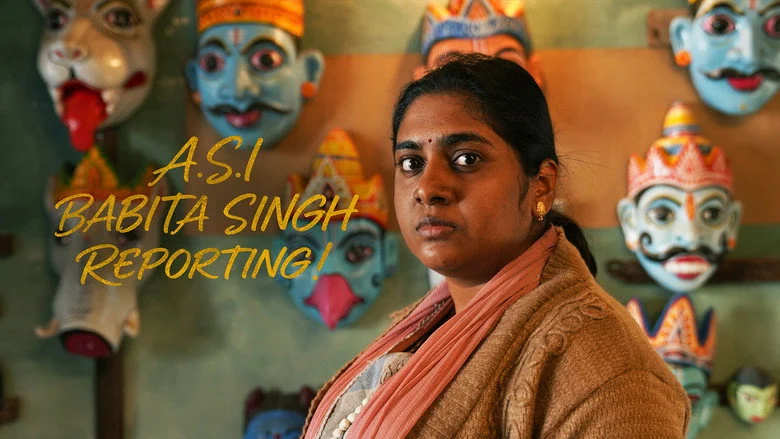
Sajayan does something rare here: she makes stillness feel like resistance. Her Babita never erupts, never grandstands, yet every restrained glance toward her husband’s family signals a woman slowly realizing her own erasure.
The performance-driven sequences, particularly where Babita balances inquiry with marital pressure, are the film’s most praised moments. She makes the character credible as an overlooked cop who gradually asserts agency without ever losing her internal softness.
Ambiecka Pandit’s Grounded Direction Meets a Linear Screenplay
Director Ambiecka Pandit maintains a tone rooted in domestic and social realism, using Bhopal and Rewa to establish a strong sense of regional place. The balance between investigative threads and family drama avoids spectacle, which suits the material’s feminist framing.
But the screenplay’s linear structure becomes a liability. Several reviews describe the second half as slow or uneven, and the tension build is so restrained that the murder mystery loses its edge.

The Investigation Feels Personal, Not Procedural
Babita Singh Reporting treats its crime as a gateway into Babita’s own awakening rather than a puzzle box. The early phase after Bansi’s murder launches the investigative arc while preserving the film’s subdued tone, a choice that distinguishes it from darker, more intricate crime dramas like Paatal Lok or Kohrra.
The domestic conflict scenes, where marriage and investigation collide, deepen the stakes beyond simple whodunit mechanics. It’s a feminist angle integrated through Babita’s personal and professional marginalization, not tacked on as commentary.
Yet the mid-film investigative passages draw criticism for being too straightforward. The film does not fully exploit its mystery premise, and viewers expecting a sharper thriller will find the pacing a challenge rather than a build-up.
Barun Sobti’s Ghost and the Supporting Ensemble
Barun Sobti plays Bansi as the emotional trigger rather than an extended present-tense role, his death anchoring the mystery that drives Babita forward. His absence is felt more than his presence, which is exactly what the structure demands.
Anshumaan Pushkar and Rajesh Kumar appear in pivotal roles within the small-town ensemble, though accessible coverage offers limited scene-specific detail. Their casting signals a deliberate grounding in familiar character actors, supporting the film’s intent to feel like a lived-in community rather than a thriller backdrop.
Audience Reception: A Class Act With a Pacing Problem
The film released on Amazon Prime Video, so box office figures don’t apply here; instead, its fate rests on streaming word-of-mouth. Audience praise centers on Sajayan’s performance, the grounded atmosphere, and the mix of domestic drama with investigation.
Complaints mirror critical reservations: slow pacing, limited narrative surprise, and investigative beats that don’t land with enough impact. I found myself wishing the film trusted its premise enough to let the suspense breathe a little harder.
For those who appreciate restrained crime dramas and female-led investigative stories, this is a worthwhile watch on OTT. But if you’re hunting for a high-twist thriller, Babita Singh Reporting will leave you checking your watch. It’s a film that earns respect more than excitement.
Babita Singh Reporting is a sincere, well-acted drama that never quite becomes the thriller it promises, and I’d rate it a fair 3 out of 5 for Sajayan’s committed work alone.
For more compelling Hindi Drama reviews, explore our extensive coverage.
Fans of Sajayan’s restrained intensity should also check out Once More review for another performance-led drama.
If you prefer sharper investigative storytelling, Beyond Ratings verdict offers a different take on genre execution.