Ranabaali (2026): Vijay Deverakonda’s Famine-Era Fury Runs Aground on Its Own Scale
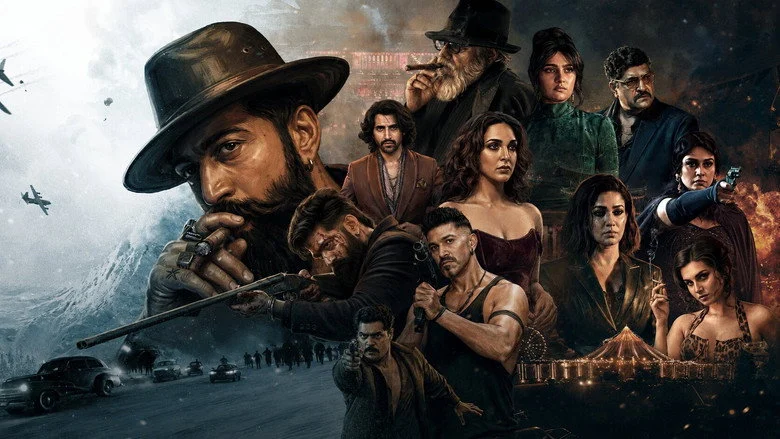
The grain sacks split open under a boot heel in the first movement of Rahul Sankrityan’s Ranabaali, and what spills out is not rice but the entire moral architecture of the Madras Famine. It is a striking image, colonial abundance weaponized into starvation, and for roughly ninety minutes, the film believes in it completely.
Then the second half arrives, and belief gives way to arithmetic.
The Famine Is the Villain, and That Is the Film’s Smartest Instinct
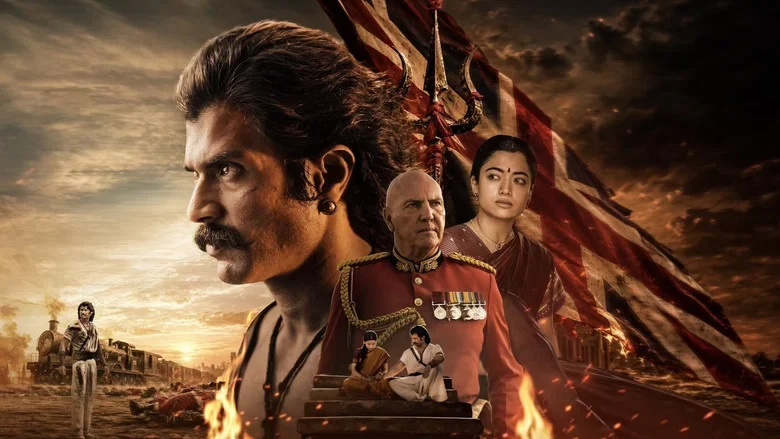
What separates this from the standard period-warrior template is where Sankrityan locates the enemy. Arnold Vosloo’s Sir Theodore Hector is not a sadist in a red coat; he is an administrator who understands that hungry people are compliant people, and the screenplay treats grain as a military asset rather than a symbol.
The raids Vijay Deverakonda’s Singanamala Bobbili Ranabaali leads are not revenge set pieces. They are logistics. When his riders intercept a colonial supply cart, the camera stays low and close, tracking the sacks being hauled off rather than the bodies being cut down, a deliberate, disciplined choice that keeps the film’s violence tethered to survival.
Just as he demonstrated a tighter spatial discipline in Jailer 2, Sankrityan here strips away decorative camera movement during the raid sequences. The result is friction rather than spectacle, and it is easily the film’s strongest sustained passage.
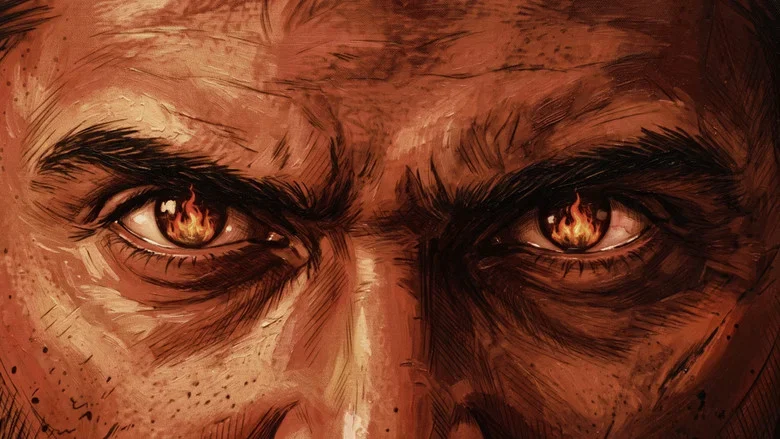
Deverakonda’s Body Does the Work His Dialogue Cannot
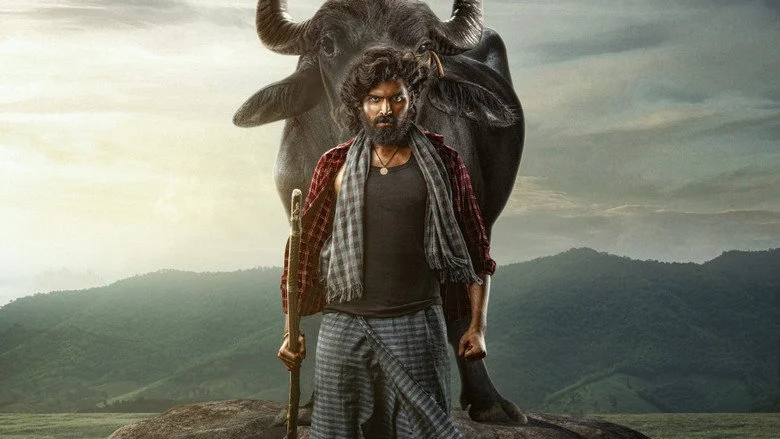
The transformation is entirely physical. Deverakonda arrives with a lowered center of gravity, shoulders rolled forward, weight settled into the heels, and he holds eye contact a beat longer than comfortable, as if measuring whether the man in front of him is worth feeding. It is a performance built on mass and stillness rather than volume.
Where it falters is in the interior register. The famine has hollowed his community out, and the screenplay keeps handing him declarative speeches about hunger instead of letting his face carry it. The restraint Rashmika Mandanna brings as Jayamma, a resistance partner who calculates before she speaks, whose hands are always busy with something practical, recalls the psychological weight of her turn in Cocktail 2, but she is given roughly a third of the screen time her character’s function demands.
Vosloo, meanwhile, is the film’s quietest asset. He never raises his voice. His Hector issues orders in the register of a man filing paperwork, and the horror lands precisely because the violence is bureaucratic rather than theatrical.
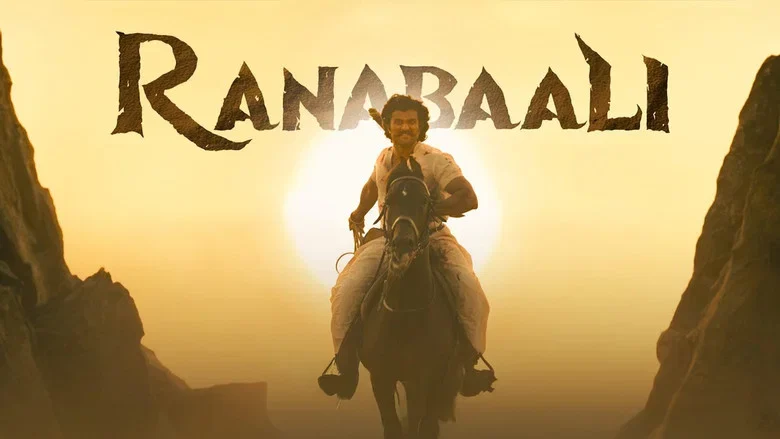
A Three-Hour Runtime That Mistakes Accumulation for Escalation
The structural problem is not length; it is repetition. By the fourth guerrilla sequence, the film has established its grammar, ambush, retreat, reprisal, and it simply runs that grammar again with larger numbers and louder score cues.
The screenplay resists the kinetic sensationalism that overtook KJQ, opting instead for a deliberate, suffocating dread in its middle stretch. That is an admirable instinct, but dread needs variation to sustain itself across 185 minutes, and Sankrityan’s editing rhythm stays stubbornly uniform through the second hour.
The romance between Ranabaali and Jayamma is the casualty. What begins as a partnership of shared political purpose dissolves into standard-issue domestic interludes that stop the momentum dead, and the film never quite recovers its footing after each one.
The Camera Knows the Land; It Doesn’t Know the People
There is real texture in the Rayalaseema frames, cracked earth, low horizons, a palette drained of green, and Sankrityan uses long lenses to compress his warriors against the landscape, making them feel like geology rather than individuals.
The cost is intimacy. When the film needs a face to break, the camera pulls back into a wide, and the emotional beat evaporates into composition. The score does the heavy lifting instead, and it does too much of it, swelling under scenes that would play better in silence.
Mythri’s Most Expensive Bet Rests on a Market That Rewards Patience
Mythri Movie Makers has positioned this as Vijay Deverakonda’s costliest production to date, and the studio’s release slate now leans heavily on period-scale Telugu action as a theatrical proposition. That is a significant wager in a market where the three-hour historical drama has become a genre of diminishing returns outside a handful of tentpoles.
The reported North American break-even target of roughly $2.2 million is a modest territory figure, but it signals the shape of the bet: a film that needs to perform across many territories rather than dominate one. Deverakonda’s theatrical leverage, meanwhile, remains the open question, his fanbase is loyal but has not yet proven it can carry a period epic on its own shoulders.
This patient, land-first approach signals a welcome tonal maturity across contemporary Telugu action, even where the execution lags behind the ambition.
The Ending Refuses Catharsis, and That May Be the Point
Without spoiling the final confrontation, the film’s closing movement understands something its middle section forgot: that famine is not defeated by a battle, only survived by a generation. The last image is not triumphant. It is tired, and it is honest about what resistance actually costs.
That honesty is the film’s residue. Ranabaali is a flawed, overlong, occasionally magnificent piece of filmmaking that mistakes endurance for depth, but when it remembers that hunger is a political weapon and not merely a backdrop, it earns its scale. It is a film about a man who fed his people, made by a filmmaker who occasionally forgets that feeding an audience requires more than volume.