Border Diaries (2026): ASG’s Borderland Drama Tests Patience Before It Pays Off
The first image that lands is dust: a Karnataka–Tamil Nadu border industrial belt where the air itself feels taxed. ASG’s film wants that grit to do the emotional work, and for a while, it nearly does.
A Border That Behaves Like A Character, Not A Backdrop
ASG opens on the geography before the people, letting the industrial corridor define the terms of every relationship that follows. It’s a deliberate choice that recalls the spatial discipline of Gajab Raat, where setting became a pressure system rather than decoration.
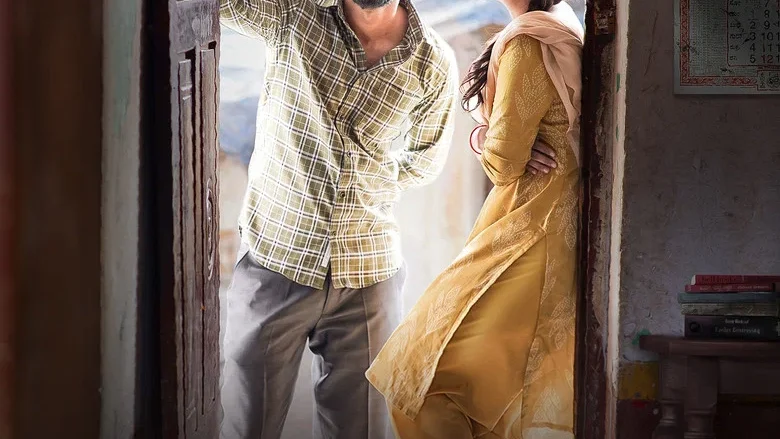
Manjula (Ashwitha R. Hegde) and Dore (Anjan Nagendra) move through this landscape with the wariness of people who know borders are negotiated daily, not just on maps. The film’s smartest instinct is refusing to treat their romance as a sealed chamber.
Instead, love is constantly interrupted by labor, language, and the quiet economics of who gets to belong. That triangulation gives the first hour a texture most Kannada romances skip entirely.
When The Crime Thread Arrives, The Romance Stiffens
The crime classification in the film’s marketing isn’t a bluff, but ASG deploys it with unusual restraint, almost too much. When the external threat finally surfaces, the film’s emotional register tightens into something more procedural than passionate.
Gopalkrishna Deshpande brings a weathered stillness to his scenes that recalls his grounded work in Bail, though here he’s given less room to maneuver. His presence alone signals institutional weight, but the script rarely lets him press down on the story.
Sharath Lohitashwa fares better in fragments, his physical bulk and low vocal register doing the work the dialogue sometimes fails to. These are actors who can hold a frame in silence, and ASG wisely lets them.
The problem is structural: the middle act keeps introducing moral pressure without letting any single confrontation fully detonate. Tension accumulates, but it doesn’t always convert.
The Stillness That Manufactures Pressure, And Sometimes Just Stalls
ASG’s camera favors medium-long holds on faces during arguments, refusing the cutaway that would release tension. In the film’s best scene, Manjula stands at a factory gate while Dore speaks off-frame, and the framing does more than any line could.
But that same patience becomes a liability elsewhere. Several sequences stretch past their dramatic usefulness, mistaking duration for depth.
The sound design leans on ambient industrial hum rather than score, a choice that works until the film needs an emotional lift it hasn’t earned. When music finally arrives, it feels like an apology.
This unevenness echoes the tonal wobble of America America 2, another Kannada drama that trusted sincerity over structure and paid for it in patches.
The Supporting World Feels Populated But Underwritten
The extended community, Veena Sundar among them, registers as lived-in without ever becoming essential. These are faces that suggest histories the screenplay never bothers to excavate.
Tabla Nani’s brief appearances carry a warmth the film could have used more of, but he’s deployed as texture rather than character. The ensemble suggests a community drama that the plot keeps forgetting to be.
What’s missing is an antagonist with a face. The crime element hovers as atmosphere rather than opposition, which drains the climax of the confrontation it’s been promising.
ASG’s Control Is Real, But The Script Doesn’t Match It
The direction shows a filmmaker who understands how to let a location breathe and how to trust actors in silence. What ASG hasn’t solved is rhythm: the film moves in long exhales without enough inhalations.
Cinematographically, the border infrastructure, checkpoints, fencing, loading yards, is shot with a documentary plainness that serves the material. But the domestic interiors lack the same specificity, flattening the contrast the film needs.
By the final act, the film has built genuine emotional residue, even if it hasn’t built momentum. That’s a strange trade-off, and not entirely a losing one.
The Commercial Math On A Border Drama Without A Clear Hook
With a 23 October 2026 theatrical slot and no verified production banner attached to its marketing, Border Diaries enters a crowded Kannada release calendar without the franchise scaffolding that usually guarantees opening weekend traction.
Ashwitha R. Hegde’s star leverage remains untested at this scale, and the film’s refusal to advertise a clear genre promise, romance, crime, or social drama?, makes its theatrical lifecycle genuinely uncertain.
The regional border-story pipeline has produced modest successes when anchored by recognizable faces and a single clean emotional hook. This film has neither, which puts its commercial sustainability squarely on word-of-mouth from the first weekend.
For a market increasingly defined by contemporary Kannada dramas that wear their specificity as a badge, that’s a risky bet, but not a foolish one.
A Film That Earns Its Ending, If Not Its Middle
What Border Diaries finally argues is that borders, geographic, emotional, economic, are maintained by daily consent, and that love is the most fragile form of crossing. The ending doesn’t resolve this so much as let it stand.
ASG has made a film of real conviction and uneven execution, one that trusts its actors and its landscape more than its screenplay. That trust is rewarded in moments, not in arcs.
It’s the kind of film that will find its audience slowly, on a second weekend, in a theater that hasn’t yet moved on. Whether that audience arrives in time is the only border that matters now.