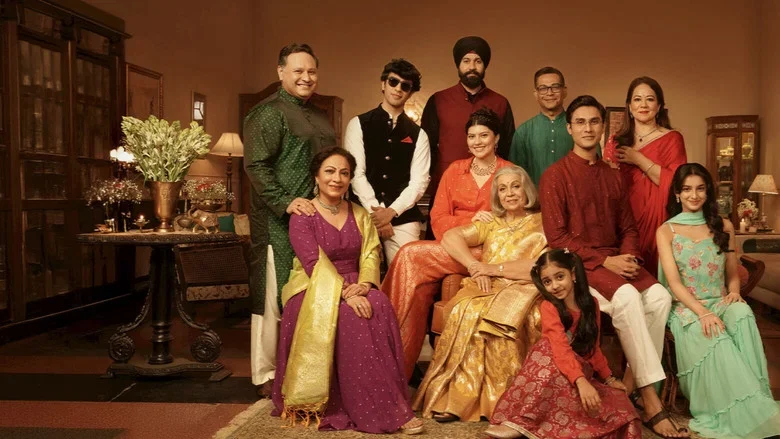
Meethe Mein Kya Hai (2026): Ritwik Bhowmik Anchors a Diwali Reunion That Mistakes Crowding for Depth
A widower comes home for Diwali, and a sister’s surprise marriage lands like a firecracker in the dal. Radhika Bansal’s direct-to-Netflix debut wants to be a chamber piece about grief and wants to be a family comedy, and never quite decides.
The Festival Table Is Set, but Nobody Brought a Knife
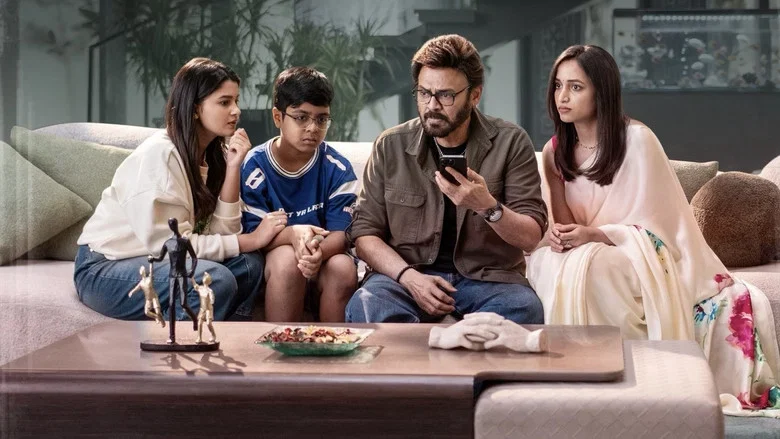
Jai (Ritwik Bhowmik) arrives at Nani’s Lucknow house carrying the specific exhaustion of a man who has been condolenced to death. The film’s smartest instinct is spatial: it traps him in a two-hour-two-minute corridor of relatives who process his loss by feeding him and talking over him.
That geography is the whole engine. A grieving man cannot mourn in a house where every room has an audience.
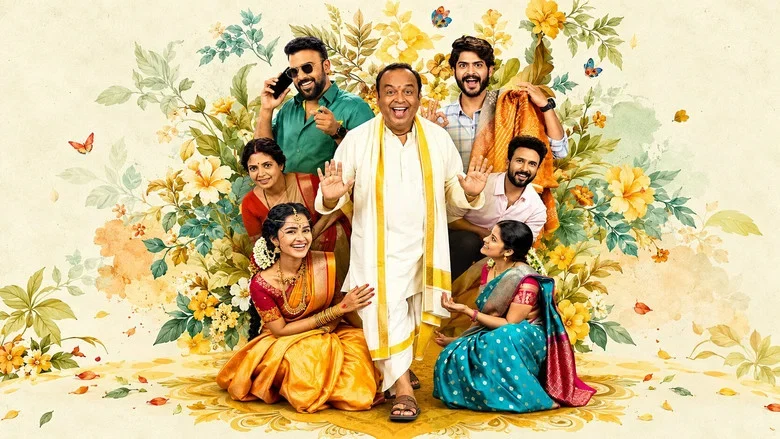
Where the screenplay could have weaponised that claustrophobia, it mostly uses it as wallpaper. The Diwali gathering supplies noise, marigolds, and a rotating cast of aunts, but the camera keeps retreating to the widest possible frame, as if terrified of getting close enough to wound.
A Surprise Marriage Should Detonate. Here It Barely Rattles the Crockery
The sister’s announcement is positioned as the film’s turning point, the moment festivity curdles into dispute. In practice it functions as a scheduling problem. Relatives react, voices rise, and then the film cuts to the next domestic set piece without letting a single accusation land.
Bansal’s direction favours a gentle observational drift, a mode that served the middling family-crime cocktail of Aadarsha Kutumbam House No about as well as it serves this one. Both films confuse a crowded room with dramatic pressure.
Secrets surface, generational grievances get aired, and none of it escalates beyond a raised eyebrow at the dinner table. The conflict is real in concept and weightless in execution.
Ritwik Bhowmik Plays the Silence, and the Silence Nearly Wins
Bhowmik’s Jai is built from withheld gestures: a hand that stops halfway to a plate, a smile that arrives a half-second late and leaves early. In the film’s best stretch, he sits at the edge of a group photograph and physically shrinks as the frame tightens around him.
That restraint is the correct choice, and it also exposes the ensemble around him. Rohini Hattangadi’s Nani commands the house with small, precise movements, a spoon tapped against a bowl, a look that ends an argument before it starts, and she is given perhaps four scenes to do it.
Ayesha Raza’s Amrita carries the film’s most sustained emotional labour, her voice dropping into a flatter register whenever the marriage topic surfaces, a woman managing a room while managing herself. The remaining relatives register as texture, not people.
The physical exhaustion Bhowmik brings to Jai’s quietest scenes recalls the psychological weight Plabita Borthakur shouldered in Doosra, where a single performer’s stillness had to compensate for a structure that kept slipping. Here the stillness is asked to do the same heavy lifting, and it can only carry so much.
Warm Light, Soft Focus, and a Score That Apologises for Every Emotion
The visual grammar is Diwali-by-numbers: string lights in shallow focus, warm tungsten interiors, group shots staged like greeting cards. It is pleasant and it is anonymous, and it never once visualises Jai’s grief as anything other than him looking out of a window.
The background score is worse than anonymous. Every time a scene approaches genuine discomfort, strings arrive to smooth it over, as though the film is embarrassed by its own premise.
Editing in the first half dawdles through introductions that could have been compressed into a single montage. The second half moves faster only because it has more plot to clear, not because the rhythm has sharpened.
Netflix Gets a Warm Family Drama and a Modest One
This is a streaming proposition by design, and the platform economics make a certain sense: a Diwali-set ensemble drama with a recognisable lead and a low spectacle ceiling is exactly the kind of title that performs respectably in the living room and would have struggled to fill a Friday multiplex.
What is at stake is not box office but positioning. Bhowmik has spent his career building credibility through performance-forward work, and this film asks him to hold a narrative that keeps handing its best moments to the production design.
For the Hindi family drama space, the lesson is familiar. Warmth is not the same as insight, and a festival is not automatically a dramatic structure.
The film’s sentimental instincts sit awkwardly beside the sharper, more disciplined approach the genre has been edging toward, the kind of grounded character work visible across contemporary hindi dramas that trust their audiences with unresolved feeling.
Grief Gets a Group Hug and Nobody Learns Anything
The resolution arrives where you expect it: Jai thaws, the family closes ranks, and the house settles into a warmth the film has been promising since the first frame. It is not unearned so much as unexamined, a reconciliation that happens because the runtime is ending.
The more interesting film is buried in the margins, in the relatives who never got to say their piece and the secrets that were raised only to be politely folded away. That film would have been harder to watch and considerably harder to forget.
What remains is a film that loves its family, forgives it instantly, and never once asks it a difficult question. Warm, watchable, and gone by the time the diyas cool.