KillR (2026): Jyothi Poorvaj’s Sci-Fi Identity Puzzle Loses Its Own Thread
Somewhere inside KillR, a woman sits in a white room and is told she is four different people. The scene should detonate. Instead it merely decorates a premise already running on fumes.
The Question That Opens The Film Is The Only Question It Has
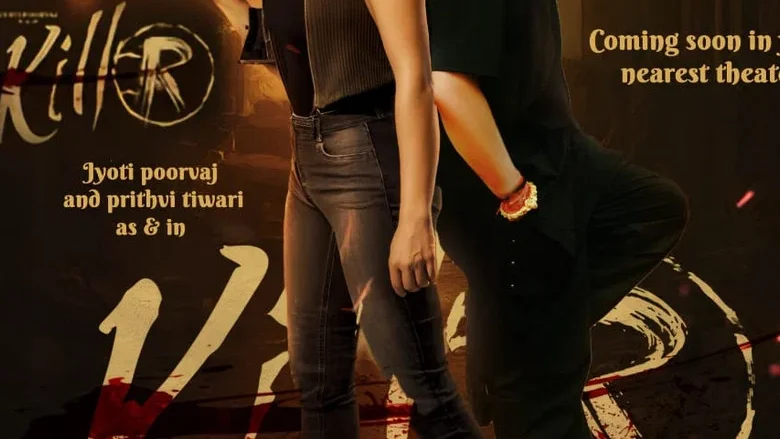
Poorvaaj’s science-fiction action thriller arrives with an unusually stark hook: a central woman who may be a terrorist, a spy, an actress, or a vampire, and possibly all four wearing the same face.
It is a genuinely arresting proposition, and the film knows it. What the film never quite decides is whether the question itself constitutes a plot, or merely a marketing strategy stretched to feature length.
Artificial intelligence is folded into the central mystery rather than parked in the background, and an AI-driven avatar is credited as one of the protagonist’s several selves. That is a promising mechanism for a genre picture.
But a mechanism is not a screenplay. The film’s own promotional framing admits the ambiguity without resolving it, and the suspicion settles early that the ambiguity may be the entire engine.
A Female Protagonist With Four Identities Needs Four Rules, Not Four Costumes
Jyothi Poorvaj is credited as Rania, Raktika, Julia, Sia, and the avatar. That is an extraordinary performance challenge, and structurally it is the film’s most interesting gamble.
The performance burden is differentiation, not continuity. She must make each apparent self legible while the audience holds the possibility that these are not separate women at all, but suppressed faces of one.
That distinction matters enormously. If the personas are separate people, the film is a twist machine. If they are one woman’s fragments, the film is a psychological study.
The material gestures toward the latter without committing to its consequences. The result is a thriller that keeps its options open so long that suspense curdles into indecision.
Where The Stillness Should Manufacture Pressure, It Manufactures Distance
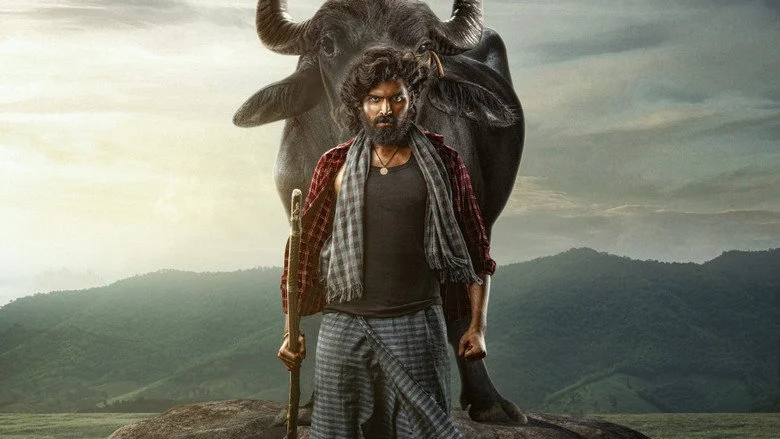
Poorvaaj, who also produces and acts here, plays Dr. Poorvaaj, a genius scientist structurally tied to the film’s experimental premise. His moral alignment stays conveniently unreadable for long stretches.
His scenes with Jyothi Poorvaj lean on stillness and physical distance rather than confrontation. She is often seated, or framed alone, while he approaches from behind or stands at the room’s edge.
The blocking wants to suggest control. It reads instead as a director-actor unwilling to place himself in genuine opposition to his own lead, and the tension never sparks.
The supporting ensemble, including Manish Gilada and Archana Ananth, registers as texture rather than function. Their characters carry no identifiable dramatic weight, and the film never asks them to.
The Camera Keeps Explaining What The Script Refuses To
There is a visual strategy built around contrasting persona presentation, and the film leans on it heavily. Costume shifts and lighting changes do the work that dialogue should be doing.
Just as the filmmaker’s approach in Pyre stripped away decorative camera moves to prioritize raw psychological friction, this film’s best instincts lie in the unglamorous middle distance.
When the camera holds on Jyothi Poorvaj’s face mid-transition, the film briefly becomes what it promised. The score by Suman Jeeva and Asheer Luke pushes hard in those moments, sometimes harder than the image can carry.
The restrained physical exhaustion she brings to the final act recalls the psychological weight of the lead turn in #Cult, where a performer’s stillness had to substitute for a coherent script.
That is a compliment with a cost attached. When performance is the only load-bearing wall, the architecture above it is visibly hollow.
The Climax Asks Us To Care About A Reality It Never Built
The final movement pushes toward confrontation with secret powers and the recovery of a suppressed reality. It is the right destination for this premise, and the film arrives there with conviction.
What it cannot supply is the accumulated weight that would make reclamation mean something. A woman reclaiming her reality only lands if we have spent two hours understanding what was taken.
The screenplay resists the kinetic sensationalism that overtook Maremma, opting instead for deliberate, often suffocating dread. That restraint is admirable in theory and enervating in practice.
By the time the identity question resolves, or declines to resolve cleanly, the audience has been asked to hold too many contradictions without enough narrative reward for the effort.
The Ledger: A Producer-Director-Star Betting On His Own High Concept
Poorvaaj carries director, producer, and actor credits simultaneously, which is the film’s most consequential commercial fact. There is no studio buffer between the concept and its execution.
That structure concentrates risk. The Telugu science-fiction space has been expanding steadily, and this film positions itself as a female-led genre entry rather than a conventional single-identity thriller.
That positioning signals a welcome tonal ambition across contemporary Telugu thrillers, even when the execution does not yet match the reach.
Without verified revenue or budget data, no trade verdict can be responsibly assigned. What can be said is that a film this dependent on a single performer’s range lives or dies on her availability and her audience pull.
The Verdict: An Ambitious Fragment That Never Becomes A Whole
KillR is a film built on a question it is unwilling to answer, performed by an actress willing to answer it four times over. That imbalance defines the entire experience.
Jyothi Poorvaj does the heaviest lifting here, and she does it without the script’s help. The film’s identity mystery is not solved so much as survived.
What lingers is not the AI, not the personas, not the climax. It is the image of one performer holding four contradictory women in her body while the film around her quietly declines to decide which one deserves the ending.