Pyre (2026): Vinod Kapri’s Mountain Elegy Tests the Limits of Patience
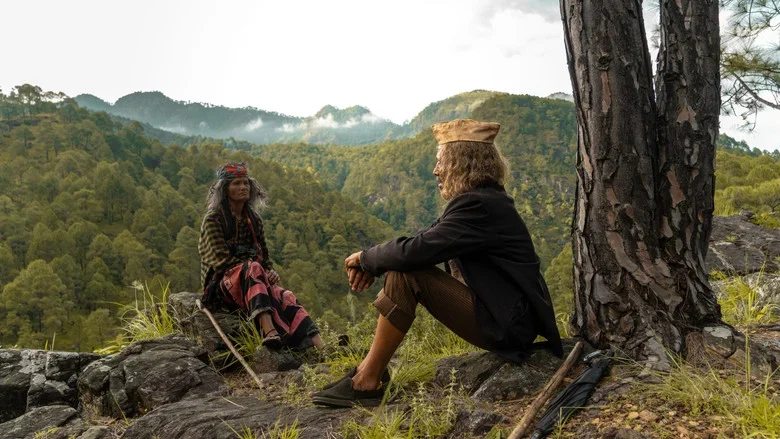
Vinod Kapri opens on a precipice, and not the metaphorical kind. An old man leads his ailing wife toward the mountain’s edge and asks her to jump with him.
She refuses. That single refusal is the entire engine of Pyre, a Kumaoni-Hindi drama that treats endurance as a daily physical chore rather than a virtue.
When Death Looks Like A Practical Solution, The Drama Has Already Begun
The film’s first act belongs to Padam, a retired soldier herding goats in a Kumaon village whose young people have all left for the plains. His wife Tulsi is failing, and the nearest hospital sits downhill, unreachable without money or a working back.
Kapri stages their despair without a single raised voice. Padam’s death wish arrives as a logistical proposal, delivered with the same flat tone he uses to discuss fodder.
It is a genuinely unnerving choice, and it establishes the film’s core tension: two people who love each other disagreeing about whether survival is worth the labor.
The Goat Trade Is The Film’s Most Honest Scene Of Love
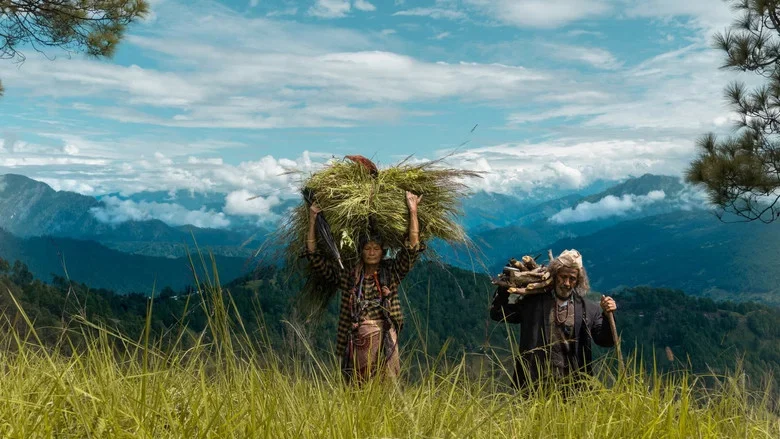
When Tulsi’s condition worsens, Padam sells his goats to finance her treatment. The transaction is shot plainly, almost bureaucratically, and that is precisely why it lands.
Love here is measured in livestock and walking distance, not declarations. Kapri understands that in a village this emptied, sacrifice has a price tag and a body count.
The middle stretch also introduces the film’s structural problem. Neighbors leave one by one, and the screenplay keeps returning to the same register of quiet hardship until repetition starts to feel like the point rather than a flaw.
That observational patience has precedent in this year’s Hindi drama landscape, though the comparative discipline of #Cult suggests Kapri could have tightened the same material without losing its stillness.
Padam Singh Kapri Performs Fatigue As A Physical Fact
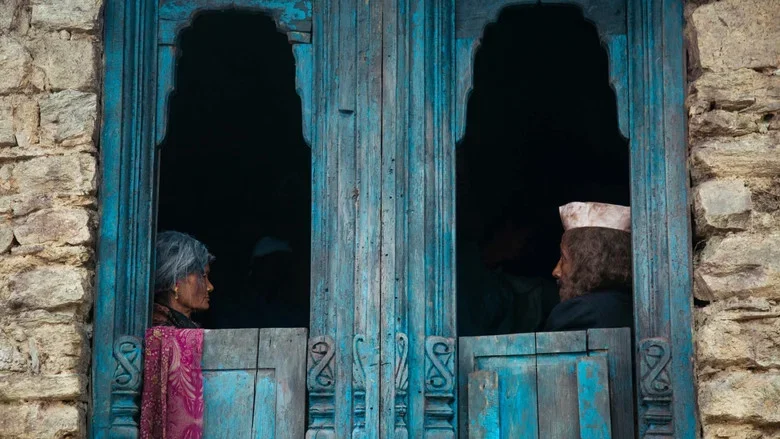
Padam Singh Kapri, an untrained performer, carries the film through posture and breath. Watch how he lowers himself onto a ledge, or how he hauls water with a hitch in his shoulder that never announces itself as acting.
His despair in the precipice scene is not a breakdown but a conclusion, reached the way a man reaches any decision after decades of calculation.
Hira Devi’s Tulsi is the necessary counterweight. She gives the character resistance rather than saintly suffering, and her refusal to die becomes the film’s quiet act of defiance.
The supporting ensemble, including Sadab Khan as Bishan, exists mainly to register the shrinking social world around the couple. Their restraint serves the film’s naturalism, though none of them are given enough screen time to become more than witnesses.
Devi’s stubborn, unsentimental presence recalls the grounded physicality that anchors Enemy Of The Smuggler, where performance carries a thin narrative frame.
The Postman’s Letter Recharges The Film, Then The Editing Lets It Drift
Midway through, a postman delivers word that the couple’s son, absent for nearly three decades in Mumbai, intends to return. The letter is a small object that reorganizes the entire emotional architecture of the film.
Suddenly the goats matter differently, the house matters differently, and the waiting acquires a deadline. It is the screenplay’s smartest pivot, introduced without a single sensational beat.
What follows, however, exposes the film’s uneven editing. The anticipation of reunion stretches across passages that repeat emotional information the performances have already delivered.
Kapri’s camera holds the Himalayan terrain with real compositional intelligence, placing two small figures against exposed rock and empty settlement. The landscape is not scenery; it is the antagonist, deciding who gets medical care and who gets visitors.
The film’s treatment of aging, migration, and the fear of dying without anyone to light a pyre shares thematic ground with the family fractures examined in Meethe Mein Kya Hai, though Kapri’s austerity is far less forgiving of its audience.
The Absent Son Is The Most Present Character In The Film
There is no villain here, and the film is better for it. The opposition is terrain, poverty, distance, and a son whose silence has become a family member in its own right.
Whether the promised return repairs anything or merely exposes the damage is the question the climax refuses to answer cleanly. That ambiguity is the film’s most mature instinct.
It also means viewers raised on reunion dramas will leave restless. The pyre of the title is not a plot device but a fear, and Kapri never lets the audience forget what it costs to die unclaimed.
A Small Release Carrying A Heavy Burden
This is not a film built for opening-weekend arithmetic. Its theatrical footprint is modest, and the reported early figures offer no reliable measure of its commercial life; the release pattern suggests a limited urban art-house run rather than a wide multiplex push.
For the producing banners behind it, the calculus is prestige over profit. A film like this earns festival traction and critical conversation, not mass footfall, and its theatrical window will likely function as a launchpad for a longer streaming afterlife.
The commercial risk is real. Star-less, slow, and set in a depopulated village, Pyre asks audiences to pay for discomfort, and the current exhibition market rarely rewards that bargain.
Yet its existence signals a welcome widening of contemporary hindi dramas, where migration and elder care can occupy the center of a theatrical release rather than the margins of a streaming sidebar.
The Verdict: A Film Of Real Integrity That Mistrusts Its Own Momentum
Pyre is a genuine achievement of performance and place, and a frustrating one of rhythm. Kapri finds moments of devastating simplicity, then asks the audience to sit inside them long past the point of discovery.
What lingers is not the pacing but the image of two old people negotiating whether to continue, and the terrible tenderness of a man who offers his wife the mountain because he has nothing else left to give her.
That image earns the film its place. It also makes the slack passages harder to forgive, because the material deserved a cut as ruthless as its protagonist’s despair.