
Sumo Didi (2026): Shriyam Bhagnani Anchors a Sincere Biopic That Rarely Finds Its Fighting Weight
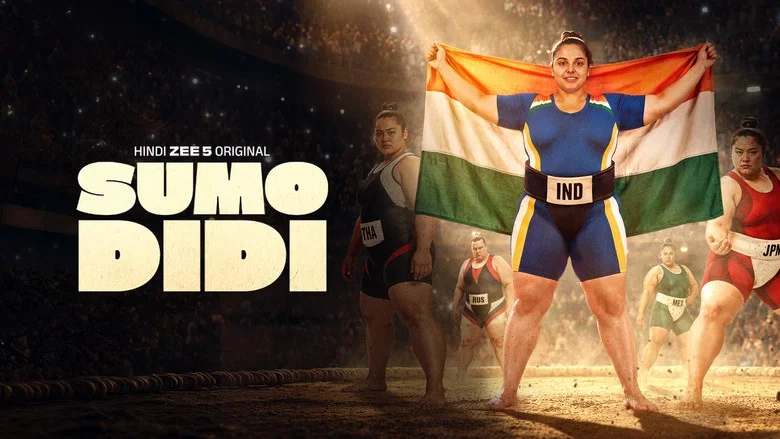
The first image is a woman winning. Hetal Dave, planted wide in a sumo ring in Taiwan, absorbs a charge and turns it into a fall, and for ninety seconds the film believes in itself completely.
Then the rewind begins, nine months and a lifetime of other people’s opinions, and Jayant Rohatgi’s Zee5 original starts the harder work of earning that victory back.
The Body as Liability, Then as Weapon: A Premise Worth the Weight
What the screenplay gets right, early and unambiguously, is the architecture of shame. Hetal’s size is treated by her household as a problem to be solved before a marriage can be arranged.
Sudha’s campaign, bitter-gourd juice at the kitchen counter, yoga instruction delivered like a correction, the word liposuction dropped into conversation as though it were a grocery item, is the film’s sharpest running gag and its cruellest one.
The pivot is elegant on paper: the same body ridiculed at the dining table becomes an athletic resource the moment a sumo grandmaster walks into her life. Rohatgi trusts that irony enough to let it carry the middle stretch.
Where a lesser film would have invented a sneering federation official, this one keeps the opposition diffuse, ridicule, matrimonial pressure, a sporting ecosystem that has no room for women’s sumo, and Hetal’s own internalised contempt for her reflection.
That structural choice is the film’s most adult instinct, and it links it to the patient, villain-free tension of Poniiy, another recent Hindi drama that locates its conflict inside a family rather than inside an antagonist.
Judo as Bridge: How the Screenplay Earns Its Sport
The judo thread is the smartest piece of engineering in Nikhil Sachan’s script. Hetal is already a state-level competitor before sumo exists as a possibility, so the sport arrives as a redirection of existing discipline, not a miracle.
The sequence that plants it is the best-constructed scene in the film: after Hetal strikes a neighbour who insults her, Rajendra does not punish the rage, he channels it into a dojo.
Nitesh Pandey plays that turn with a beautiful economy, hands in his pockets, voice flat, offering his daughter a mat instead of a lecture. It is the film’s cleanest piece of parenting on screen.
From there the training material is honest about infrastructure, or the absence of it. There is no gleaming academy, no montage of sponsorship cheques, just a woman converting judo footwork into something sumo-shaped while nobody in the country is watching.
Bhagnani’s Physical Grammar: Force in the Ring, Stillness Outside It
Shriyam Bhagnani’s transformation is the film’s commercial headline and, fortunately, its dramatic one too. She does not play Hetal as a victim who learns to fight; she plays a fighter who has been taught to apologise for her frame.
Watch her posture in the domestic scenes, shoulders rounded forward, chin tucked, taking up as little horizontal space as a woman of her build possibly can. Then watch the ring, where the same shoulders square and the chin lifts and the apology disappears.
That contrast is a physical performance choice, not a dialogue one, and it is the reason the Taiwan bookend lands at all. The restrained, weight-bearing stillness she brings to the pre-match corridor recalls the same held-breath economy Manoj Bajpayee sustains through Gajab Raat, where silence does the work dialogue is denied.
Anubha Fatehpuriya is the film’s true antagonistic force, and she plays Sudha without a trace of villainy, a mother whose fear of neighbourhood opinion has calcified into doctrine. Her finest moment is not a shouting match but a small, brisk correction at the dinner table, delivered while serving, never looking up.
Chaitanya Sharma’s Akshat, the physiotherapist who doubles as emotional ballast, is given the least interesting job in the script: he exists to say the encouraging thing at the eighty-minute mark. He is warm and entirely functional.
A Climax That Knows the Result and Forgets the Fight
Here is where the film loses its grip. The opening-match framing means the audience knows the destination from minute one, which places enormous pressure on the journey to generate suspense it structurally cannot.
Rohatgi’s direction is patient with the social drama and oddly hesitant with the sport. The bouts are shot in tight, fragmented coverage that keeps us close to Bhagnani’s face but rarely lets us read a full exchange of balance, grip and leverage.
Sumo is a sport of three-second decisions, and the film keeps cutting away from the exact instant that would make those three seconds legible. The result is competition material that feels reported rather than witnessed.
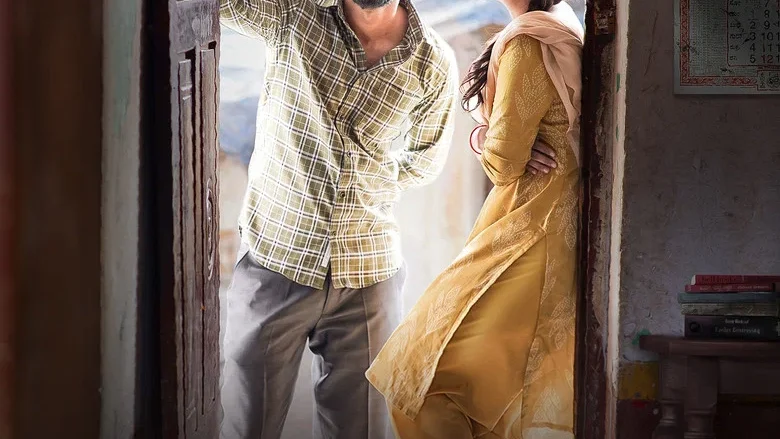
The domestic interiors, by contrast, are framed with real discipline, doorways used as borders, Hetal often boxed into the edge of the frame while her mother occupies the centre. It is a legible visual argument about who controls the household’s field of vision.
That same instinct for spatial storytelling, the willingness to let a room do the arguing, is what made the long, testing middle of Border Diaries finally pay off; here it is applied to a kitchen instead of a frontier, and it works better than the ring ever does.
Zee5’s Bet on the Unusual Athlete, and What It Costs
As a Zee5 original rather than a theatrical proposition, the film’s commercial logic is legible: a modest-budget, performance-forward sports biography aimed at the streaming audience that made women-led athletic dramas a viable category.
What is at stake for the platform is less a box-office number than a brand position, the willingness to fund stories about Indian athletes the exhibition market has never bothered to build a poster around.
That is a defensible strategy, and it is the same instinct visible across contemporary hindi dramas that have traded scale for specificity. But it also explains the film’s ceiling.
Bhagnani’s physical commitment is a genuine star-making argument, yet a streaming release denies her the one thing a sports biopic most needs: a packed house reacting to a win in real time. The film’s biggest moment plays to a living room.
The Victory That Belongs to the Woman, Not the Family
The ending resists the obvious reconciliation. Hetal’s triumph in Taiwan is framed as the arrival of a pioneer, not the healing of a household, and Sudha is not granted a tearful conversion she has not earned.
That restraint is the film’s most mature decision, and it is why the final image lingers longer than the uneven match footage deserves.
Sincere, specific, occasionally underpowered, a biography that understands its subject’s psychology better than her sport. Bhagnani wins the fight; the film around her keeps stepping out of the ring.