
Haiku (2026): Aegan’s Two-Love Study Fumbles Its Own Thesis
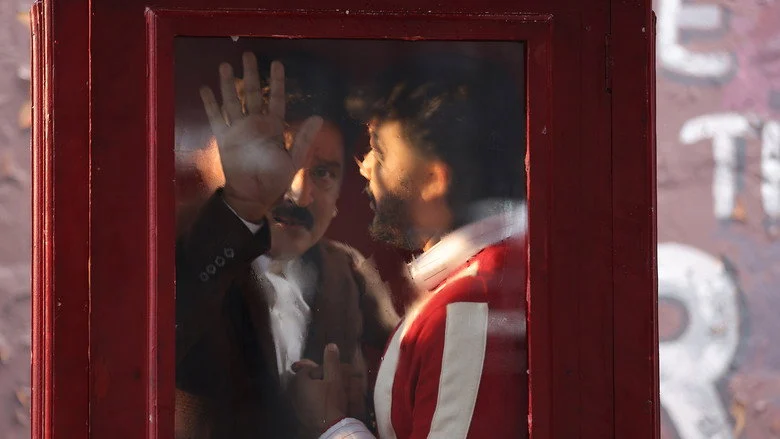
Yuvaraj Chinnasamy opens on a campus corridor where the ratio has just flipped: Arul Bodhi Girls College has gone co-educational, and Aegan’s Manohar walks in as the first male student. It is a sharp, faintly absurd image, and for a while the film believes in it.
That belief does not survive the second hour. Haiku wants to be a study of how possessiveness masquerades as devotion, and how a man might unlearn it. It has the architecture for that film. It does not have the patience to build it.
A First Love Designed To Be Lost, And A Film Too Eager To Lose It
The Kodi romance is the film’s best-constructed stretch, precisely because Sri Devi plays her as someone with a life outside Mano’s attention. She is warm, quick to laugh, and rooted in a traditional Coimbatore household that gives her spine rather than submission.
When Mano’s insecurity curdles into control, the film locates the damage in small territorial gestures rather than shouting matches. That restraint is the movie’s sharpest instinct, and Chinnasamy trusts it for roughly forty minutes before the screenplay starts explaining itself.
The engineering-to-designer pipeline, the long-distance erosion, the breakup, all of it arrives as biography rather than confrontation. We are told the relationship soured. We rarely sit inside the souring.
Three Years Later, A Second Chance Arrives With A Bruise Already On It
The jump forward deposits Mano as a senior figure in an IT firm, and Femina George’s Nivetha enters as an intern carrying the wreckage of Arul. That backstory is the film’s most interesting structural gamble, because it forces the romance to earn trust rather than assume it.
George plays Nivetha’s guardedness in her shoulders first and her sentences second, a woman who has learned to shrink her own footprint and is slowly, warily, unlearning it. Her arc carries more dramatic weight than the man ostensibly at the film’s centre.
Mano’s role here is to support her independence, which is a genuinely adult idea for a Tamil romance to stage. The problem is that the screenplay treats his reform as a premise rather than a process.
Aegan Plays Two Men, And Only One Of Them Is Fully Inhabited
The college-era Mano is the easier assignment: loose-limbed, over-eager, quick to sulk, and Aegan gets the physical grammar of a boy who mistakes intensity for intimacy. Watch how he closes distance in group scenes, always angling to be the nearest body in the frame.
The older Mano is where the performance thins. Aegan softens his voice and slows his walk, but the change reads as volume control rather than interior reconstruction, the same man, quieter, rather than a man who has genuinely reckoned with what he did to Kodi.
That gap matters because the entire third act hinges on Nivetha’s discovery of his history and her reasonable question: is this change, or a better-managed version of the same appetite? The film asks it well. It answers it with a speech.
The Confrontation The Film Needs Is The One It Keeps Deferring
When Nivetha learns about Kodi, the scene should be the film’s spine, two people in a room, one holding evidence, one holding excuses. Instead the revelation is processed quickly, and the emotional reckoning is largely narrated to us through what the characters subsequently decide.
Chinnasamy has a real instinct for the gender-reversed campus premise, and he stages the early college material with a light comic touch that never tips into caricature. The filmmaking, though, grows cautious exactly when the material demands recklessness.
The supporting ensemble around the college and the workplace registers as texture rather than character, familiar faces doing familiar work, present to populate frames rather than to complicate Mano’s self-image. The relational antagonist Arul exists almost entirely as a rumour of violence, which keeps the film tasteful and also keeps it weightless.
Where The Craft Supports The Thesis, And Where It Quietly Undermines It
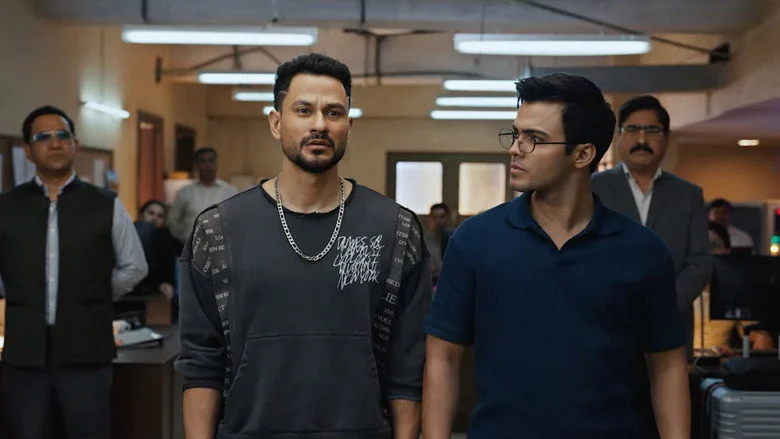
Priyesh Guruswamy’s camera favours medium frames that hold both faces in the same plane, which is the correct choice for a film about people failing to hear each other. The Coimbatore daylight is unglamorous and specific; the IT floor is fluorescent and flattened, and the contrast does real thematic work.
Siddhu Kumar’s score, by contrast, is asked to do the emotional labour the screenplay declines, swelling under scenes that have not earned the swell. Music that arrives to tell us a moment is profound is usually a confession that it isn’t.
The pacing sags most in the transition between the two relationships, where the film must convince us that three years and a broken heart produced a different man. Time jumps are cheap. Dramatised change is expensive, and Haiku keeps reaching for the cheaper option.
What it gets right is the refusal to frame reunion as the goal. The film’s quiet argument, that healing must precede romance, not follow it, is more mature than most of its genre peers, and it lands with more clarity than the execution around it deserves.
It is a thesis the movie states better than it dramatises, a gap that also hollowed out the ambition of Cuddle Café.
A Distributor’s Bet That Says More Than The Collections Do
Vision Cinema House, the Arulanandhu brothers’ banner, made an unusual wager here: Netflix reportedly picked up digital rights before the shoot wrapped, and the producers then turned down Tamil Nadu minimum-guarantee offers to self-distribute theatrically. That is a confident posture for a two-hander romance with no stars and no action.
It also means the film’s commercial exposure sits almost entirely with its makers. A campus romance with a first-time lead and a director without a proven track record is a hard theatrical sell in a market that rewards scale, and self-distribution converts a distributor’s risk into a producer’s ledger.
Aegan’s box-office leverage remains unproven at this stage, which makes the decision to bypass guaranteed money look less like conviction and more like a bet on a film that the finished cut does not fully back.
The pre-release buzz was real. The word of mouth it needed to convert that buzz is the thing Haiku cannot manufacture.
The broader market for intimate Tamil relationship dramas is healthier than it has been in years, and this film’s willingness to sit inside emotional discomfort rather than escalate into melodrama places it in a more interesting conversation than its flaws suggest.
That conversation, across contemporary Tamil dramas, is increasingly about interiority over incident, and Haiku is a flawed but sincere participant in it.
For all its structural caution, the film is trying something harder than it looks: asking a male protagonist to be judged by a woman’s memory of him.
That instinct deserves a sharper vehicle, and the comparison with a certain kind of well-intentioned misfire is hard to avoid, the same gap between concept and execution that defined Orijinal.
The Verdict: A Romance That Argues Its Way To The Right Answer
Haiku ends where it should, not with a grand reconciliation, but with the uncomfortable recognition that forgiveness is a decision the wronged party makes on their own timeline. Mano’s acceptance of accountability, rather than his demand for absolution, is the film’s one genuinely adult gesture.
Everything around that gesture is thinner than it needs to be. Aegan’s performance carries the film’s charm but not its complexity, and the screenplay keeps choosing the explanatory path over the confrontational one. The result is a movie that understands its own thesis better than it can embody it.
Still, there is something worth defending in a Tamil romance that treats a woman’s recovery from abuse as a precondition for love rather than a plot obstacle, and that lets its hero be small before it lets him be redeemed.
Haiku is three scenes away from being the film it keeps promising. The tragedy is that it knows exactly which three.