
#Cult (2026): Zaid Khan’s Broken Heart Drama Is A Test Of Patience
Anil Kumar T. M. opens on a sun-bleached village courtyard, where Madhava and Geetha share the kind of first love that feels less like a relationship and more like a shared skin.
The problem is that the film mistakes this tender prologue for depth, spending its opening act luxuriating in stolen glances without ever establishing what these two people actually want.
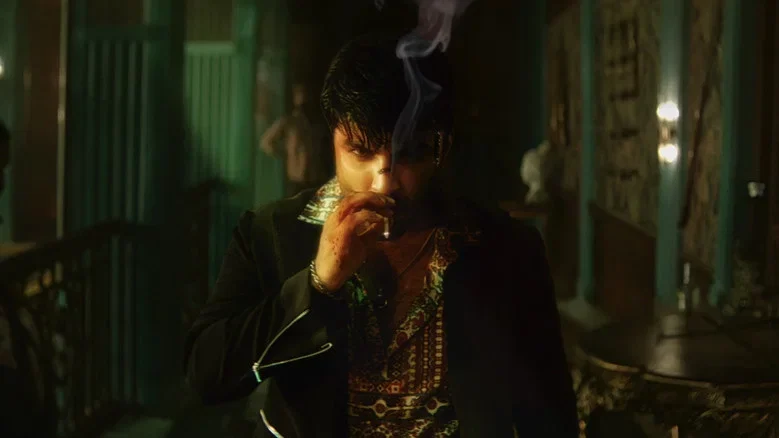
Zaid Khan plays Madhava with a softness that borders on inertia, his eyes registering affection but rarely anything sharper. When Geetha’s acceptance letter arrives, the camera lingers on the envelope, and you can feel the screenplay bracing for the breakup it has been waiting to deliver.
When Geography Becomes The Antagonist
The film’s structural pivot, the move to different cities for higher education, is its most honest dramatic device. Separation here is not a villain with a scheme; it is the slow erosion of proximity, the way a shared life becomes two separate calendars.
Rachita Ram’s Geetha carries the rupture with a quiet pragmatism that is more interesting than the script allows her to articulate. When she tells Madhava she has moved on, her voice is flat, almost administrative, and the film never explains why, leaving her motivation as a blank space the screenplay forgets to fill.
Where Enemy Of The Smuggler at least tried to externalize its conflicts through physical stakes, this film internalizes everything until the screen feels airless. The heartbreak is real, but it is also monotonous, a single note held for forty-five minutes without modulation.

Ithi Enters, And The Film Exhales
Malaika Vasupal’s Ithi arrives like a change in barometric pressure. She is not a romantic rival but a witness to Madhava’s grief, and Vasupal plays her with a watchful stillness, hands folded, head tilted, waiting for him to finish mourning a relationship she can never compete with.
The film’s best scenes are the quiet ones between them: a shared meal where neither speaks, a bus ride where she falls asleep on his shoulder and he does not move. These moments suggest a filmmaker who understands that second love is built from small mercies, not grand declarations.
Khan’s performance in these passages is his strongest, particularly a sequence where Madhava laughs at something Ithi says and then immediately looks guilty, as if joy is a betrayal of the past.
It is a fleeting, wordless beat that the film could have built on, but instead it rushes forward into a romantic resolution that feels earned by the calendar rather than the character.
The Supporting Cast As Furniture
Rangayana Raghu and Achyuth Kumar appear in the periphery as village elders, their faces familiar and their dramatic function negligible. They are not characters so much as textures, reminding us that Madhava comes from a community without ever letting that community complicate his choices.
This is a film that mistakes the presence of older actors for emotional weight, a shortcut that Meethe Mein Kya Hai also struggled with, crowding its frame with recognizable faces instead of giving them something to do.
The Music Tells You What The Screenplay Cannot
Arjun Janya’s score is the film’s most reliable emotional guide, swelling at exactly the moments the dialogue fails to earn. The background music during the breakup scene does more work than the script, signaling heartbreak with strings because the actors have been given nothing to say.
J. S. Wali’s cinematography establishes a clean contrast between the village’s warm, dusty palette and the city’s cooler, fluorescent interiors, but it never develops beyond that binary. The camera is competent without being curious, framing faces at a respectful distance rather than pushing into the discomfort that might have made this story feel alive.
A Climax That Forgets To Arrive
The film’s final act is its most frustrating, resolving Madhava’s romantic dilemma with a series of conversations that feel like plot summaries rather than dramatic scenes. He chooses Ithi, or rather he stops resisting her, and the film treats this as a conclusion when it is really just a default.
The emotional stakes of Aadarsha Kutumbam House No at least had the courage to let its family fracture on screen, whereas this film’s resolution is so gentle it barely registers as a choice. There is no confrontation with Geetha, no reckoning with the version of himself Madhava lost when she left.
The Box Office Math Of A Small Kannada Romance
Loki Cinemas has released a film that will struggle to find its audience in a theatrical market dominated by spectacle and franchise IP. The opening day numbers, a modest ₹0.53 crore net in India, suggest a film that will rely on word of mouth that its own pacing makes difficult to generate.
The Kannada romantic drama space is crowded, and this film lacks the star wattage or the critical buzz to break through.
Zaid Khan is a capable presence, but he is not yet a box-office draw, and the film’s refusal to offer a clear villain or a thriller mechanism limits its appeal to the mass audience that might otherwise have shown up.
The trade verdict is unlikely to be kind, though the film’s small budget may soften the blow. This is a release that will find its life on streaming, where its deliberate pace and intimate scale will feel less like a liability and more like a modest virtue.
The Verdict: A Film That Grieves Without Learning
Cult is not a bad film so much as an incomplete one, a story that understands heartbreak but not the person who survives it. Madhava ends the film with a new love, but he has not changed, and the screenplay seems to believe that moving on is the same as growing up.
What lingers is not the romance but the silence, the empty spaces where Geetha’s reasons should be, the conversations Madhava never has with himself, the moments where the film could have pushed deeper and chose instead to look away.
It is a film about recovery that never quite recovers from its own reluctance to confront the mess it has made.
For viewers patient enough to sit with its quietness, there are moments of genuine tenderness. But tenderness alone is not a story, and this one ends before it has truly begun.