Manduka (2026): Bhushan’s Schizophrenia Crime Thriller Loses the Thread
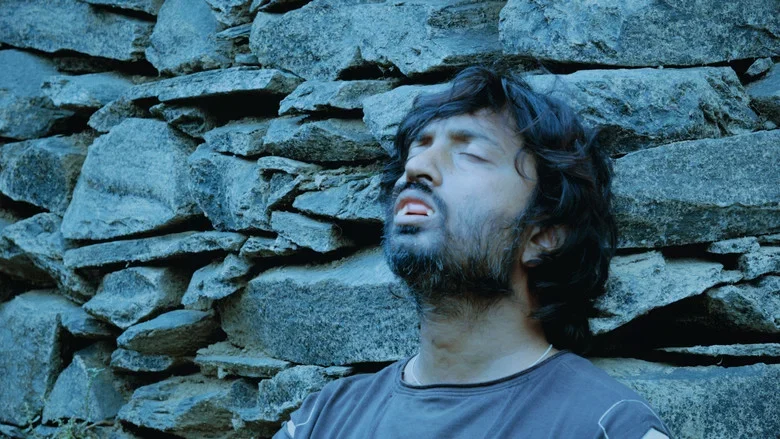
The girl meets four criminals by accident, and the film spends the rest of its 104 minutes trying to decide whose movie this is. Bhushan writes, directs, and casts himself as a villain, which is either total authorship or total overreach.
A Promising Premise Buried Under Competing Agendas
The inciting incident is genuinely unnerving: a schizophrenic young woman stumbles into the orbit of four violent men, and the police pursuit that follows turns an accident into a mystery. That collision of psychological instability and criminal concealment should generate unbearable pressure.
Instead, the film treats schizophrenia as a plot device rather than a perceptual condition. Anjala’s character exists to be moved between locations and factions, never to make us doubt what we’re seeing.

Four Villains, Zero Antagonists Worth Fearing
Bhushan stacks the deck with Mysore Raju, Manikanta, and Zoom Ravi as additional villain figures, but the film never gives the group a hierarchy. Four criminals should mean four competing strategies, four different kinds of menace. Here they blur into a single indistinct threat.
Watching this next to the more disciplined KillR, the difference is stark. That film at least commits to its central formal conceit; Manduka keeps introducing new players without sharpening any of them.
The Stillness That Should Have Manufactured Dread
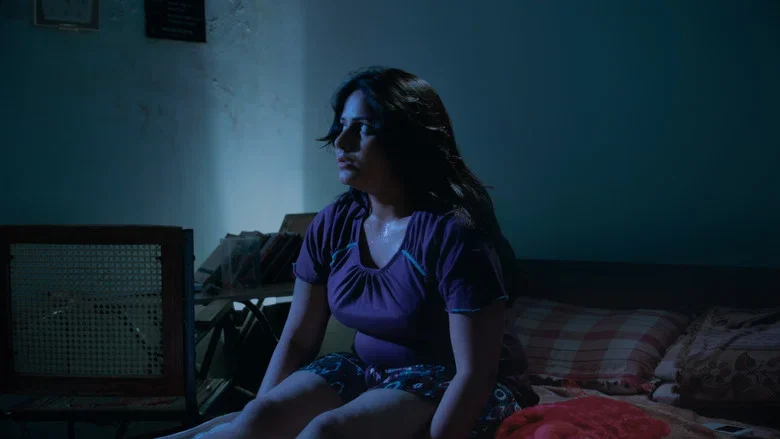
Anjala’s best moments come in the quiet gaps, a held stare at a doorway, a flinch that arrives a half-second too late. Her body language suggests a mind constantly recalculating whether the room is real. The camera, unfortunately, rarely lingers long enough to let those micro-tells land.
The film’s spatial grammar keeps pulling away from her. Bhushan stages the criminal encounters in flat medium shots that neutralize the claustrophobia the premise demands. There’s no sense of a vulnerable body trapped in hostile geometry.
That restraint is a different failure from the punishing endurance test of Pyre, which at least committed to its own severity. Manduka simply dithers.
A Director-Writer-Villain Stretched Too Thin
Bhushan’s triple duty (writer, director, antagonist) should theoretically produce unified intent. In practice, his villain performance is the thinnest in the film, a scowl and a raised voice doing the work that staging should have done.
The police side fares no better. Manjunath Mirle’s officer registers as procedural furniture, moving through the hide-and-seek pursuit without a single moment that clarifies his stake in the outcome. The chase has momentum but no meaning.
Where the Kannada psychological thriller has recently found real texture by valuing mood over plot mechanics, as seen in Tadviruddha, this film inverts the equation. It chases incident and forgets atmosphere entirely.
The Editing Never Lets the Mystery Breathe
The first half scrambles to establish the encounter and the criminal group, but the cuts arrive too fast to build either tension or character. By the time the police pursuit kicks in, we’re watching strangers chase strangers.
The second half has the shape of escalation without the sensation of it. Scenes end before they’ve generated consequence, and the resolution arrives with the flatness of an obligation rather than a revelation.
There’s a version of this film, one that trusts the audience to sit inside Anjala’s unstable perception, that could have been genuinely unsettling. That version is not on screen.
What’s Actually at Stake for the Producers
With an estimated budget around ₹75 lakh and no verified theatrical revenue data circulating, Manduka sits in the precarious mid-tier of Kannada crime thrillers that need word-of-mouth to survive opening week. The compact runtime is a commercial asset; the muddled execution is not.
For the lead actress, this is a calling-card role that deserved a sharper film around it. For Bhushan, the triple credit reads as resourcefulness rather than vision, a filmmaker doing every job because the budget demanded it, not because every job needed his hand.
Across contemporary Kannada thrillers, the gap between premise ambition and execution discipline remains the genre’s defining fault line. Manduka lands squarely on the wrong side of it.
The Uncomfortable Verdict
Manduka wants to be a film about the unreliability of perception, but it never lets us doubt anything except whether the filmmakers knew what they were building. The schizophrenia premise becomes decoration rather than engine.
What lingers isn’t a scene or a performance, it’s the frustration of watching a genuinely promising collision of vulnerability and violence get flattened into procedure. The girl deserved a movie that trusted her mind as much as it feared the men around her.