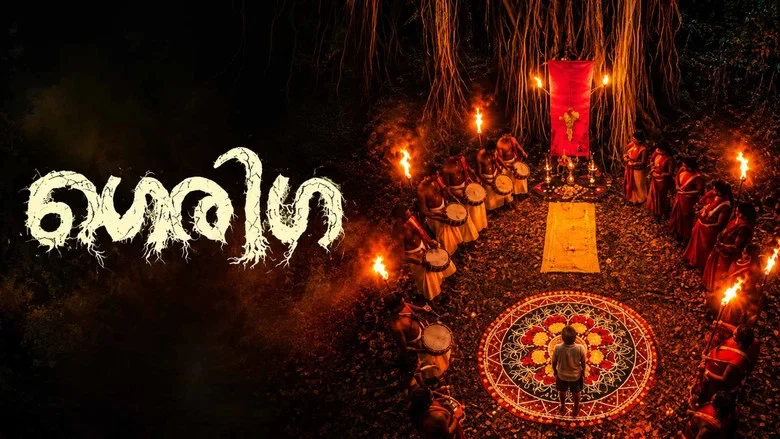
Geriga (2026): Rishan Sha’s Ritual Horror Dares You to Press Play
The camera is already rolling when the sacred lamp is lit. That is the whole thesis of Geriga, and for about twenty minutes it is the most dangerous idea in the theater.
When The Hoax Becomes The Ritual, The Horror Has Teeth
Bhaskar Bantupalli opens in Naivad, a Kerala village that treats the Geriga rite as a doorway to the dead, and he shoots it with a documentarian’s patience, wide frames, no music, the sound of a match striking.
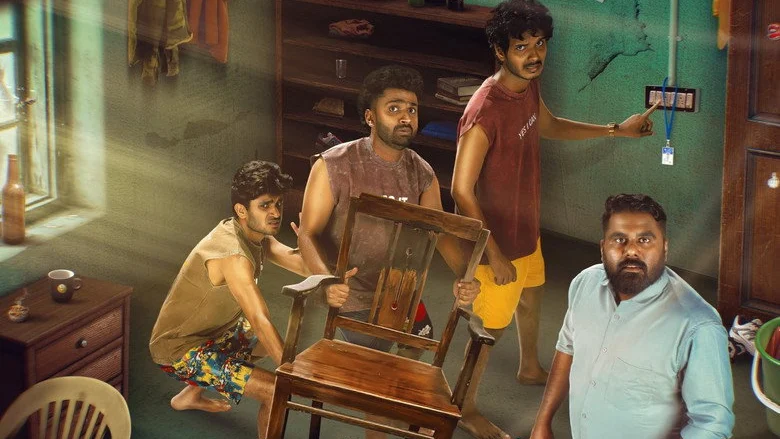
Then Vijay and his four YouTuber friends arrive to fake it. The contempt is casual, almost innocent: a thumbnail, a title card, a ritual performed for a comment section.
What follows is the film’s sharpest structural gamble. Vijay is possessed at the exact moment word arrives that his father has died, and the screenplay refuses to separate the two shocks.
The Twelve-Day Countdown Is A Clock, Not A Crutch
Act two converts the possession into a logistics problem: the group must complete the rite properly within twelve days or lose him entirely. It is a clean engine, and Bantupalli keeps the geography tight, one village, one deadline, one body.
The middle stretch is where the writing thins. The four friends orbit Vijay without ever becoming distinct people; they function as reaction shots rather than characters, and the film mistakes their panic for personality.
Where the premise promises a satire of creator culture, the screenplay mostly settles for the observation that viral fame is reckless, a point the opening reel already made twice.
Rishan Sha’s Body Does The Work The Script Won’t
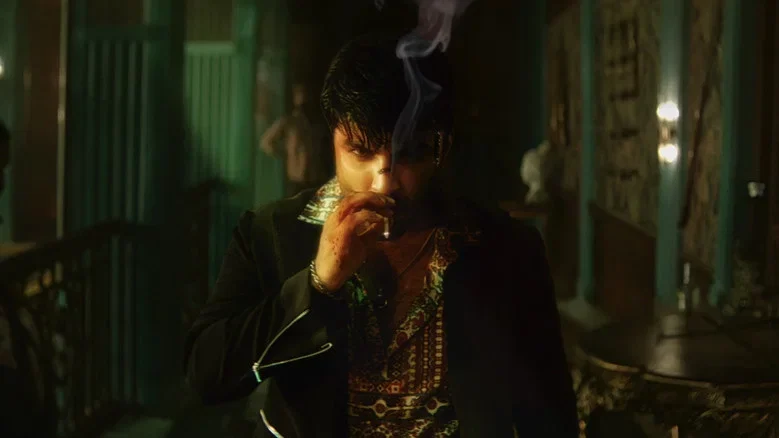
Rishan Sha plays the possession as a physical failure rather than a performance. His shoulders drop first, then his breath goes shallow, then his eyes stop tracking the room, a man being vacated in stages.
The grief register is harder to pull off, and he underplays it deliberately: no weeping, just a stillness when the phone rings that reads as a body refusing to accept information.
The supporting women get almost nothing to hold. Neebha Bala registers genuine alarm in the ritual sequences, but the script gives her no argument to make, and Anjana Nair is stranded in the same narrative dead zone.
That imbalance is a familiar one in this crop of regional genre films, and it connects Geriga to the wider problem of premise-rich, character-poor horror currently crowding contemporary Malayalam horrors.
A Director Who Trusts Silence More Than Splatter
Prashanth Kanchapalli’s camera holds longer than the genre usually allows, and the film’s best scare is built from an unbroken medium shot of a doorway where nothing happens for four full seconds.
The lighting strategy is consistent: oil-lamp amber in the village interiors, cold phone-screen blue on the YouTubers’ faces. It is a simple binary, but it does the thematic work without dialogue.
Jinu Vikayan’s score is the weakest element, arriving too early and too loud, telling us the possession is frightening before Sha has finished earning it.
The edit, also Kanchapalli’s, sags noticeably around the ninth day, when the group repeats the same investigative beat three times with diminishing returns, a structural stall the film never fully recovers from.
Ritual Horror Lives Or Dies On Its Rules
The screenplay never quite specifies what the Geriga rite requires, which means the twelve-day deadline operates as an assertion rather than a mechanism. We are told the clock matters; we are rarely shown why.
Compare that vagueness to the tighter mythological discipline in Mr. Lucky, where the fantastical premise at least commits to its own internal logic before asking the audience to follow it.
The possession itself is the film’s most confident invention, an embodied threat rather than a haunting, which forces Sha to carry the horror in his posture instead of the production design.
It also exposes the film’s central limitation. Once the body is the monster, the other four characters have nothing to do but watch it, and watching is not a plot.
The Ending Refuses The Comfort It Has Been Promising
Without spoiling the final ritual, the resolution withholds the clean exorcism the first act sets up, and that refusal is the most interesting thing the screenplay attempts.
The cost is a climax that feels emotionally underpowered rather than deliberately unresolved, the film wants ambiguity but has not built the character bonds that would make ambiguity hurt.
The final image lingers on Vijay in a way that echoes the psychological unraveling at the center of Manduka, though that film at least gave its lead a coherent interior to fracture.
Here the possession is the whole arc. Once the spirit is dealt with, there is no man left to grieve, and the film does not seem to notice.
What The Box Office Is Actually Betting On
Produced by Venugopal Devi on a scale that reads as mid-budget regional genre, Geriga is positioned to test whether a ritual-specific Malayalam horror can travel beyond its home market on concept alone.
The commercial risk is real: without a star draw or a franchise hook, the film depends entirely on word-of-mouth from the opening weekend, and its slow middle act is precisely the kind of thing that kills a second-week multiplier.
It also arrives into a crowded field. The genre-sibling template of Maharaja Hostel showed how quickly a strong premise can collapse when the tone wobbles, and Geriga is more disciplined but not immune.
For Bantupalli, this is a calling card rather than a franchise starter. For the market, it is a useful data point: audiences will follow a specific ritual and a specific fear, but only if the people inside it are worth fearing for.
Verdict
Geriga is a genuinely unnerving first hour attached to a second hour that runs out of ideas about what to do with its own monster.
Rishan Sha’s physical commitment and Bantupalli’s restraint with the camera make it worth the ticket; the underdeveloped ensemble and the vague mythological rules keep it from the film it clearly wants to be.
It is a horror film about people who mistake a sacred thing for content, and its most unsettling moment is the realization that the filmmakers, for all their craft, occasionally make the same mistake.