
Tera Yaar Hoon Main (2026): A Familiar Romance Anchored by Paresh Rawal’s Underutilized Presence


Aman Indra Kumar’s Sanju is a carefree Nagpur boy who moves to Mumbai, befriends his mother’s host Viswanath’s daughter Anu, and only realizes his feelings after her fixed marriage to someone else. This is the blunt, familiar gear in which Milap Milan Zaveri’s romance-drama grinds, leaning heavily on a premise where emotional recognition arrives too late.
Aman Indra Kumar: Promising but One-Note
Sanju’s arc hinges on a single gear, the shift from oblivious friend to heartbroken lover, and Kumar plays it straight. His energy during the early, playful scenes with Akanksha Sharma feels natural, but when the conflict hits, the performance narrows into a register of passive longing.
There is no scene where he truly wrestles with the decision to confront or retreat. The character remains reactive, and Kumar’s limited range in the dramatic stretches exposes the script’s lack of interiority.
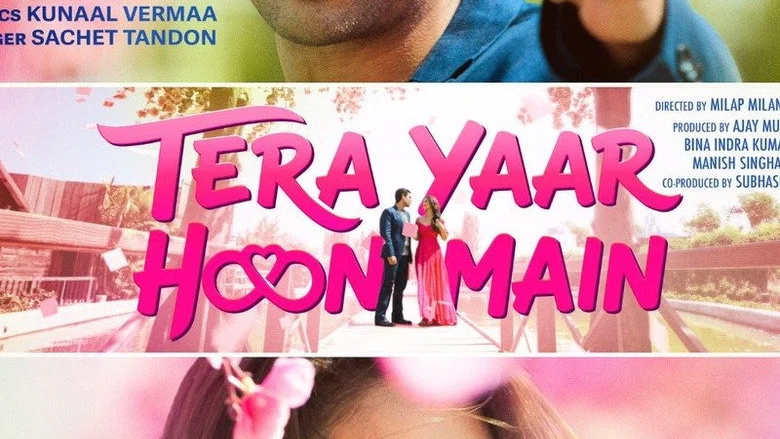
Direction and Screenplay: Safe, Slightly Stale
Milap Milan Zaveri directs this as a clean, linear romance, the kind where every beat is telegraphed. The strength is the clarity of the emotional setup: friendship, duty, love, all neatly arranged. The flaw is the screenplay’s refusal to complicate that setup.
There is no surprise in how Sanju arrives at his dilemma, and no sharp dialogue to elevate the familiar. The line “Get Ready for Love, Pain, and Music!” tells you exactly what the film aims for, but the execution doesn’t earn that pain.
Romance as Melodrama: A Familiar Yet Functional Core
Zaveri’s central romance is built on a classic structure, the friendship-to-love progression with a late recognition of feelings. It works as a sturdy emotional scaffold, but the film never adds the unexpected turns that make a standard premise feel fresh. The house setting, where Sanju lives with Viswanath and Anu, should create intimate, layered tensions. Instead, the scenes between Sanju and Anu stay surface-level, their chemistry more polite than electric.
The melodramatic register is clear: family obligation looms over every interaction. Yet the conflicts between friendship, love, and duty remain outlined rather than deeply felt. The script checks boxes but doesn’t interrogate them. When Sanju finally realizes his love after Anu’s marriage is fixed, the moment lands with a thud, you see it coming from the first act, and the screenplay offers no fresh perspective on that ache.
This is a film that knows its genre but doesn’t stretch it. It’s comfortable with familiar pain, which works for viewers seeking easy emotional beats, but feels thin for anyone looking for romance that actually complicates its characters. The emotional pacing is steady, but the payoff lacks the dramatic weight the premise promises.
Paresh Rawal: A Veteran Wasted in a Familiar Role
Paresh Rawal plays Viswanath, the family friend whose daughter is at the center of the conflict. His casting signals an attempt at credibility, Rawal brings instant gravitas to any domestic drama. But the role gives him little to do.
He appears as the benevolent host and later as the conflicted father, but his scenes rarely rise above functional. One moment in the research, Sanju moving into Viswanath’s house, could have been a rich setup for tension; instead, it plays as exposition. Akanksha Sharma’s Anu has even less agency. She is the object of the conflict rather than a participant, and the script never lets her voice matter.
If you’re a fan of straightforward emotional stories about friendship and family, this is a clean enough watch. For Hindi romance enthusiasts, there’s plenty more to explore in our Hindi Action reviews.
Audience Fit: Who This Film Is Really For
Without critic scores or audience metrics to lean on, the film’s target feels clear: it is made for viewers who prefer their romance uncomplicated and their family conflicts resolved with warm resolutions. The marketing tagline “Now every friend will express love” is not subtle about its intent.
This is not a film for those seeking risk-taking structure or performance depth. It is for audiences who want a familiar emotional arc served cleanly, with a known actor like Paresh Rawal as a comfort anchor and a debut lead carrying the heart of the story.
Tera Yaar Hoon Main works best for casual viewers who want a simple love story without demanding much originality. If you are looking for the kind of emotional precision that makes a romance truly land, you might leave feeling like you’ve seen this all before, just with a different face. Watch it on a regular screen with low expectations, and it might pass the time. I’d rate it a humble 2 out of 5, a debut lead doing decent work inside a script that never dares to be memorable.
For a more emotionally complex romantic drama, check out Jana Nayagan review.
If you prefer films that defy easy categorization, Ire verdict offers a more rewarding cinematic puzzle.