Dhood (Sandstorm) (2026): Yashpal Sharma Anchors a Rajasthani Chamber Thriller That Buries Its Knife Too Deep
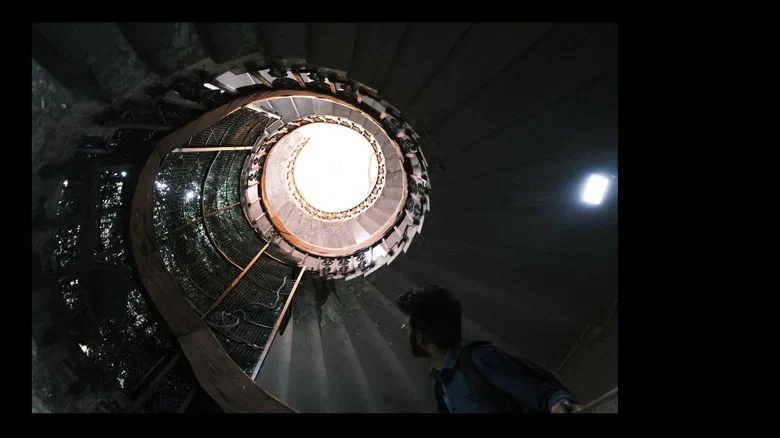
Anand Singh Chouhan opens on cracked earth and a courtyard swept clean every morning out of habit, not hope. Somewhere behind that discipline, a family is deciding which of its own members it can afford to lose.
The film arrives billed as the first Rajasthani-language feature aimed at a pan-India theatrical footprint, and that ambition is legible in every frame. It is also the source of its central instability.
A Lineage Drama That Refuses to Name the Thing It Fears
Chouhan sets his story in the early 1990s inside a single household isolated by the Thar, and the premise is genuinely loaded: inheritance, authority, and the quiet arithmetic of who inherits the right to speak.
What the screenplay will not do is assign that pressure a face. Greed circulates through the rooms like heat, distributed across elders and heirs alike, and the film treats this diffusion as sophistication when it is closer to evasion.
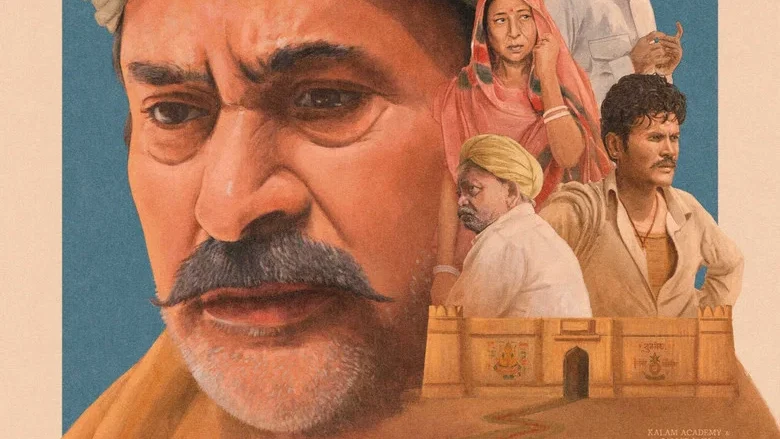
Yashpal Sharma carries the household’s gravitational weight as a man whose authority is expressed almost entirely through where he chooses to sit. Watch his hands in the early confrontation scenes, flat on his knees, then closed, then still, and you have the film’s entire thesis on power rendered physically.
Alka Amin works the opposite register, occupying doorways rather than rooms, and her stillness in the background of arguments registers as a verdict rather than a retreat.
Confinement Is the Film’s Sharpest Instrument and Its Laziest Excuse
The desert does real structural work here. There is no road out, no investigator arriving, no outside law to appeal to, which means every escalation must be metabolised inside the family’s own architecture.
That is a legitimate engine for dread, and Chouhan understands it. He shoots the courtyard at a distance that makes the walls feel taller than the people, and the early-90s period detail is restrained enough to read as memory rather than costume.
Where the film drifts is in mistaking withheld information for tension. A countdown only tightens when the audience knows what is being counted, and here the stakes stay abstract for long stretches while the dialogue circles lineage without ever landing on a specific threat.
The screenplay’s refusal to clarify individual motives early on is a defensible choice in a psychological thriller, but it flattens the middle act into atmosphere without propulsion. Atmosphere is not the same as escalation.
An Ensemble That Earns Its Silences Without Always Filling Them
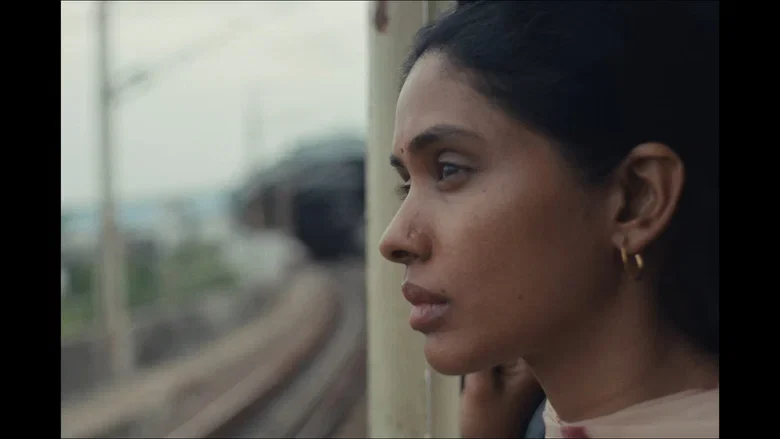
The debuting performers are asked to hold screen space against two seasoned actors, and the results are uneven in instructive ways. One young man in the lineage scenes keeps his jaw set through an entire negotiation, and the rigidity reads as character rather than inexperience.
Elsewhere the newcomers are given reaction shots instead of decisions, and the film’s habit of cutting away from them at the exact moment they might reveal something becomes a structural tic.
Sharma’s restraint here is a different instrument from the coiled menace he brought to Haiku, where the performance was built on withheld feeling rather than withheld information. The distinction matters: one is acting, the other is withholding on the script’s behalf.
The film’s most effective sequence is also its quietest, a meal where nobody eats, and the clatter of a single utensil does more narrative work than any confrontation that follows.
Mehul Surti’s Score Knows When to Leave the Room
Surti’s compositions lean on Rajasthani folk instrumentation, and the restraint in the first hour is admirable; the desert gets silence, and the silence gets to be uncomfortable.
Then the strings arrive in the final third and start explaining emotions the performances had already earned. It is the one place where the film stops trusting its own ensemble.
Chouhan’s camera, by contrast, stays disciplined, favouring medium-long framing that keeps the family grouped and legible as a unit rather than isolating them into individual psychologies. It is a coherent visual argument about kinship as a trap.
The editing in the back half accelerates without clarifying, cutting between rooms in a way that generates urgency but not comprehension. The countdown, when it finally resolves, arrives with less force than the film’s earlier stillness promised.
That comparison to Gajab Raat is instructive: that thriller trusted its silence because it knew exactly what the silence was hiding. Here the withholding is structural rather than dramatic.
What Soul of Desert and Kalam Academy Are Actually Betting On
The producing banners, Soul of Desert Production with Ainak Co-Labs, presented by Kalam Academy, are wagering on a proposition with no established market precedent: a Rajasthani-language psychological thriller sold on a national theatrical release.
That is a genuine commercial gamble, and the film’s modest scale suggests the backers understand it. There is no star vehicle here, no franchise scaffolding, no sequel hook.
Sharma’s box-office leverage is real but regional and character-actor-shaped; he opens films in the Hindi belt on the strength of recognition rather than draw. The pan-India framing is therefore aspiration more than strategy, and the film will live or die on word of mouth in Rajasthan’s urban centres first.
Compared with the nostalgia-driven marketing of Pehla Pyaar Doosri Baar, this release has the harder task: it must build an audience for a language the national market has never been asked to sit with.
Whether that bet pays off depends less on quality than on whether exhibitors give it a second week.
The Knife Lands, but the Wound Is Left Unnamed
The climax resolves the lineage question in a way that is morally coherent and dramatically underpowered, because the film never committed to which transgression mattered most.
What lingers is not the revelation but the physical residue: a courtyard swept clean, a chair left empty, a family that has preserved its name and lost the reason it wanted to.
Chouhan has made a film with real spatial intelligence and a genuine feel for how authority occupies a room. What he has not yet learned is that a psychological thriller must eventually name its monster, even when the monster is a bloodline.
This patient, place-specific approach is a promising direction for contemporary Hindi thrillers and their regional cousins, but promise is not the same as arrival. Dhood is a first step taken in the right direction, on ground that has not yet been broken.