Doosra (2026): Plabita Borthakur Anchors a Docu-Fiction Experiment That Never Quite Lands Its Second Punch
Abhinay Deo opens on a television set in a Rajasthani living room, and for a while that box is the most dangerous object in the house. Tara watches a country learn to shout, and the film asks whether she ever will.
A Nation Learns To Cheer While One Girl Learns To Speak
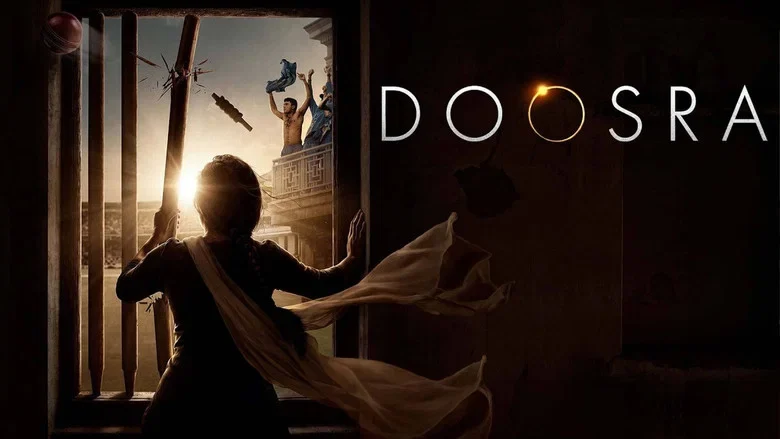
The premise is genuinely audacious: a 78-minute hybrid that welds a fictional coming-of-age story to the 2002 NatWest final, using Sourav Ganguly’s shirt-waving as emotional shorthand for a young woman’s refusal to stay silent.
Deo trusts the archival material to carry the thesis, cross-cutting liberalisation, political churn and cricket’s shifting mood with Tara’s claustrophobic adolescence. The formal ambition is real, and it’s the reason the film stays in your head longer than its running time suggests.
But ambition and execution part ways early. The decade-spanning montage establishes context briskly while starving the domestic drama of the accumulated detail that would make Tara’s rebellion land.
When The Cricket Nostalgia Outshouts The Girl In The Room
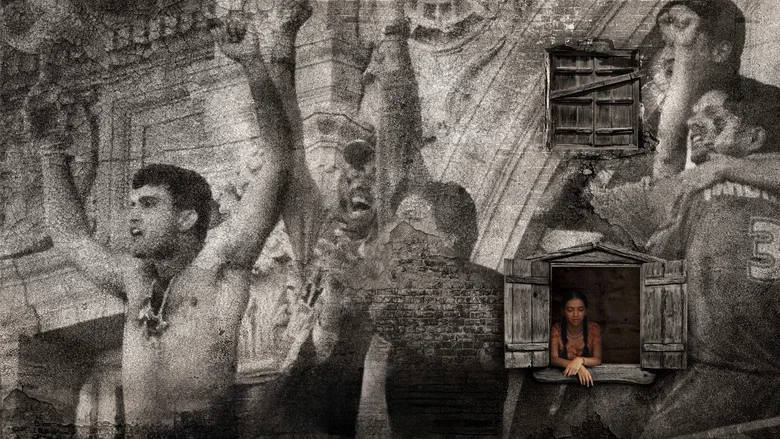
The structural imbalance is the film’s central wound. The cricket passages arrive with documentary authority and collective memory behind them; Tara’s family confrontations arrive as sketches that keep getting interrupted.
Watch how the Lord’s balcony image is deployed. Ganguly peeling off his shirt is a genuinely potent symbol, and the film knows exactly how to frame it, but it returns to that well so often that the metaphor starts doing the work the screenplay should be doing.
Reviewers who found the cricket material overwhelming aren’t wrong. The archival texture is more emotionally forceful than the fictional household, which means the parallel reads as an intellectual conceit rather than a fully dramatised convergence.
Plabita Borthakur Builds A Rebellion Out Of Held Silences
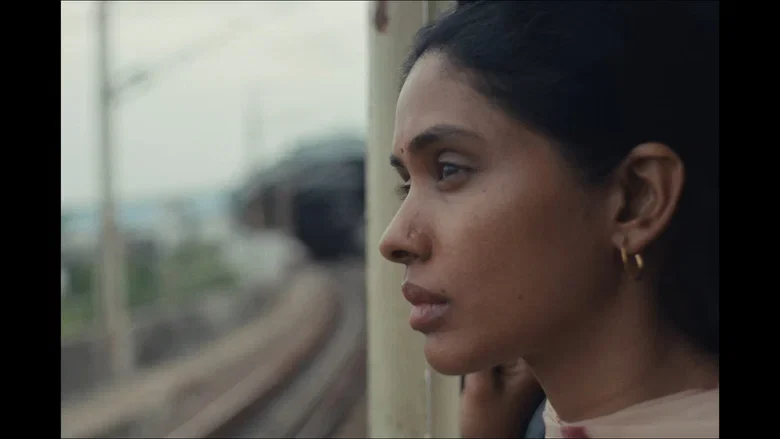
Borthakur is the film’s strongest asset, and she plays Tara through restraint. Her shoulders stay squared in rooms designed to shrink her; her eyes track her father’s movements before her mouth ever forms a sentence.
The television-watching scenes are where the performance does its quietest work. You can see observation turn into identification in her face, the moment a distant public gesture becomes a private permission slip.
Ankur Vikal’s father is a different kind of antagonist: no raised voice, no theatrical cruelty. He governs through the arrangement of furniture and the expectation of obedience, turning ordinary domestic space into a surveillance grid.
Samidha Guru’s mother is the film’s most painful presence, embodying accommodation rather than resistance. Her compliance sketches the narrow corridor of options available to her daughter without a single speech about it.
The brother, played by Navin Ratwa, occupies the household’s gendered privilege with casual ease, a reminder that the rules tightening around Tara were never applied evenly. Krishna Gokani and Twisha Joshi appear in supporting capacities that the screenplay never develops into distinct dramatic function.
Ram Sampath’s Score Bridges Two Worlds That Rarely Touch
The film’s visual grammar rests on a single contrast: the enclosed, low-ceilinged Rajasthan interiors against the expansive public spectacle of Lord’s. Television becomes the visual bridge, and it’s the most elegant idea in the film.
Ram Sampath’s score carries the period-setting and the cricketing momentum, but it also papers over transitions that the screenplay hasn’t earned. Music doing structural work is a warning sign, not a solution.
The first half moves fast across more than a decade, establishing context efficiently while limiting the accumulation of domestic texture. The second half leans harder on the cricket parallel, and Tara’s emotional progression starts to feel abbreviated.
The Director Of Delhi Belly Swaps Comic Chaos For Conceptual Control
Deo’s career has always been about tonal control, and here he swaps the ensemble anarchy of his better-known work for a disciplined conceptual parallel. The compression is deliberate; the underdevelopment is not.
The peer comparison is instructive. Where a film like Dhood (Sandstorm) lets a single chamber setting generate sustained pressure, Doosra keeps cutting away from its own most charged space. The Pehla Pyaar Doosri Baar comparison cuts the other way: both films mistake a recognisable cultural reference for emotional resolution.
What Doosra does better is refuse the conventional sports-film arc entirely. The match is a catalyst, not a competition; the film is interested in who is permitted to express anger and pride publicly, which is a far more interesting question than who wins.
The thematic kinship with Sumo Didi is obvious, both are compact, sincere dramas about a young woman pushing against a system that has already decided who she is. The difference is that Doosra has a richer symbolic vocabulary and a thinner dramatic spine.
A 78-Minute Experiment Testing The Patience Of A Franchise-Obsessed Market
The commercial math here is unforgiving. A 78-minute docu-fiction hybrid with no conventional star vehicle, no verified franchise hook and a niche cricket-nostalgia appeal is a hard theatrical sell in a market that rewards scale and spectacle.
The producing team, Masha Sajdeh and Rohan Sajdeh, with Neeta Shah co-producing, has backed a formally adventurous project, and the film’s festival-oriented positioning suggests they know it isn’t a mass-market proposition. The theatrical window will be short.
What’s genuinely at stake isn’t this film’s box office but the viability of the format. The regional remake pipeline and franchise sequels currently dominate screens; a 78-minute experiment like this one needs a very specific audience to justify its existence in cinemas rather than on streaming.
That audience exists, but it’s narrow: cricket historians, docu-fiction enthusiasts, and viewers drawn to short, issue-driven Hindi dramas. The contemporary Hindi dramas landscape has room for this kind of formal risk-taking, but not much patience for it.
The Second Punch Never Quite Lands
The ending resolves around Tara finding the courage to speak, not around a cricket victory, and that’s the right instinct. The problem is that the film has spent so much time on the national gesture that the personal one arrives without the weight it needs.
Ganguly’s shirt-waving works as a symbol because it was a public act of defiance by a man with nothing to lose. Tara’s confrontation should carry the same charge, but the screenplay hasn’t built the sustained domestic pressure that would make her moment feel earned rather than illustrated.
Doosra is a film of real ideas and an uneven execution, a promising experiment that mistakes a strong metaphor for a finished argument. It’s worth seeing for Borthakur’s performance and for the ambition of its structure. Just don’t expect the second punch to land as hard as the first.