Scene (2026): Suriya’s Chaotic Cop Comedy Thriller, A Risk That Mostly Pays Off
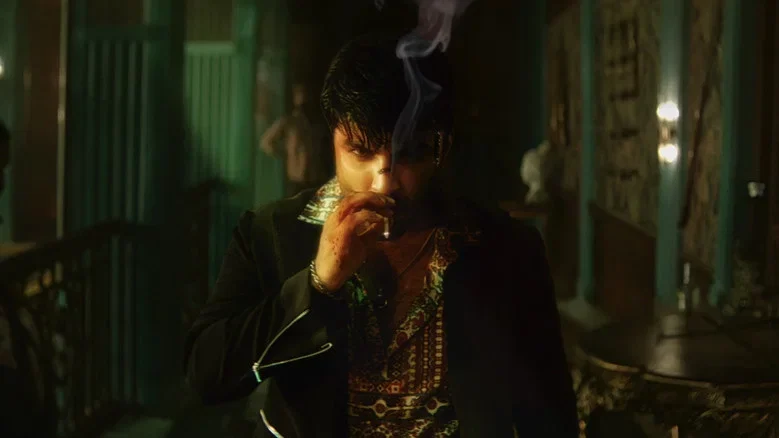
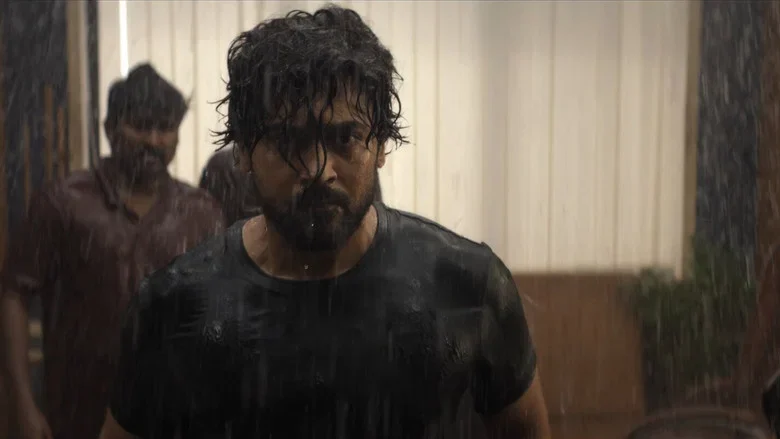
The first thing you notice in Jithu Madhavan’s Scene is how deliberately Suriya undercuts his own movie-star gravity. DSP Inbaraj isn’t a strutting supercop; he’s a rumpled, defiant officer whose first significant act is to reopen a case he himself left unfinished.
That choice tells you everything about the film’s ambitions. This is a star vehicle that wants to be a shaggy ensemble comedy with a crime spine, and the tension between those two impulses is the whole show.
An Eccentric Cop Who Refuses To Be The Hero
Madhavan, whose previous work thrived on volatile personalities and tonal whiplash, builds his procedural around a deliberately broken machine. No conventional team is available, so Inbaraj assembles a crew of troublesome misfits who can barely share a room, let alone solve a mystery.
The recruitment sequence is the film’s clearest comic engine. Each new addition arrives with a personality defect that sabotages procedure, and the screenplay treats institutional dysfunction as a running gag rather than an obstacle to be efficiently cleared.
Naslen’s Charming Menace Complicates The Game
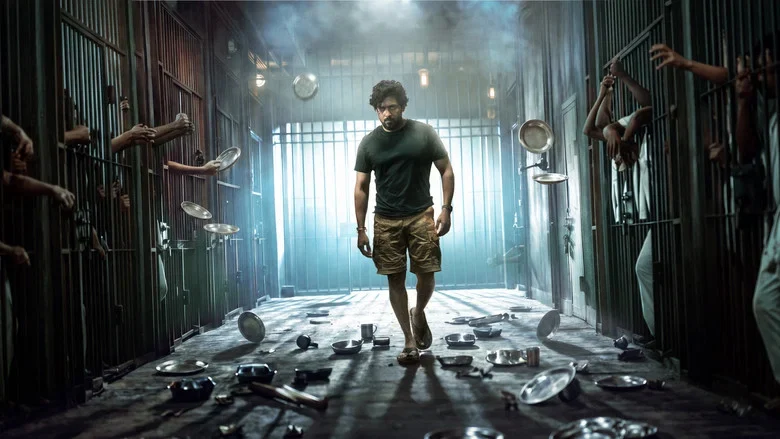
The antagonist is where the film gets its real charge. Naslen’s Eeswaran is engineered as a smile that doesn’t reach the eyes, an accessible presence whose warmth curdles the longer the investigation circles him.
His Tamil debut leans hard on that tonal contrast, and it works because the screenplay never lets him play pure menace. The charm is the weapon, and the mystery’s central threat stays human rather than abstract.
Suriya’s Restraint Against A Screaming Ensemble
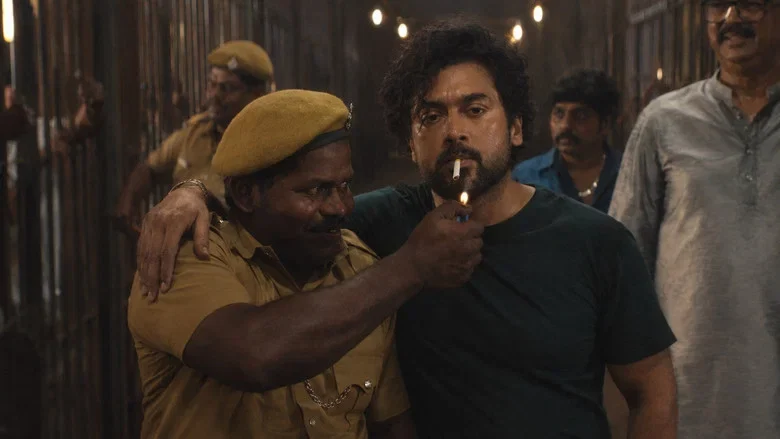
The performance challenge here is holding authority while the room collapses into chaos. Suriya plays Inbaraj inward, using a low, flat register and a stillness that makes his occasional outbursts land like gunshots in a quiet corridor.
The unresolved connection to his old case gives him a second, quieter track to play. Watch how his posture shifts when the past surfaces; the shoulders drop, the eyes go somewhere the team can’t follow.
That same disciplined physicality anchors the film’s emotional weight, echoing the controlled exhaustion he brought to Vishwanath & Sons without ever letting the comedy curdle into melodrama.
Where The Tone Buckles Under Its Own Ambition
The central risk is tonal, and Scene doesn’t always win it. The comedy and the crime stakes pull in opposite directions, and in the middle stretch the film occasionally forgets which one is supposed to be holding the tension.
The mystery escalates through reversals and clashing personalities, but the ensemble’s comic disorder sometimes swallows the dread. When everyone is a punchline, the villain’s threat has to work twice as hard to land.
Madhavan’s instinct for unstable ensembles, honed in films like Geriga, mostly serves him here. The question is whether the film’s tonal tightrope is a feature or a wobble, and the answer shifts scene by scene.
The Supporting Ensemble As Comic Architecture
The supporting cast functions less as individuals than as a pressure system. Lal’s Stephen brings a weathered stillness to the group, a counterweight to the noise, while the royal-relatives and temple-elders types who populate the margins exist to be baffled by Inbaraj’s methods.
Nazriya Nazim Fahadh’s Maya sits within the cross-language ensemble with a different performance register entirely, and that contrast is the point. The mixed Tamil-Malayalam casting gives the film a texture that a uniform procedural couldn’t manufacture.
Pacing, Silence, And The Camera That Watches The Room
The film’s visual grammar favors the group over the individual. The camera holds on faces during arguments, letting the comedy play in reaction shots rather than cutting to the punchline, and that patience gives the ensemble scenes a lived-in rhythm.
The score stays sparse during the investigation, which is the right call; the silence lets the crime thread breathe between the comic set pieces. Where the film stumbles is in the second half’s escalation, where the reversals arrive faster than the emotional stakes can catch up.
That’s a structural bet that mostly pays off but doesn’t fully cash in, a tension that mirrors the push-pull of Jailer 2‘s own struggle to balance swagger with substance.
A Star Vehicle That Refuses To Play It Safe
The commercial logic here is interesting. Suriya is betting his box-office leverage on a film that deliberately refuses the conventional single-hero action template, and that’s a genuine risk in a market that rewards familiar formulas.
Whether that risk translates into a hit depends on whether audiences want their star vehicles shaken up, a question that speaks to the broader evolution of contemporary Tamil action cinema and its appetite for tonal experimentation.
The film’s fate will be decided by whether the ensemble comedy and the crime mystery can coexist in the audience’s mind, or whether one eats the other.
The Uncomfortable Resolution
What lingers after Scene is the question it poses about its own protagonist: can a man whose methods are chaos itself convert his personal disorder into something that actually works? The film’s answer is deliberately unresolved, and that’s its quiet strength.
Suriya’s Inbaraj doesn’t get a clean victory, and the film doesn’t pretend he should. The case closes, but the man doesn’t, and that refusal to tidy up is the most interesting thing about a star vehicle that could have coasted on charisma alone.
It’s a messy, uneven, frequently thrilling swing at something different, and in a market that rewards safety, that’s worth something. The film doesn’t fully solve its own equation, but it’s honest enough not to pretend it has.