
Pulse (2026): Master Mahendran Anchors a Survival Thriller That Bites Off More Than It Can Chew
Nawin Ghanesh opens his survival thriller with a premise that sounds like a dare: a man who cannot be seen or heard must find the woman he loves inside a government hospital, then survive the protest that swallows the building whole.
It is a high-concept hook with a built-in liability, the moment the audience starts asking how the condition works, the film has to answer.
A High Concept That Wants to Be a Social Drama
The first act establishes the hospital as a pressure cooker of overflowing corridors, indifferent administration, and a public system stretched past its limits. Ghanesh shoots the bureaucracy with a documentarian’s patience, letting us feel the damp walls and the fluorescence.
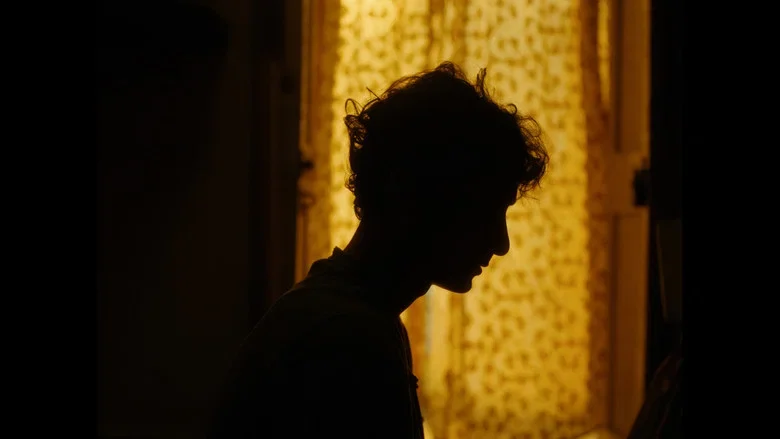
That patience pays off when the premise kicks in. Master Mahendran’s protagonist becomes invisible to the people around him, and the film’s central tension is born: a man screaming in a crowded room while nobody turns their head.
Where a grimy procedural would root that terror in paperwork and procedure, Ghanesh roots it in the body, the frantic wave of a hand that passes through a stranger’s eyeline, the shouted warning that dies in the ambient noise of a protest chant.
Mahendran’s Physicality Carries the Weight
The lead performance is the film’s most reliable asset. Mahendran plays his condition not as a superpower but as an affliction, his body language shifting from confident pursuit to the hunched, apologetic crouch of a man who has stopped expecting to be noticed.
Watch his hands in the hospital sequences. They reach for shoulders and stop just short, the fingers curling back before contact, a small gesture that does more character work than any dialogue the script hands him.
Rishika Rajveer, as the object of the search, is given less to do, but her scenes with Mahendran carry a warmth that grounds the abstraction. The film is smart enough to make her absence a physical ache rather than a plot device.
Livingston and R. V. Udayakumar populate the hospital corridors with the specific gravity of men who have spent careers inside institutions. Neither gets a scene that explains them, and that restraint is welcome.
When the Protest Arrives, the Engine Stalls
The second act’s pivot into a massive public protest is where the film’s ambitions start to outrun its execution. The crowd is staged with real scale, but the film never quite solves the geometry of its own premise.
If the protagonist cannot be seen or heard, then every confrontation with the mob has to be choreographed around that limitation. Ghanesh stages some of this cleverly, a near-miss with a police barricade, a desperate sprint through a corridor of bodies, but the middle stretch repeats the same beat of near-discovery without escalating the stakes.
This is where the comparison to Appa Kutty becomes instructive. Both films build their tension around a protagonist whose interior state is at odds with the world around him, but Ghanesh’s film mistakes volume for escalation.
The protest grows louder, the crowds denser, the sirens more insistent, and yet the dramatic pressure plateaus. By the third act, the film is running on the momentum of its premise rather than the logic of its scenes.
The Supporting Cast Is a Texture, Not a Structure
Kumki Ashwin and Cool Suresh appear in the margins, their comic timing deployed as pressure release valves. It’s a functional choice, but it also reveals the film’s uncertainty about what kind of thriller it wants to be.
The tonal shifts between the hospital’s institutional dread and the protest’s chaotic energy are handled with less finesse than the material demands. There are moments, a sudden silence in a stairwell, a shot of a hospital bed left unmade, where the film finds its footing.
But those moments are islands. The connective tissue between them is thinner than it should be, and the film’s final act leans on a crescendo of noise rather than the quiet, accumulating dread that the premise deserves.
The Craft Is Functional, the Vision Is Intermittent
Abhishek AR’s score is the film’s most consistent collaborator, building tension with low-frequency drones and percussive hits that land with precision. The sound design, too, does the heavy lifting, the muffled quality of the world as heard by a protagonist who cannot make himself heard.
The cinematography, by contrast, is workmanlike. The hospital sequences are lit with a clinical flatness that serves the institutional mood, but the protest sequences are shot with a restless handheld energy that occasionally obscures the spatial logic of the action.
Ghanesh’s direction shows a clear understanding of the film’s central metaphor, the invisibility of the poor within a system designed to ignore them, but he doesn’t always trust that metaphor to carry the scene. The film keeps reaching for external conflict when the internal one is richer.
What Pulse Gets Right About the Survival Thriller
The film’s smartest choice is to keep the love story personal and the social critique structural. The government hospital isn’t just a setting; it’s the reason the protagonist is invisible. The system that should protect him is the system that erases him.
That’s a sharp idea, and when the film leans into it, a sequence where a hospital administrator walks past the protagonist without a flicker of recognition, a moment where a protest slogan becomes a bitter joke, it achieves a resonance that the action sequences can’t match.
The problem is that Ghanesh doesn’t trust the idea to sustain a full film. He keeps adding layers, the protest, the survival stakes, the romantic pursuit, when the most compelling version of this story might have been smaller and quieter.
This is a film that knows its premise is its greatest asset, but it doesn’t always know how to let that asset breathe. The result is a thriller that is more interesting to think about than it is to watch.
The Box Office Reality for a Mid-Budget Tamil Thriller
T Series South’s involvement signals an ambition beyond the regional market, but the film’s commercial prospects are complicated by its own identity crisis. It’s too thoughtful for the mass-market survival thriller crowd and too conventional for the art-house audience that might appreciate its social critique.
The Tamil thriller space is crowded, and a film like Party Animals shows how quickly audience goodwill can evaporate when a high concept isn’t matched by execution. Pulse has a stronger foundation than that, but it faces the same challenge: convincing viewers that its premise is worth the price of admission.
Master Mahendran’s box-office leverage is real but not unlimited. He’s a reliable draw in the Tamil market, but he’s not yet a star whose name alone guarantees an opening weekend. The film’s success will depend on word of mouth, and word of mouth on a film this uneven is hard to predict.
For T Series South, Pulse is a test case for whether the banner can build a sustainable pipeline of mid-budget Tamil thrillers. If it works, it could open doors for more films like it. If it doesn’t, it may be a while before we see another project this ambitious from the same team.
The Uncomfortable Truth at the Center of Pulse
The film’s ending, which I won’t spoil, resolves the survival plot but leaves the social critique hanging. The protagonist survives, but the system that made him invisible remains intact. It’s a bleak note, and it’s the most honest thing in the movie.
That honesty is what makes Pulse worth discussing even when it frustrates. It’s a film that understands the terror of being unseen, but it doesn’t always trust that terror to carry the story. It keeps reaching for bigger, louder, more kinetic ways to say what a single quiet scene could have said better.
The result is a thriller that is more interesting in its ambitions than in its achievements. It’s a film that wants to be about something, and sometimes it is, but not often enough.
For viewers who appreciate a survival thriller with a social conscience, Pulse offers enough to justify a ticket. For everyone else, it’s a reminder that a great premise is only the beginning, and that the hardest part of making a film about invisibility is making the audience see it.