Gajab Raat (2026): Manoj Bajpayee Anchors a Conspiracy Thriller That Trusts Its Own Silence
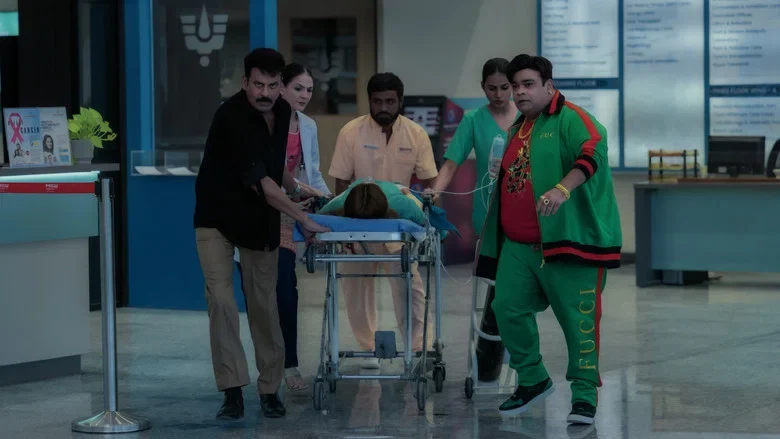
A woman is shoved from a moving car in the middle of a Delhi night, and the first man to reach her is already calculating what she’s worth. That’s the whole moral engine of Ritesh Shah’s Gajab Raat, and it idles with unusual patience.
A Corrupt Cop Who Never Asks To Be Redeemed
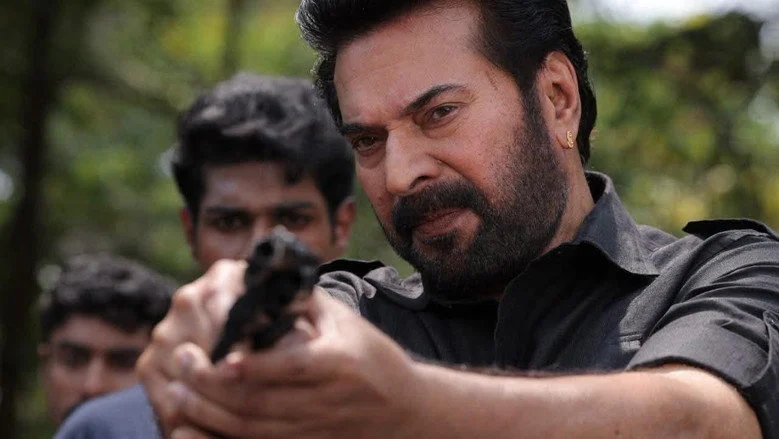
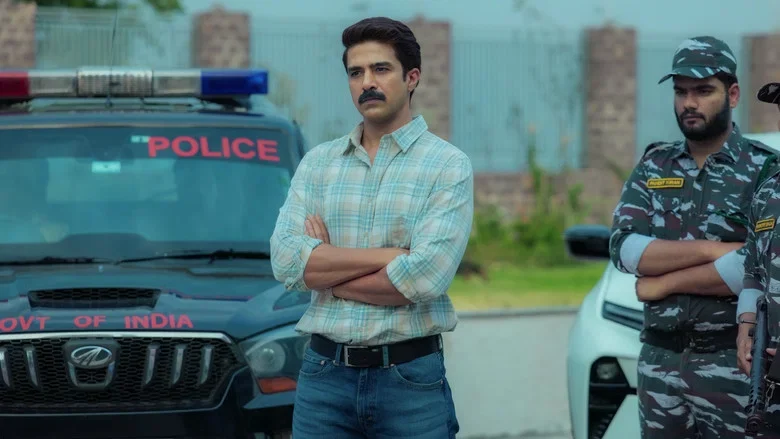
Manoj Bajpayee’s Ajay Dikshit is introduced doing something most Hindi procedural protagonists are forbidden from doing: planning a profitable evening. He isn’t haunted, he isn’t righteous, and he isn’t secretly noble. He’s a working policeman with a side hustle and a low opinion of the people he’s paid to protect.
When the injured woman lands at his feet, his first instinct is bureaucratic triage, how much attention does this body attract, and who will notice if he looks away.
The film refuses to sand that calculation down. Ajay doesn’t find his conscience in a single musical cue; he finds it the way a man finds a bill he forgot he owed.
That refusal to launder his corruption is the film’s most genuinely unusual instinct. Just as Udta Teer chose gags over tradecraft and paid for it in credibility, this screenplay chooses moral friction over redemption arcs and earns something harder to name.
The One-Night Clock Is a Discipline, Not a Gimmick
Compressing the investigation into a single night strips out the usual filler of Hindi crime thrillers, the montage of files, the superior officer’s office, the drive across three cities. Every question Ajay asks happens within walking distance of the woman he’s trying to identify.
That spatial tightness matters. Shah stages the hotel raid and the corridor pursuit as parallel threads before the car-drop incident absorbs them, so the audience is assembling a conspiracy from fragments while Ajay is still deciding whether to bother.
Where the structure strains is in the middle stretch, when the identity of the woman starts attracting pressure from above. The screenplay keeps adding institutional weight without always giving Ajay a physical action to match his rising anxiety. A man can only stare at a phone so many times.

Bajpayee’s Stillness Does the Work the Dialogue Won’t
Watch his hands. In the early scenes he’s constantly touching things, the car door, a cigarette, the woman’s wrist, a man asserting control over his environment through contact.
As the night curdles, those hands stop moving. He sits in a chair and lets a superior talk, and the stillness reads as a man doing arithmetic he can’t finish.
The physical exhaustion Bajpayee carries into the final third recalls the moral weariness of his turn in Last Man in Tower, but stripped of that film’s rhetorical flourishes. Here he barely raises his voice, and the restraint lands harder for it.
Nushrratt Bharuccha registers as the mystery’s emotional center even when the screenplay keeps her at arm’s length, and Divya Dutta’s single sustained scene, a woman speaking with the flat courtesy of someone who has rehearsed her answers, does more conspiratorial work than any exposition dump.
The Camera Stays Close Because the Truth Is Local
There’s no sweeping Delhi skyline establishing shot here. The frame hugs corridors, car interiors, and the fluorescent hum of a police station, so the conspiracy never feels abstract. It feels like a series of rooms Ajay can’t leave.
When the film does go wide, it’s for violence, the car, the corridor, the sudden intrusion of a body into a space that was supposed to be safe. That contrast between claustrophobic investigation and sudden spatial rupture is the film’s most confident visual argument.
The score, meanwhile, is used sparingly enough that the silences register as pressure rather than emptiness. It is not the kind of thriller that tells you how to feel; it waits to see if you’ve caught up.
Why the Ensemble Never Resolves Into a Clean Villain
The antagonistic force isn’t a man with a scar and a monologue. It’s a network, senior officers, intermediaries, people whose names matter less than their willingness to make a phone call. That choice keeps the threat diffuse and, at times, frustratingly shapeless.
The screenplay resists the kinetic sensationalism that overtook Vibe, opting instead for a deliberate, suffocating dread that asks the audience to sit in uncertainty rather than be thrilled out of it.
Whether that patience pays off depends entirely on the final reveal, and the film’s ending is its most divisive asset, a resolution that refuses the catharsis a mainstream thriller would ordinarily deliver.
What Netflix Is Actually Buying Here
Friday Storytellers and Neeraj Pandey’s backing signal a specific commercial thesis: the streaming thriller as a prestige-adjacent, star-led product that doesn’t need a theatrical window to justify its budget. For Netflix India, this is a bet on Bajpayee’s name as a subscription driver rather than a box-office draw.
That bet is reasonable. Bajpayee has become the most reliable anchor in the OTT crime space precisely because he doesn’t require a heroic frame.
But the model has limits, a film this interior and this resistant to tidy resolution will divide the casual subscriber who clicked for a twisty thriller and got a moral slow-burn instead.
The broader lesson for the streaming pipeline is that this patient character study signals a welcome tonal maturity across contemporary hindi thrillers, proving that tension can be sustained without manufactured plot theatrics.
The Verdict: A Thriller That Trusts You to Sit With the Discomfort
Gajab Raat is not interested in whether Ajay becomes a good man. It’s interested in whether a corrupt man can be forced, by one inconvenient body on a Delhi road, into acting as if goodness mattered, and whether that act changes anything.
The film’s final movement refuses to answer that question cleanly, and that refusal is both its integrity and its limitation. It leaves you with a man who has done the right thing for reasons he can’t fully explain, which is probably the most honest ending a film like this could have.
What lingers isn’t the conspiracy. It’s the image of a policeman standing over a woman he doesn’t know, deciding, against every instinct he’s spent a career cultivating, to stay.