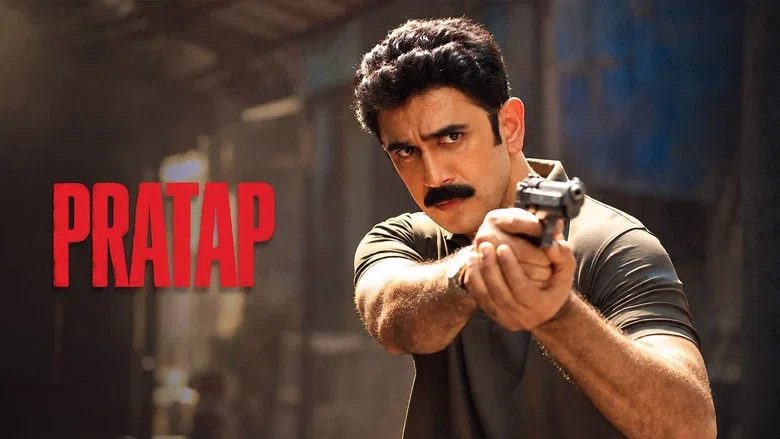
Pratap (2026): Amit Sadh Anchors a Grimy, Unsettling Procedural
The parking lot is the first lie. A wanted man is pinned, cuffed, and then dies of a heart attack before the cameras can look away, and the video that follows is the entire film in miniature.
Sachin Saraf’s Pratap understands that a cop movie is only as good as its worst fifteen seconds of footage.
Amit Sadh Has Never Been Asked to Be This Still, and It Nearly Breaks Him
The opening hour belongs to the record: twenty-six encounters, a wall of commendations, and a man who has confused institutional protection with personal invincibility. Amit Sadh plays Pratap Ranade as a coiled, unsmiling functionary, not a superhero.
Watch how he stands in the parking area after the suspect collapses. He doesn’t kneel. He doesn’t check the pulse. He simply watches the body as though it has personally betrayed him.
That stillness is the performance’s engine. When the video goes viral and the system turns, Sadh doesn’t rage; he goes quieter, and the film gets louder around him. The contrast between his clenched jaw and the shouting television panels is the sharpest thing Saraf stages all year.
Seema Biswas Turns Prison Procedure Into a Weapon, and It Cuts Deeper Than Any Interrogation
Meera Sen is the film’s best idea, and Seema Biswas plays her with the flat, unimpressed cadence of a woman who has processed a thousand dangerous men and expects to process a thousand more. She doesn’t raise her voice. She doesn’t need to.
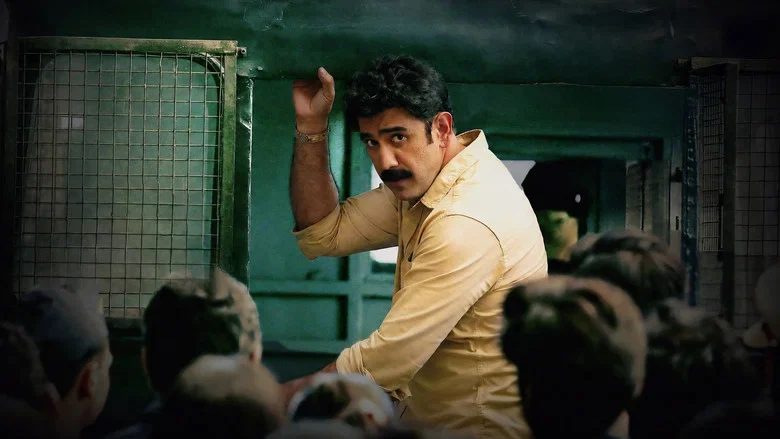
The confrontation in the prison corridor is where the film’s real stakes emerge. Pratap expects deference. She offers him a uniform and a meal slot. The scene is shot at a distance that refuses intimacy, and Biswas’s refusal to blink does more dramatic work than any chase sequence.
This is the kind of authority that recalls the oppressive hierarchies of Hum Angrezon Ke Zamane, where the jailer was the whole world and the prisoner was an afterthought.
The Conspiracy Is the Weakest Thread, and the Film Knows It
Once the story moves outside Mumbai Central Prison, the tension leaks. The state-sponsored conspiracy that supposedly frames Pratap is sketched in broad, bureaucratic strokes, and the film’s villains remain faceless enough to feel like a plot requirement rather than a dramatic presence.
Saraf’s direction is most confident inside the prison walls, where the geometry of bars and corridors does the storytelling. Outside, the film reverts to familiar procedural beats: the sympathetic investigator, the leaked file, the inevitable rooftop confrontation.
The escape sequence is staged with competence but without the queasy moral pressure of the earlier material. It’s a thriller sequence in a film that was, for a while, something stranger and better.
What Saraf Gets Right Is the Humiliation, Not the Gunplay
The film’s smartest structural choice is to make the prison a place of bureaucratic humiliation rather than physical brutality. Pratap is stripped of his phone, his rank, and his assumption of deference, and Sadh plays each small indignity with a flicker of disbelief.
The cinematography, handled by Anil Akki, favors hard overhead light in the cellblocks and a cold, washed-out palette in the exterior scenes, so that the prison feels paradoxically more vivid than the city outside it.
It’s a visual argument the screenplay doesn’t always earn. The conspiracy material feels imported from a different, more conventional film, and the two halves never fully reconcile.
Comparatively, the film shares the suffocating, chamber-piece instincts of Dhood (Sandstorm), but where that film trusted its claustrophobia, this one keeps looking for an exit.
Party Animals Was a Farce; This Is a Funeral, and the Difference Matters
Saraf’s previous theatrical outing, Party Animals, was a comedy of social performance, all noise and vanity. Pratap is its inverse: a film about what happens when the performance collapses and the audience turns.
That inversion is the most interesting thing about Saraf as a director. He’s drawn to men who mistake their public image for their actual self, and he’s willing to let them sit in the wreckage.
What he hasn’t yet learned is how to sustain that discomfort for a full runtime. The final act’s pivot toward conventional conspiracy thriller mechanics feels like a director losing faith in his own best instincts.
The Box Office Math Is Brutal, and the Film Knows It
Pratap arrives in a marketplace that has been unforgiving to mid-budget Hindi crime thrillers, and the absence of a marquee villain or a familiar franchise hook makes its commercial climb steeper.
Pradeep Rangwani’s production is clearly banking on Sadh’s credibility with the streaming-era audience and on the topicality of encounter politics, but that audience has been trained to wait for OTT.
The film’s best chance is word of mouth around the Biswas material, which is the kind of performance that generates clips and arguments. Whether that translates into footfalls is a different question.
Across contemporary Hindi thrillers, the pattern is consistent: films that trust their contained, character-driven halves outperform those that reach for a larger conspiracy canvas.
The Verdict: A Prison Drama Trapped Inside a Procedural
Pratap is at its best when it forgets it’s a thriller and remembers it’s a study of a man learning that the system he served was never his to command.
The film’s final image, Pratap outside the walls, technically free, morally unrecognizable, is the one moment where the pieces cohere. It’s a quiet, bitter ending that earns more than the conspiracy plot ever does.
Sadh and Biswas deserve a film that trusts them completely. What they get is a film that trusts them for about ninety minutes and then loses its nerve.
Still, those ninety minutes are worth the ticket. There’s a version of this movie that’s a minor classic, and you can see it flickering behind the one that got made.