Kaali Kheti (2026): Jackie Shroff Anchors a Horror That Trusts Silence Over Spectacle
Haris Imtiyaz Khan opens on soil, not shadow, a furrowed field at dusk, the camera low enough that the horizon tilts. By the time the first scream arrives, the film has already taught you to mistrust the ground beneath the characters.
That patience is the film’s signature, and it is a strange, welcome anomaly in a Hindi horror season built on jump-cut arithmetic.
A Horror Film That Refuses to Announce Its Monster
The premise arrives with deliberate poverty of information: a rural property, a family returning to it, and a hostility that seems to live in the land rather than in any one figure. Khan withholds the supernatural grammar for nearly half the runtime.
What he substitutes is geography, boundary walls, irrigation channels, the specific dread of an inherited plot that nobody wants to farm and nobody can sell. The film’s fear is proprietary, which is a more interesting engine than most possession plots manage.
Where the screenplay thins is in the connective tissue between those two ideas. The land is haunted; the family is fractured; the film keeps insisting these are the same wound without quite dramatizing the suture.
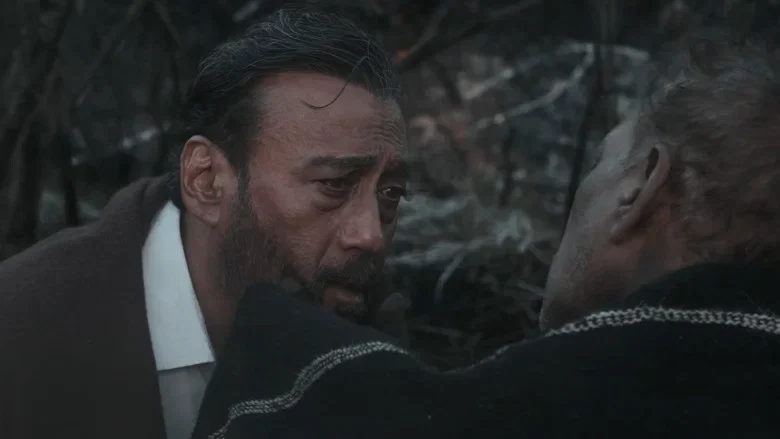
Jackie Shroff Plays the Silence, Not the Threat
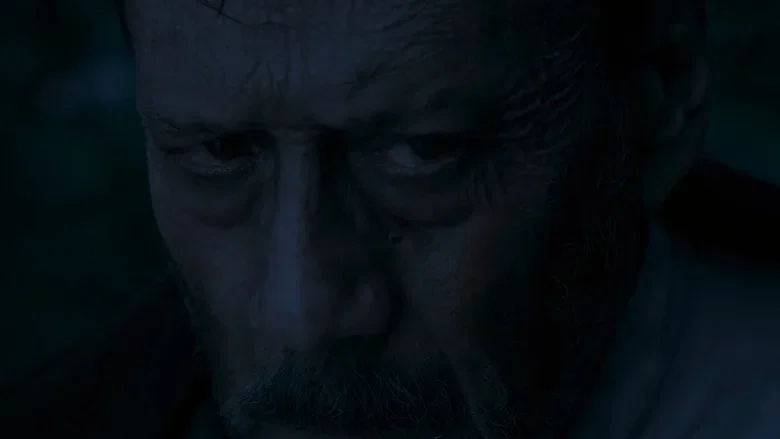
Shroff’s work here is the most disciplined he has been in years, and it is almost entirely physical. He stands with his weight on one hip, hands loose at his sides, and lets other people finish their sentences before he answers, or doesn’t.
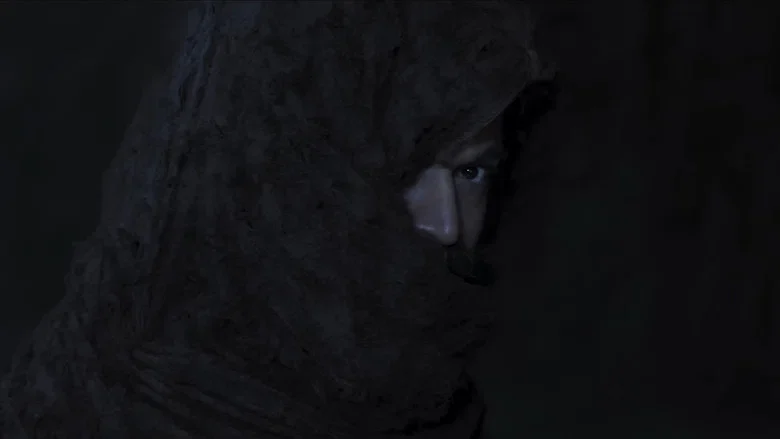
There is a moment at a kitchen threshold where he simply stops walking, mid-stride, and the camera holds on the back of his neck. It is a better scare than anything the sound design does all evening.
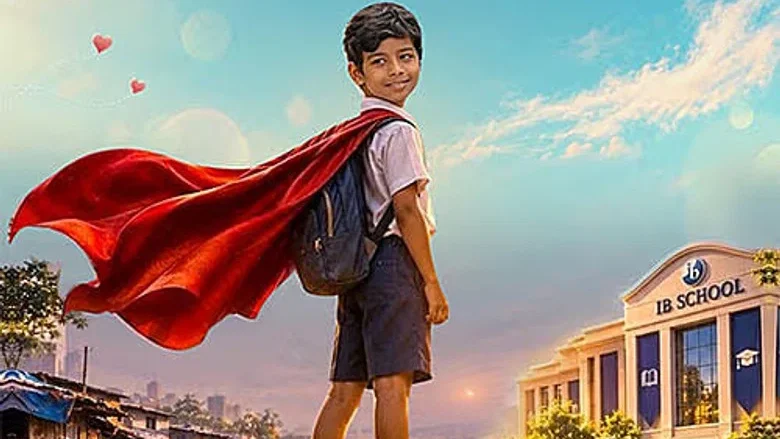
The register is a long way from the broad comic timing of his turn in The Great Grand Superhero, and the contrast is instructive: strip the performance of shtick and what remains is a man who has learned to occupy a frame without filling it.
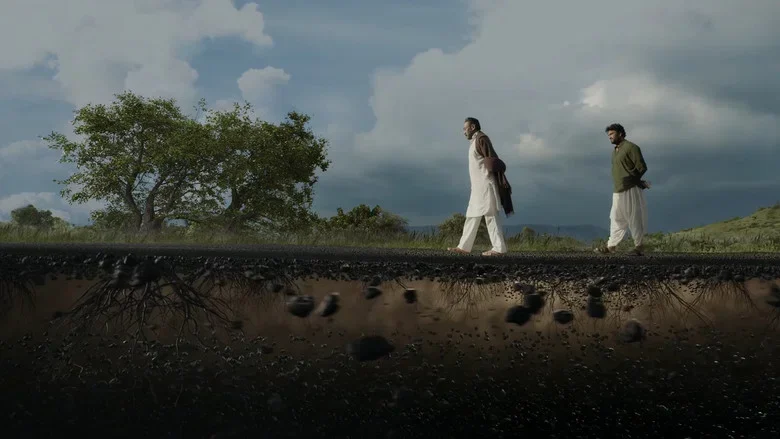
Sharad Kelkar and the Problem of a Second Presence
Kelkar is the film’s other anchor, and his scenes with Shroff carry a friction the horror material never quite earns on its own. He plays a man negotiating, always negotiating, with the land, with his relative, with his own temper.
The two actors share a long, wordless sequence in a corridor that is staged almost entirely in profile, and the spatial tension between them is more unnerving than the film’s actual supernatural set pieces. When the movie cuts away to the dark, it is cutting away from its best asset.
Beyond these two, the ensemble functions as texture rather than character. Village elders, a lawyer, a priest, they deliver information and exit, and the film never gives any of them enough interiority to register as more than plot furniture.
The Sound Design Does the Heavy Lifting, and Then Too Much
Khan’s visual grammar is restrained to the point of austerity: static wide shots, a reluctance to cut on action, natural light that goes grey rather than black. It is a deliberate refusal of the contemporary horror playbook.
The audio, however, betrays that discipline. By the final third, the low-frequency rumble has become a metronome, arriving on cue before every revelation, and the film starts to feel like it is reassuring you that something scary is happening rather than letting you discover it.
It is an odd inversion, a director who trusts his images but not his audience. The result is a horror film that is frequently atmospheric and occasionally genuinely frightening, but rarely as confident as its own first act.
The Remake Pipeline and What Kaali Kheti Costs Its Backers
The film arrives in a theatrical market that has spent two years testing whether regional horror can sustain a wide release without a franchise attached. The economics are unforgiving: no star-driven opening, no sequel hook, and a runtime that leaves little room for the interval bump that multiplexes depend on.
For the producers, the bet is on the adult-horror niche that has quietly been building across contemporary hindi horrors, where modest budgets and A-certificate positioning can still turn a profit on a strong second weekend. Whether Shroff’s name alone can open a film of this scale is the question the box office will answer.
The comparison that lingers is with Geriga, another recent genre entry that understood ritual as a structure rather than a mood. Kaali Kheti has the mood; it is still searching for the ritual.
A Final Act That Chooses Ambiguity Over Release
The climax resists the exorcism the film has been promising, and that refusal is both its boldest choice and its most frustrating. The threat is not defeated; it is inherited, passed along like the land itself.
It is a conclusion that will divide audiences, and it is the kind of ending that only works if the preceding ninety minutes have earned the ambiguity. Here, the film has earned about seventy of them.
What remains is a horror-thriller with a genuinely unsettling central performance, a strong sense of place, and a screenplay that never quite decides whether it is about grief or about property. Khan is a director worth watching; this is a film that suggests rather than delivers.
The final image, a field, unharvested, waiting, is the best thing in it. It is also the only thing in it that trusts you to be afraid on your own.