
Nooru Kodi Vaanavil (2026): Harish Kalyan Anchors A Romance That Mistakes Delay For Depth
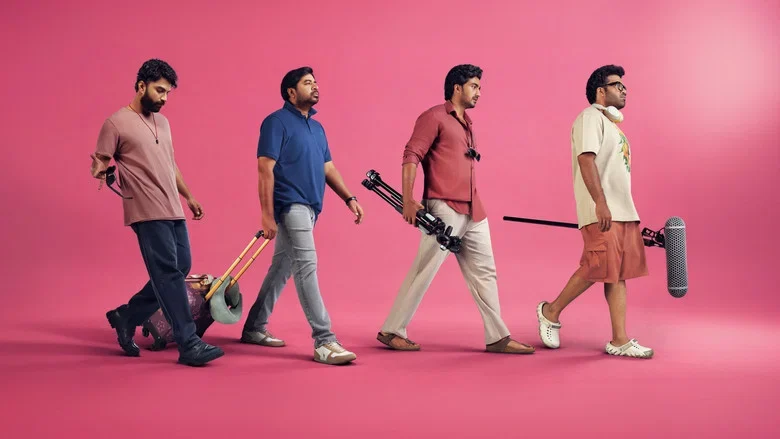
The first image Sasi gives us is a man in a new city pretending his job is a personality. Vino has a broadcasting title and a Goa address, and the film believes that’s enough to build a life on.
A Broadcasting Assignment Is Not A Dramatic Engine
The premise is tidy on paper: newly appointed television man needs a female lead for his programme, meets Fenny during the search, and the professional errand becomes a romantic one. It is the kind of hook that sounds like structure until you notice it’s just a corridor between two rooms.
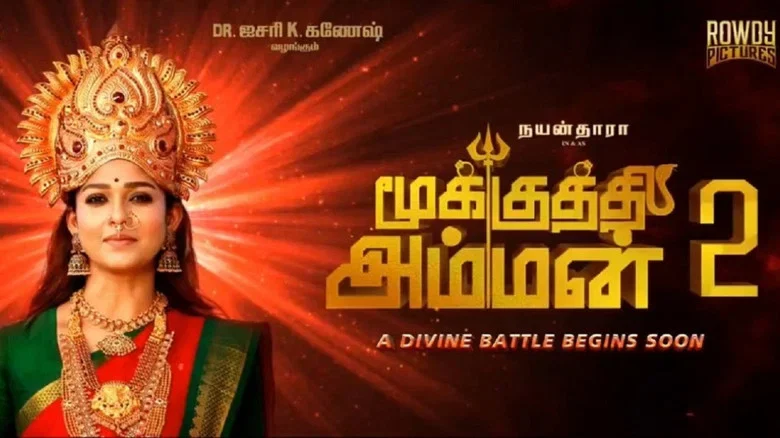
The problem is that the search never costs Vino anything. He looks, he finds, he moves on to the next phase of the movie. Compare that to the sprawl Sasi wrestled with in Mookuthi Amman 2, where at least the excess had a pulse; here the tidiness reads as timidity.

When Misunderstanding Becomes The Only Antagonist
Act two hands the conflict to incompatible expectations, and the film treats this as sufficient opposition. It isn’t. Misunderstanding is a delay tactic, not a dramatic force, and Sasi leans on it the way a weaker script leans on a villain.
What we get is the familiar slide: light connection, then friction, then fights that exist because the plot needs a second half. Nobody in this film wants anything specific enough to lose, which means nobody can really be hurt.

Siddhi Idnani Holds The Frame While The Script Drifts
Fenny is the more interesting problem, and Siddhi Idnani plays her with a watchful stillness that the screenplay never rewards. Watch her in the argument scenes: she doesn’t raise her volume, she shifts her weight back and lets her jaw set, as if deciding whether this man is worth the effort of correcting.
That restraint is genuinely more articulate than the dialogue around her. It recalls the composure she brought to the messier registers of Drones, except there the chaos at least gave her something to push against.
Harish Kalyan’s Vino Is All Professional Posture, No Interior
Harish Kalyan has the harder job, because Vino is written as a job description. He plays the early scenes with a bright, forward-leaning eagerness, hands busy, eyes scanning rooms for faces rather than people, and it works as a portrait of a man who confuses momentum with direction.
Once the relationship curdles, though, the performance has nowhere to go but reactive frustration, and Kalyan keeps reaching for a wounded register the script hasn’t earned. The camera holds him in medium close-up during the fights, and you can see the actor working to supply subtext the page withholds.
Comic Veterans Adrift In A Film That Forgets To Be Funny
Kovai Sarala and Thambi Ramaiah are present, and their presence is the most frustrating thing about the enterprise. Both are performers who can locate a laugh inside a single reaction shot, and Sasi gives them nothing but proximity to the leads.
There’s one moment where Sarala’s face does a small, silent recalculation of a room’s mood, and for three seconds the film feels alive. Then it cuts away, as if embarrassed by the possibility of texture.
Goa As Backdrop, Not As Pressure
Siddhu Kumar’s score works hard to manufacture feeling the staging hasn’t built, swelling under scenes that are mostly two people standing at polite distances. The visual scheme is bright and evenly lit, which flattens the emotional temperature rather than sharpening it.
This is the same trap that swallowed the ambitions of Haiku, where a promising relational thesis dissolved into pleasant, undifferentiated imagery. A romance needs friction in its frames, not just in its arguments.
The Long Shelf Life Shows In The seams
The film sat unreleased long enough that its eventual digital premiere feels less like a strategy than a surrender. You can sense the seams: scenes that once played as contemporary now carry a faintly dated rhythm, and the resolution arrives with the weariness of something that has been waiting to be finished.
That history matters critically, because a delayed film often reveals which ideas were provisional. Here the provisional idea is the whole emotional architecture.
ZEE5 Gets A Romance Without A Theatrical Case To Make
The commercial math is straightforward and unkind. A direct-to-streaming premiere means no opening-day number to defend, no word-of-mouth curve to ride, and no exhibition stake for anyone involved.
For Harish Kalyan, this is a holding pattern rather than a statement, and for the Tamil romance pipeline it’s another reminder that star-led relationship dramas now need either a theatrical hook or a genuinely distinctive voice.
This has neither, which makes its quiet landing on a platform feel like the correct outcome rather than an injustice.
The Parting Question The Film Never Asks Out Loud
By the end, Vino and Fenny are asked to understand each other, and the film treats that understanding as a finish line rather than a beginning. The closing movement wants to be tender, but it plays as exhaustion, two people agreeing to stop arguing because the running time is up.
What lingers isn’t the romance. It’s the sense of a filmmaker and a cast capable of more, working inside a structure too polite to demand it, a hundred crore colours, and almost no shadow to make them mean anything.